
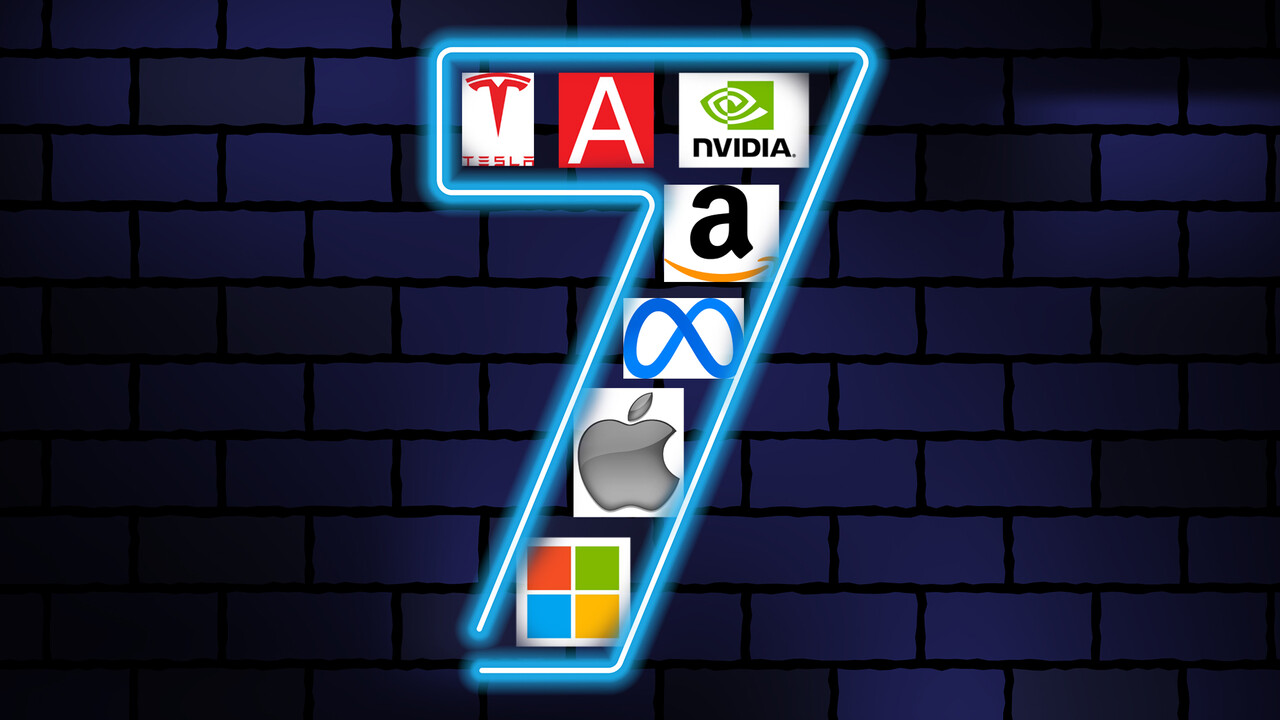
The landscape for the world’s largest technology companies is shifting as investors recalibrate their expectations for the “Magnificent 7.” Recent market movements show a divergence in performance among these titans, with Alphabet and Amazon seeing gains while Microsoft faces a period of relative weakness.
This volatility comes amid a broader tech rally. In a significant market move, Alphabet, Meta, Amazon and Nvidia led a tech rally following the announcement of a ceasefire with Iran by Donald Trump, highlighting how geopolitical stability can trigger rapid shifts in investor confidence for the tech sector.
However, the enthusiasm is not uniform. While some companies are riding a wave of optimism, others are issuing stark warnings. A reported $16 billion warning involving Nvidia, Apple, Alphabet, Amazon, and Microsoft has sent shockwaves through Wall Street, suggesting that the trajectory for these giants may be more complex than a simple upward trend.
Divergence Among the Tech Giants
The current market dynamics reveal a split in the “Magnificent 7” group. Alphabet and Amazon have recently seen their stock prices climb, signaling strong investor confidence in their current trajectories. This growth contrasts with Microsoft, which has been described as “struggling” or showing weakness in recent trading sessions.
Despite the current dip in Microsoft’s performance, institutional outlooks remain cautiously optimistic. Goldman Sachs continues to see potential in Microsoft, maintaining a price target that suggests the company has room for growth despite the short-term headwinds.
The Role of Geopolitical Stability
The intersection of politics and technology has never been more apparent. The recent rally involving Alphabet, Meta, Amazon, and Nvidia was directly tied to the announcement of a ceasefire with Iran. Such events reduce the perceived risk for global operations and supply chains, which is particularly critical for companies like Nvidia that rely on complex international semiconductor logistics.
When geopolitical tensions ease, capital tends to flow back into high-growth tech stocks. The “Magnificent 7” are often the primary beneficiaries of this trend due to their massive liquidity and global market reach.
The $16 Billion Warning and Market Volatility
While rallies provide short-term boosts, a deeper concern has emerged. A $16 billion warning associated with the top five tech firms—Nvidia, Apple, Alphabet, Amazon, and Microsoft—has created significant tension on Wall Street. This warning serves as a reminder that the valuations of these companies are closely tied to their ability to deliver massive returns on investment, particularly in the realm of artificial intelligence.
For investors, the primary question is whether the current spending levels on AI infrastructure can translate into sustainable revenue. The “shockwaves” mentioned by analysts reflect a fear that the market may have overpriced the immediate gains from AI, leading to a correction if the promised productivity leaps do not materialize quickly enough.
What Which means for the “Magnificent 7”
The “Magnificent 7” refers to the group of high-performing US tech stocks—Alphabet, Amazon, Apple, Meta, Microsoft, Nvidia, and Tesla—that have dominated market returns. Their collective influence is so great that their individual movements can dictate the direction of the S&P 500 and Nasdaq.
- Alphabet and Amazon: Currently showing strength, likely driven by a combination of cloud growth and advertising resilience.
- Microsoft: Experiencing a temporary lull, though still backed by major financial institutions like Goldman Sachs.
- Nvidia: Central to the AI hardware boom, but sensitive to both geopolitical shifts and the aforementioned $16 billion warning.
Analyzing the Impact on Global Investors
For a global audience, these movements are more than just numbers on a screen. They represent the health of the digital economy. When companies like Amazon and Alphabet rise, it often signals a robust appetite for digital services and cloud computing globally.
Conversely, when Microsoft “stumbles,” it can lead to broader questions about the enterprise software market. Because Microsoft’s ecosystem is deeply embedded in corporate infrastructure worldwide, its performance is often viewed as a bellwether for general business spending on technology.
Key Takeaways for Market Observers
- Geopolitical Influence: Tech rallies are currently highly sensitive to diplomatic breakthroughs, such as the Iran ceasefire.
- Institutional Support: Despite price dips, firms like Goldman Sachs are still identifying long-term value in Microsoft.
- Valuation Risks: The $16 billion warning indicates that Wall Street is becoming more critical of the “AI premium” attached to tech stocks.
- Selective Growth: The “Magnificent 7” are no longer moving in lockstep; investors are now picking winners and losers within the group.
As the market continues to process these warnings and rallies, the next critical checkpoint for investors will be the upcoming quarterly earnings reports and official regulatory filings, which will provide the hard data needed to verify if the $16 billion warning is a temporary hurdle or a systemic shift. We will continue to monitor these filings for updates on capital expenditure and AI revenue realization.
Do you believe the “Magnificent 7” are still the safest bets for long-term growth, or is the AI bubble beginning to show cracks? Share your thoughts in the comments below.