
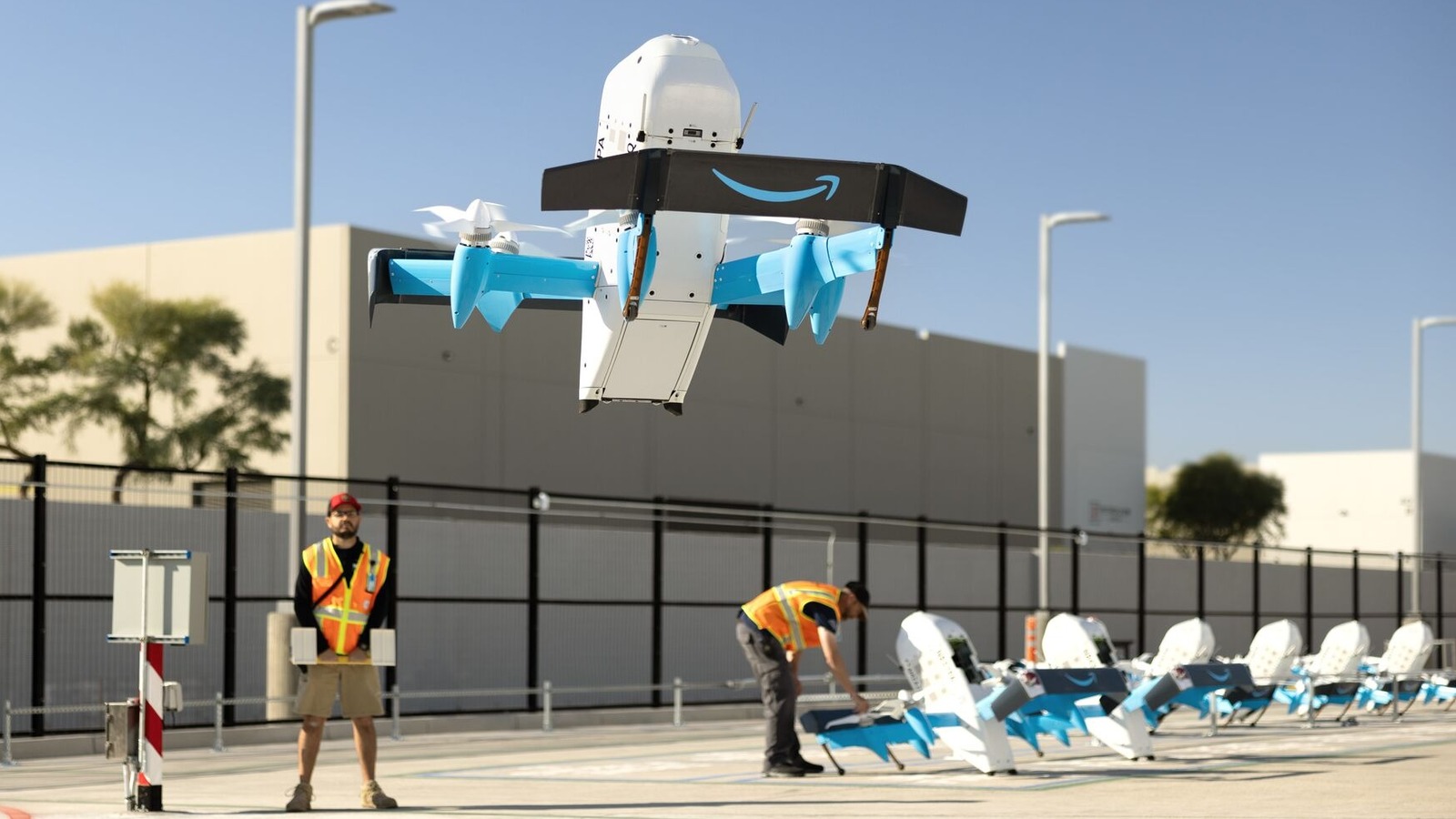
For many residents in Metro Detroit, the sight of a five-and-a-half-foot-tall blue and white machine hovering in the sky is no longer a curiosity—it is a source of anxiety. Whereas Amazon continues to scale its Prime Air drone delivery service in Michigan, the convenience of receiving a package in under an hour is being overshadowed by a singular, growing concern: privacy.
The rollout, centered around fulfillment hubs in Pontiac and Hazel Park, represents Amazon’s push to revolutionize “last-mile” logistics. Still, as these drones become a common fixture in the skyline, homeowners are questioning who—or what—is watching them from above. The tension highlights a classic tech-industry friction point: the gap between operational efficiency and the public’s expectation of domestic sanctuary.
The deployment of Amazon delivery drones in Metro Detroit has shifted from a novelty to a point of contention, particularly in areas surrounding the Pontiac fulfillment center. Residents have reported a surge in sightings, leading to a wave of inquiries to local law enforcement regarding the legality and intent of the aerial surveillance.
Privacy Concerns and Law Enforcement Response
The primary point of friction emerged in Bloomfield Township, where the local police department was forced to address a “myriad of concerns” from residents. According to the Bloomfield Township Police Department, the biggest worry among citizens is the potential for an invasion of privacy, specifically that cameras mounted on the drones are being used to peer into backyards and the interiors of homes reported by FOX 2.
In response to these fears, the police department engaged with Amazon Air to clarify how the technology operates. Officer Heather Glowacz, the agency’s community relations officer, explained that while the drones are equipped with cameras, their purpose is operational rather than voyeuristic. Glowacz noted that the drones fly at speeds of approximately 70 miles per hour, which renders any captured imagery blurred. She emphasized that the cameras are utilized specifically for obstacle avoidance—detecting birds or other obstructions in the flight path—rather than surveillance reported by FOX 2.
Despite these assurances, the psychological impact of having an autonomous aircraft hovering near private property remains a significant hurdle for public acceptance. The Pontiac fulfillment center alone is reportedly deploying drones for 140 to 170 deliveries a day within an 8-mile radius, ensuring that the “buzz” of the drones is a near-constant presence for many residents reported by FOX 2.
The Technology Behind the MK30
The drones currently operating in the Detroit area are part of the MK30 fleet, a model unveiled in 2023 after approximately 18 months of engineering development. These electric aircraft weigh 85 pounds and are designed for high-speed, short-range transit. They typically maintain an altitude of 200 to 400 feet during transit, only descending to 10-12 feet when executing a delivery reported by MiTechNews.
The delivery process is highly automated. When a customer places an order, they are provided with a map of their property to select a specific drop location, such as a backyard. Upon reaching the destination, a compartment on the drone opens, and the package slips out. While most deliveries are made to residential yards, Amazon has indicated that some apartment complexes may also have designated drop points reported by Oakland County 115.
Operational Constraints and Capabilities
The Prime Air service is not a universal replacement for ground delivery but a specialized tool for small, urgent items. The drones are subject to strict physical and environmental limitations:
- Weight Limit: Drones can only carry items weighing up to 5 pounds, such as cleaning supplies, Bluetooth speakers, remote controls, or Ring doorbells reported by MiTechNews.
- Size Limit: Items must be smaller than a shoe box and durable enough to withstand a 10-foot drop reported by Oakland County 115.
- Weather Restrictions: Drones cannot operate in the dark, nor can they fly during rainy or windy weather reported by Oakland County 115.
- Cost: There is an additional fee for customers who opt for the drone delivery service over standard ground shipping reported by Oakland County 115.
Expansion Across Metro Detroit
Amazon’s strategy in Michigan involves a phased rollout. Service began in Pontiac in early November 2025, followed shortly by the launch in Hazel Park. The Hazel Park facility utilizes a fleet of 12 drones to serve a 7.5-mile radius reported by MiTechNews.
This expansion extends the service area to include parts of several cities, including:
- Detroit
- Hamtramck
- Warren
- Madison Heights
- Oak Park
- Ferndale
Lauren Wilson, a drone operations manager at Amazon, has highlighted the social utility of the program, suggesting that drone delivery could be a vital resource for elderly residents who lack transportation or those needing urgent medication from a pharmacy reported by MiTechNews.
The Global Trajectory of Prime Air
The Metro Detroit experiment is part of a broader global effort to normalize autonomous delivery. Amazon has been testing its drone delivery services since 2022, expanding beyond Michigan into other major hubs, including the Phoenix metro area in Arizona and San Antonio, Texas reported by MiTechNews.
As the company increases the volume of orders through Prime Air, the clash between technological advancement and privacy rights is likely to intensify. The Detroit experience serves as a case study for how municipalities and tech giants must communicate to mitigate public fear. When the “convenience” of a one-hour delivery comes with the feeling of being watched, the value proposition of the technology changes.
| Feature | Detail |
|---|---|
| Drone Model | MK30 |
| Max Payload | 5 lbs / Smaller than a shoe box |
| Flight Speed | Approximately 70 mph |
| Delivery Radius | 7.5 to 8 miles from fulfillment center |
| Transit Altitude | 200 to 400 feet |
| Drop Altitude | 10 to 12 feet |
As Amazon continues to refine its flight paths and obstacle avoidance algorithms, the company will likely face continued scrutiny from local governments and privacy advocates. For now, the program remains a test, with the possibility that problematic deliveries may still be completed by ground drivers if drone flight is compromised.
We find currently no announced dates for further expansion in the Detroit area, but residents are encouraged to monitor updates from the Bloomfield Township Police Department and Amazon’s official service maps for changes to delivery zones.
What are your thoughts on drone deliveries? Does the speed of a one-hour delivery outweigh the privacy concerns of having drones in your neighborhood? Share your views in the comments below.