
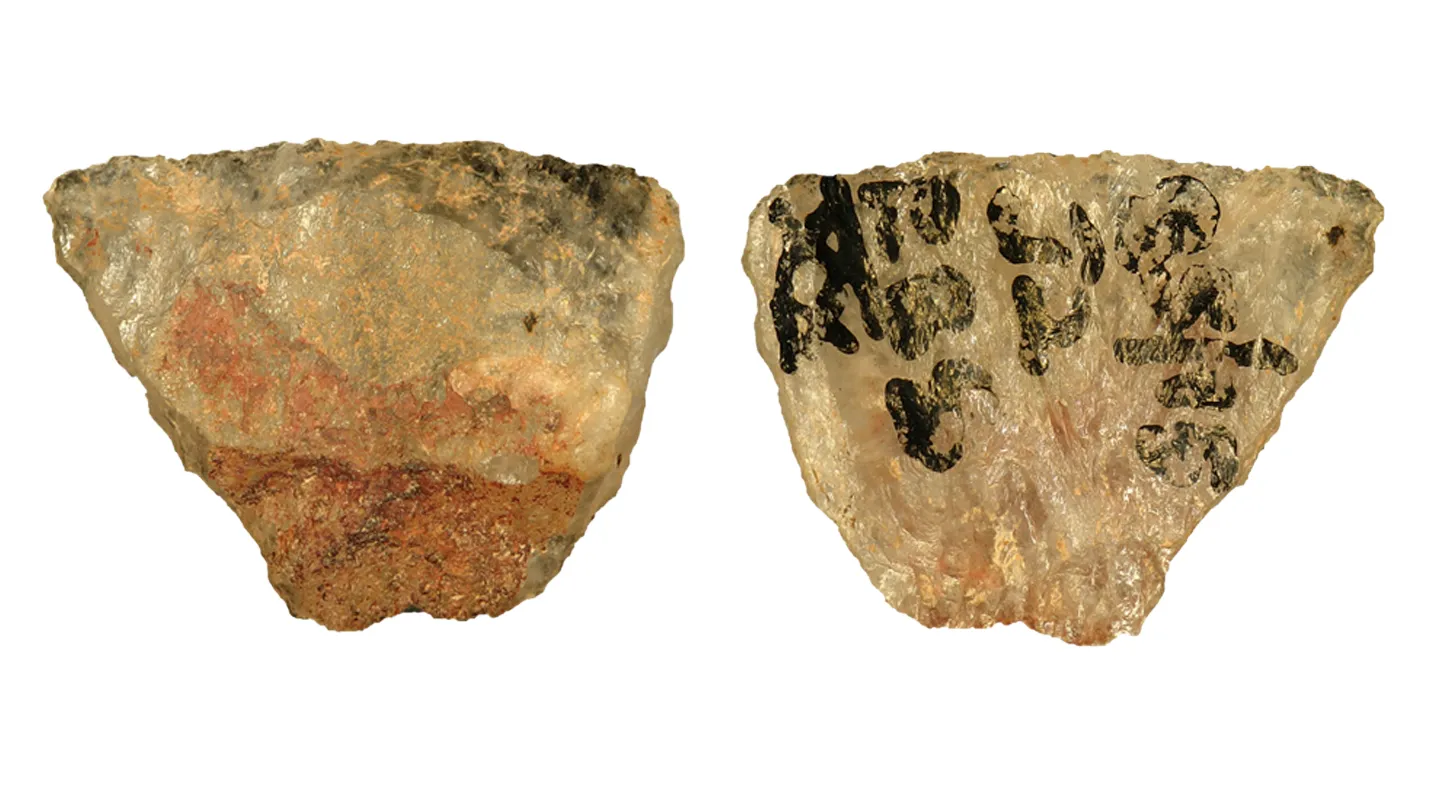
A new analysis of ancient arrowheads from South Africa pushes back prehistoric humans’ earliest use of poisoned weapons by more than 50,000 years.
The five 60,000-year-old quartz arrowheads still have traces of a poison made from a bulbous flowering plant named gifbol (boophone disticha), also called “poisonous onion,” that was used until recent centuries by customary hunters. The find points to a “cognitively complex” hunting strategy among early humans, researchers report January 7 in Science Advances.
“This is the earliest direct evidence of the use of poison and these are earliest poisoned arrowheads,” says Stockholm University archaeological scientist Sven isaksson. He notes that, before this, the earliest poisoned arrowheads were dated to less than 7,000 years ago. “It’s quite a leap.”
Isaksson and his colleagues examined arrowheads unearthed in 1990 by South African archaeologist Jonathan Kaplan at the Umhlatuzana rock-shelter in what is now that country’s southeastern KwaZulu-Natal province.
The team first used geochemical and magnetic analysis to confirm earlier dating of the sediment layer where they were found.It then used gas chromatography-mass spectrometry to search for telltale traces of the alkaloid-based poison on the prehistoric arrowheads,guided by the poison residues on a set of 18th century poisoned arrows collected in southern Africa by the Swedish naturalist Carl Peter Thunberg.
Traces of the same gifbol poison were found on the surfaces of both sets of arrowheads, even though they were separated by many tens of thousands of years, Isaksson says.
It’s unclear whether the poison was used continually over that time, or if it had been independently discovered several times, he says.
Importantly, the poison made from gifbol isn’t immediately fatal. So the ancient hunter-gatherers who used it would have had to plan for this and follow their quarry until the toxins took effect, say the researchers.
While the ancient hunters who had used the rock-shelter must not have known the exact chemical function of the poison, “our study demonstrates that they had a knowledge system or procedural knowledge, enabling them to identify, extract and apply toxic plant exudates effectively,” the researchers write. “Because poison is not a physical force, but functions chemically, the hunters must also have relied on advanced planning, abstraction and causal reasoning.”





