
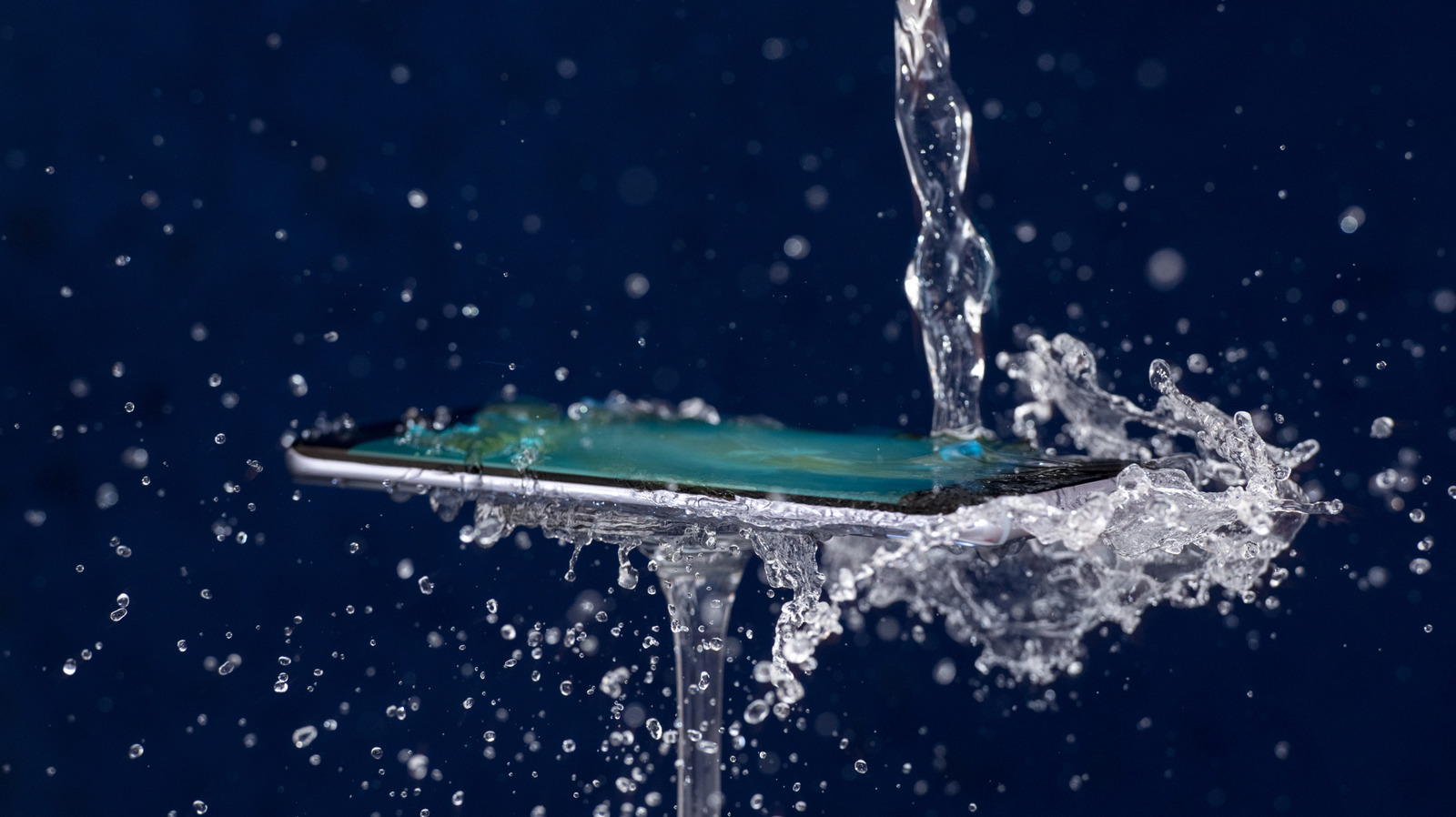
Decoding Your Phone’s Water & Dust Resistance: A Complete Guide
You’ve likely seen “IP” followed by numbers when researching a new smartphone. But what do those numbers actually mean? Understanding these ratings is crucial for protecting your investment and ensuring your device lasts. As someone who’s been immersed in the mobile tech world for years, let’s break down everything you need to no about Ingress Protection (IP) ratings.
What is an IP Rating?
Essentially, an IP rating tells you how well your phone is protected against both solid particles (like dust) and liquids (like water). It’s a standardized test,meaning a phone with a specific IP rating has undergone rigorous testing to meet those standards. This gives you a reliable benchmark for assessing durability.
Understanding the Numbers: A Two-Part System
An IP rating consists of two digits. The first digit indicates dust protection, while the second covers water resistance. Let’s look at each in detail.
Dust Protection – The first Digit
* 0: Offers no dust protection.
* 1: Protects against large dust particles, but not complete ingress.
* 2: shields against moderate dust, but may not hold up against significant amounts.
* 3: Provides protection against dust that could damage the device.
* 4: Resists dust ingress from any direction. Particles 1mm or larger are kept out.
* 5: Dust-tight; prevents any harmful dust from entering.
* 6: Fully dust-tight – even the finest dust particles can’t penetrate.
Many phones without a “4” or higher will display an ”X” in the first position, meaning they haven’t been officially tested for dust resistance. This is common with foldable phones due to the complexities of sealing a hinged design.Recently, some manufacturers have begun offering fully dustproof models, representing a significant advancement.
Water Resistance – The Second Digit
* 0: No water protection.
* 1: Protected against dripping water.
* 2: Withstands water spray when tilted up to 60 degrees.
* 3: Resists water spray at any angle.
* 4: Protected against splashing water from any direction.
* 5: Can handle water jets from any direction, but not for long periods.
* 6: Protected against powerful water jets.
* 7: Can be submerged in up to 1 meter of water for 30 minutes.
* 8: Can withstand submersion in more than 1 meter of water for 30 minutes.
* 9: Protected against close-range, high-pressure water jets.
Beyond IP68: The Rise of Higher Ratings
While IP68 is a common and excellent rating, some manufacturers are pushing the boundaries. You’ll now find phones with IP69 ratings, and even IP69K.
* IP69: Handles longer submersion times and withstands close-range, high-pressure, and high-temperature water jets.
* IP69K: An industrial-level rating,offering protection against even higher pressure jets (80-100 bar,or 1,160-1,450 psi) and temperatures up to 176°F.
While IP69K might seem excessive for everyday use, it provides exceptional peace of mind. It’s particularly valuable for professionals in demanding environments like food processing or chemical manufacturing.
What Does This Mean for You?
For most users, an IP68-rated phone offers ample protection against everyday mishaps. However, don’t underestimate the value of a higher dust rating, especially if you live in a dusty environment or work outdoors.
Ultimately, understanding your phone’s IP rating empowers you to make informed decisions and protect your device from the elements. Remember, while these ratings offer





