The enigmatic Faith of Ann Lee: A Deep Dive into Mona Fastvold‘s “The Testament of Ann Lee”
Mona Fastvold’s ”The Testament of Ann Lee,” co-written with Brady Corbet, isn’t a film you simply watch; it’s a film you experience. It’s a challenging,often unsettling,and ultimately compelling exploration of faith,repression,and the enduring power of belief,centered around the remarkable life of Ann Lee,the 18th-century founder of the Shaker movement. The film, which premiered at the Venice Film Festival, doesn’t offer easy answers, but instead invites viewers to grapple with the complexities of a woman who dared to redefine spirituality in a world determined to confine her.
Lee’s story is one of relentless persecution. emerging from a deeply religious background in England, she became a charismatic leader advocating a radical form of Christian practice. Her message – a rejection of traditional marital roles and a belief in the inherent sinfulness of sexual relations – was met with hostility and condemnation. As powerfully portrayed by Amanda Seyfried, Lee isn’t presented as a saint, but as a fiercely determined woman driven by a profound conviction. Seyfried’s performance is nuanced, capturing both the vulnerability and the unwavering strength of a leader facing constant opposition. She’s supported by strong performances from Lewis Pullman as her brother William and christopher Abbott,who delivers a chilling portrayal of Abraham,her controlling and abusive husband. Abbott’s depiction hints at a disturbing power dynamic, bordering on religious domination within their marriage.
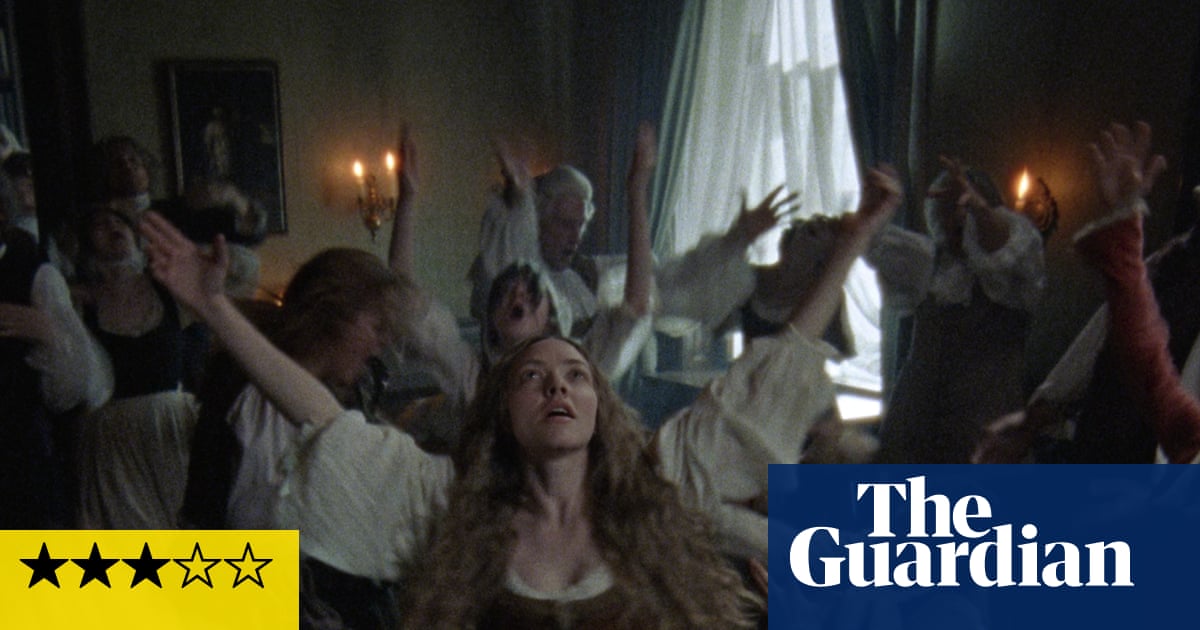
Fastvold masterfully evokes a sense of unease, drawing visual inspiration from a range of sources. The film’s aesthetic oscillates between the stark, unsettling atmosphere of a Lars von Trier film – think the ironized martyrdom of his protagonists – and the creeping dread of Robert eggers’ historical horror, “The Witch.” Yet,it also possesses a surprising theatricality,with the Shakers’ ecstatic dances and fervent worship resembling a visually arresting Broadway spectacle,reminiscent of the energy and choreography of Stomp. This juxtaposition is deliberate, forcing the audience to confront the inherent contradictions within the Shaker belief system.
beyond the Shaking: what Was Ann Lee’s Legacy?
The central question the film poses – and doesn’t explicitly answer – is: what is the enduring testament of Ann Lee? The film acknowledges the Shakers’ lasting impact, briefly noting their follower numbers in the closing credits, and their significant contribution to American design through their minimalist and beautifully crafted furniture. Though, it doesn’t shy away from the more challenging aspects of their faith.
Lee’s staunch belief in celibacy raises uncomfortable questions. The film subtly acknowledges the inherent paradox: if all sex is considered sinful, how does the community ensure its survival? The narrative doesn’t offer a resolution, leaving the audience to ponder the implications of a faith predicated on the suppression of fundamental human drives.
To a modern audience, the Shakers’ ecstatic rituals - the shaking, shivering, and speaking in tongues – might appear as collective hysteria or a manifestation of repressed sexuality. However,Fastvold resists offering a simple psychological diagnosis. She wants us to take Lee’s convictions seriously, to understand the profound spiritual yearning that fueled this radical movement.
A Complex Legacy in a New World
“The Testament of ann Lee” doesn’t shy away from the historical context of the Shakers’ arrival in America. The film depicts Lee’s condemnation of slavery during a slave auction, highlighting the hypocrisy of a nation founded on ideals of liberty while concurrently perpetuating the brutal practice of human bondage. However, the film also points out a crucial omission: Lee’s failure to integrate abolitionism into the core tenets of her Christian mission. This nuance underscores the complexities of historical figures and the limitations of even the most progressive ideologies.
Fastvold’s film is deliberately ambiguous. It employs irony and invites skepticism, yet simultaneously asks for empathy and understanding. It’s a film that doesn’t dictate interpretation, but rather encourages viewers to draw their own conclusions. The director seems to be suggesting that even within a system of strict repression,a powerful energy can be unleashed,capable of driving social change and contributing to intellectual discourse.
Why “The Testament of Ann Lee” Matters
“The Testament of Ann lee” is a genuinely unusual and thought-provoking film. It’s not a comfortable watch, and it won’t provide easy answers. But it will stay with you long after the credits roll. It’s a film that demands to be discussed,debated,and

![Health Plan Dashboards: Boost Efficiency & Performance | [Year]](https://i0.wp.com/www.osplabs.com/wp-content/uploads/2025/09/streamlining-health-plan-Banner-810x435-1.jpg?resize=150%2C150&ssl=1 "Health Plan Dashboards: Boost Efficiency & Performance | [Year]")