
The Rise of AI Automation: AnthropicS Data Reveals a Shifting Landscape
Artificial Intelligence is rapidly evolving, and with it, how we interact with it. Recent data from Anthropic, detailed in their Economic Index, paints a clear picture: we’re moving from collaborating with AI to increasingly automating tasks using it. This shift has significant implications for businesses, individuals, and the future of work. Let’s dive into the key findings and what they mean for you.
From Collaboration to Full Automation
For a long time, using AI meant a back-and-forth process – you’d provide input, the AI would respond, and you’d refine the request. But that’s changing. Anthropic’s research shows a dramatic increase in users simply giving Claude a task and letting it run.
* Late 2024: 27% of Claude conversations involved minimal user input after the initial prompt.
* August 2025: That number jumped to 39%.
This marks the first time automation has outweighed collaboration in AI usage, signaling a fundamental shift in the balance between augmentation vs. automation. It’s no longer just about AI assisting us; it’s about AI doing for us.
(Image: Share of Claude conversations: automation now exceeds augmentation. source: Anthropic Economic Index)
This trend is fueled by two key factors: Claude’s improved accuracy and growing user confidence. As AI models become more reliable, you’re more pleasant delegating complex tasks without constant oversight.
Global Adoption: who’s Leading the Charge?
The adoption of AI isn’t uniform across the globe. Here’s a breakdown of usage patterns:
* United States: Accounts for 21.6% of global Claude usage.
* Leading Per Capita: Smaller, high-income countries are utilizing Claude at a disproportionately high rate. Israel, Singapore, Australia, New Zealand, and South Korea top the list.
* US Hotspots: Within the US, Washington, DC leads in per capita usage, followed by Utah, California, New York, and Virginia.
Interestingly,local economies are shaping how people use the model.Such as, California sees a high volume of IT-related requests, while Hawaii focuses on tourism-related tasks. This demonstrates AI’s adaptability to specific regional needs.
Enterprise vs. Consumer: A Tale of Two Automations
The way businesses and individual consumers leverage AI differs significantly.
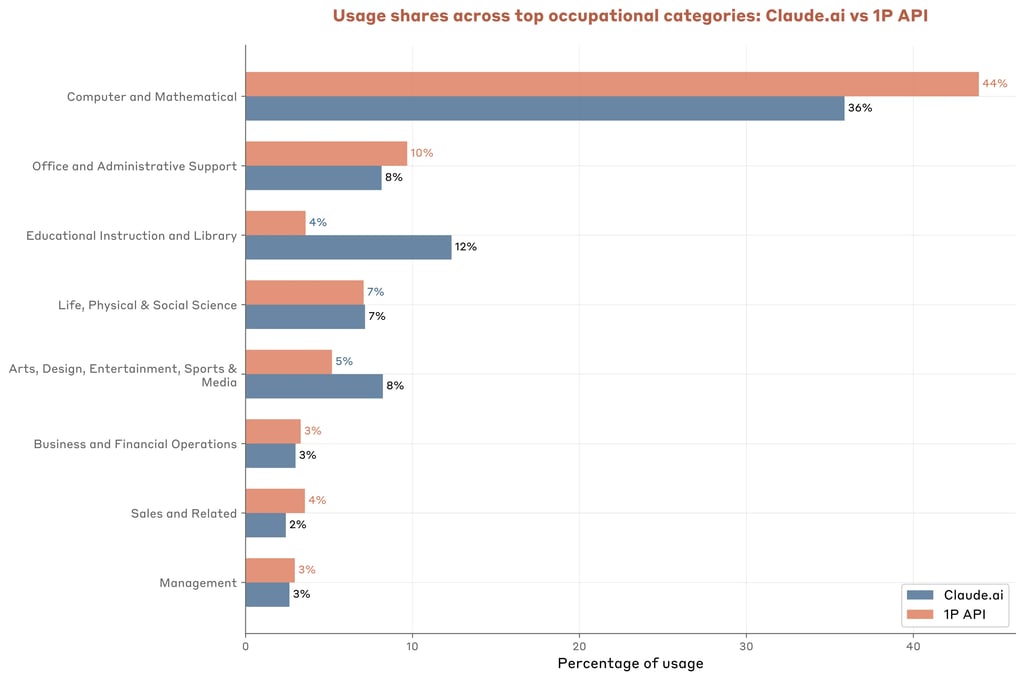
* Enterprise Focus: Enterprise adoption leans heavily toward automation. A remarkable 44% of API traffic involves coding tasks, compared to 36% on Claude.ai. Administrative tasks are also common.
* Consumer Focus: Consumer use shows a broader range, with education and creative work playing a more significant role.
* High Automation Rate: Nearly 80% of business interactions with Claude are fully automated, indicating companies are deeply integrating the AI into their workflows.
This suggests businesses are prioritizing efficiency and streamlining processes, while individuals are exploring AI’s potential for learning and creative expression.
The Future of AI’s Economic Impact
Anthropic is committed to ongoing research, regularly updating its Economic Index to provide valuable data for researchers and policymakers.The current findings highlight an accelerating, though uneven, shift.
* Coding Remains King: Coding still dominates AI usage.
* Emerging Areas: Education, science, and automation are rapidly gaining traction.
This data underscores the evolving role of AI in the economy. It’s not just about replacing jobs; it’s about transforming them and creating new opportunities.
Wont to learn more about anthropic’s commitment to responsible AI? Read about their recent decision to give Claude the power to end harmful conversations and protect “model welfare.”
Stay informed: Explore Anthropic’s Economic Index for ongoing insights into the economic effects of AI: https://www.anthropic.com/research/economic-index-geography
Original Source: [https://www.eweek.com/news/anthropic-economic-index-claude-ai-usage/](https





