
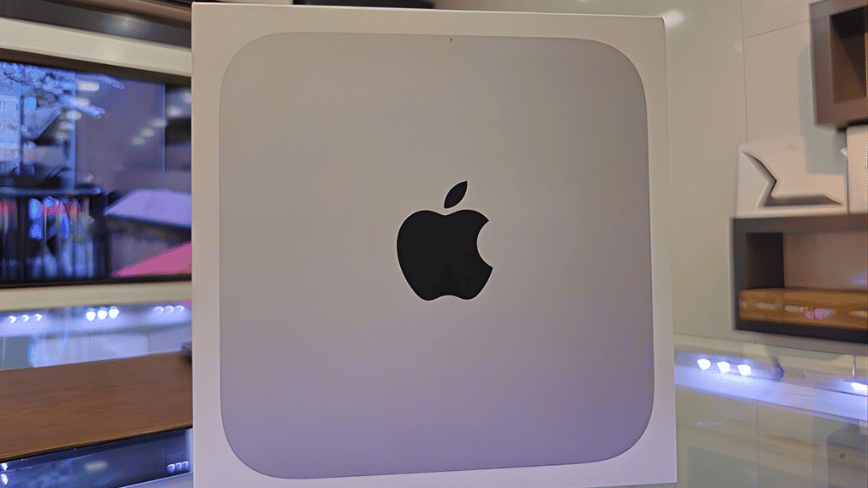
Apple users looking to upgrade their workstations may have hit a sudden wall. On April 11, 2026, several high-RAM configurations of the Mac mini and Mac Studio vanished from the official Apple online store in the United States, leaving potential buyers with a “currently unavailable” status and no estimated delivery dates.
The Mac mini and Mac Studio out of stock situation specifically targets the high-end memory tiers. According to reports, the affected models include Mac mini configurations with 32GB or 64GB of RAM, as well as Mac Studio models equipped with 128GB or 256GB of memory. For professionals who rely on these massive memory pools for data-heavy workloads, the lack of an ordering option has sparked immediate speculation across the tech community.
The timing of these disappearances has led to two primary theories: a systemic DRAM shortage affecting high-capacity modules or a strategic move by Apple to clear inventory ahead of an M5 chip refresh. While Apple has not officially confirmed the cause, the pattern of removing high-spec models often precedes a hardware transition or signals a critical supply chain bottleneck.
Analyzing the Memory Crisis: Is it a DRAM Shortage?
The disappearance of only the highest-memory configurations suggests that the issue may be rooted in the availability of specific high-density memory modules. In the Apple silicon ecosystem, RAM is integrated into the SoC (System on a Chip) as unified memory, meaning Apple cannot simply swap a supplier for a different stick of RAM; the chip itself must be manufactured with the specific memory capacity integrated.

If there is a shortage of the specific dies required for 64GB Mac minis or 256GB Mac Studios, Apple would be unable to fulfill these orders regardless of their overall production capacity. This “RAM crisis” would disproportionately affect power users—such as those in 3D rendering, large-scale software development, and high-end video production—who require the maximum headroom to avoid swapping to the SSD.
Historically, supply chain volatility in the semiconductor industry can lead to such gaps. When specific components become scarce, manufacturers often prioritize base models that sell in higher volumes, leaving the niche, high-spec configurations to fall into “unavailable” status until the supply chain stabilizes.
The M5 Refresh Theory: A Strategic Pivot?
Alternatively, the industry is eyeing the possibility of an imminent M5 chip refresh. Apple typically updates its silicon on a predictable cadence, and the current desktop lineup is reaching a point where a generational leap is expected. Removing high-end configurations from the store is a common tactic used to prevent customers from purchasing expensive, current-gen hardware right before a significantly faster successor is announced.
To understand the current landscape, it is helpful to look at the existing hardware. The Mac mini was recently refreshed with M4 and M4 Pro chips in 2024, while the Mac Studio saw updates in 2025 with the M4 Max and M3 Ultra chips according to MacRumors. If Apple is preparing to launch the M5 series, the high-end Mac Studio and Mac mini models would be the first to be phased out to make room for the novel architecture.
A refresh to M5 would likely bring improvements in neural engine performance and energy efficiency, potentially making the current M4-based high-RAM machines less attractive. For a professional spending thousands of dollars, the difference between an M4 Max and an M5 Max could be substantial enough to justify waiting a few more weeks.
Comparing the Current Desktop Lineup
For those wondering if they can pivot to a different model while waiting for a resolution, the overlap between the Mac mini and Mac Studio has become more pronounced. The M4 Pro Mac mini now offers performance that competes with more expensive machines, creating a challenging choice for buyers.
| Model | Chip Options | Starting Price | Target Audience |
|---|---|---|---|
| Mac mini (M4) | M4, M4 Pro | $599 | Everyday users / General computing |
| Mac Studio | M4 Max, M3 Ultra | $1,999 | Power users / Professional workflows |
Who is Affected and What Happens Next?
The primary stakeholders in this shortage are creative professionals and enterprise clients. For a developer running multiple virtual machines or a video editor working with 8K RAW footage, 32GB or 64GB of RAM is not a luxury but a requirement. The inability to order these machines directly from Apple disrupts procurement cycles for studios and tech firms.
Users who are not in an immediate rush may find it beneficial to hold off. If this is indeed a precursor to an M5 refresh, the new hardware will likely offer better longevity and higher resale value. However, if this is a genuine DRAM shortage, the “unavailable” status could persist for months, forcing users to seek out third-party retailers who may still have stock—albeit often at a premium.
For those who require a machine immediately, the M4 Pro Mac mini remains a formidable option. Some users have reported that the performance gap between the Mac mini and the Mac Studio is marginal for many professional tasks, such as audio production, making the mini a viable, albeit less powerful, stopgap as noted by Production Expert.
Key Takeaways for Buyers
- Affected Models: Mac mini (32GB/64GB RAM) and Mac Studio (128GB/256GB RAM) in the US store.
- Current Status: Listed as “currently unavailable” with no delivery estimates as of April 11, 2026.
- Theories: Possible high-density DRAM shortage or a strategic move ahead of an M5 chip launch.
- Alternative: The M4 Pro Mac mini is currently available and offers strong performance for many professional tasks.
As of now, Apple has provided no official statement regarding the inventory gaps. The next critical checkpoint will be the upcoming quarterly earnings call or a potential Spring event, where Apple typically clarifies its hardware roadmap. We will continue to monitor the online store for any changes in availability or the appearance of new model numbers.
Are you facing availability issues with your Mac configuration? Let us know in the comments below or share this article with your colleagues in the creative industry.