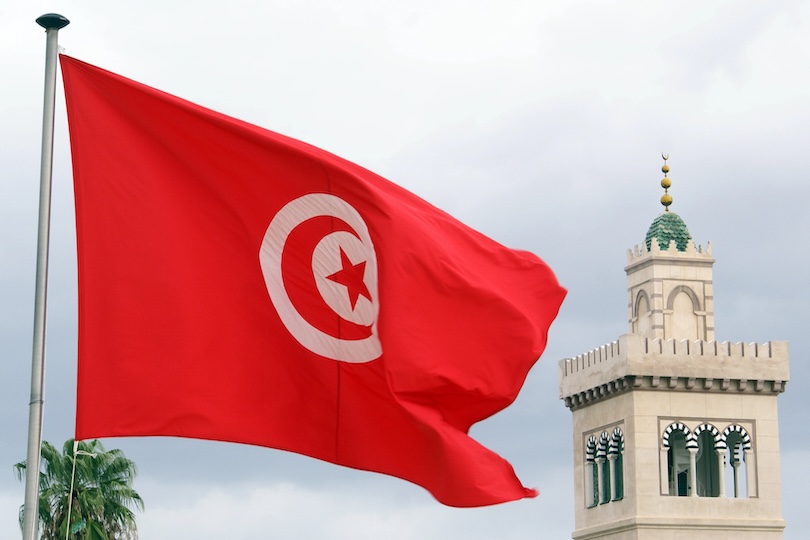
## Tunisia‘s Precarious Present: A Democracy at the Crossroads
Tunisia,once heralded as the beacon of the Arab Spring,finds itself in a precarious state,teetering between the promise of its 2011 revolution and a slide back towards authoritarianism. While the outward appearance of democratic processes - elections, a constitution - remains, a deeper examination reveals a nation grappling with economic hardship, shrinking civic space, and a growing sense of disillusionment. The international community, notably Europe and the United States, faces critical choices that will determine not only Tunisia’s fate but also the future of democratic aspirations across the Arab world.
The initial optimism surrounding Tunisia’s 2014 constitution, lauded globally, proved insufficient to address the fundamental needs of its citizens. The revolution’s core demand – *karama*, or dignity – quickly evolved beyond political freedoms to encompass economic security, access to essential services, and genuine possibility. When the political transition failed to deliver tangible improvements in daily life, frustration mounted, creating fertile ground for disillusionment and a willingness to accept strongman rule.
This discontent has been met with a concerning crackdown on dissent. Recent arrests of unionists, lawyers, and journalists, coupled with increasingly restrictive media regulations,signal a intentional effort to stifle opposition and consolidate power. While these tactics may offer a temporary illusion of stability, they fundamentally erode the trust – the vrey foundation upon which Tunisia’s fragile democratic experiment was built. A genuine path forward requires a commitment to narrowing vaguely defined speech provisions, bolstering the independence of the judiciary, and reinstating meaningful parliamentary oversight. These aren’t merely abstract ideals; they are essential mechanisms for absorbing future shocks and ensuring the resilience of the system.
However, internal reforms alone are insufficient. External actors, particularly the European Union and international financial institutions like the IMF, must reassess their approach to engagement with Tunisia. The EU-Tunisia migration compact,while possibly reducing irregular departures in the short term,risks normalizing practices that undermine human rights and reinforce authoritarian tendencies. Similarly, financial assistance cannot be solely predicated on fiscal metrics. It must be explicitly linked to demonstrable progress in expanding civic space, strengthening social safety nets, and upholding the rule of law. Without these safeguards, aid risks becoming a prop for a regime actively dismantling democratic institutions.
The lessons from Tunisia are stark. Democracy is not simply a matter of adopting a constitution; it requires sustained economic progress, social justice, and a vibrant civil society. Moreover,prioritizing short-term stability over the dignity of citizens is a self-defeating strategy. The EU’s migration deal, while addressing European concerns, may inadvertently entrench authoritarianism and fuel resentment. The IMF’s conditionality, while economically rational on paper, can be perceived as external interference, bolstering narratives of compromised sovereignty and eroding public trust. For Tunisians,dignity means access to basic necessities,freedom from desperation that drives migration,and the ability to express their views without fear of reprisal. For external partners, it must mean supporting both economic reforms *and* civic freedoms, refusing to trade one for the other.
Tunisia, despite its relatively small population of 12 million, holds significant symbolic weight. For Europe, it represents a crucial buffer state in the Mediterranean, a key partner in managing migration flows. For Washington, it remains a vital test case for the Arab Spring, a barometer of weather democratic transitions in the region are still viable. And for the broader Arab world, Tunisia demonstrates that revolutions don’t necessarily devolve into immediate dictatorship or war; they can evolve, stumble, and persist in a state of uneasy equilibrium. Allowing Tunisia to succumb to full authoritarianism would send a devastating message across the region, suggesting that even the most promising democratic experiments are ultimately doomed to fail.Conversely, a triumphant navigation towards incremental progress – through modest economic improvements, a resilient civil society, and external support that respects dignity – could offer a glimmer of hope and demonstrate that the seeds of the Arab Spring are still capable of bearing fruit.
As of 2025, Tunisia exists in a state of suspended animation. Elections continue, but with dwindling enthusiasm. Civic space persists, but under constant pressure.protests erupt, but their impact is limited.The spirit of 2011 remains, but its flame is flickering. The faded murals of Mohamed Bouazizi on Avenue Habib Bourguiba serve as a poignant reminder of the revolution’s origins