
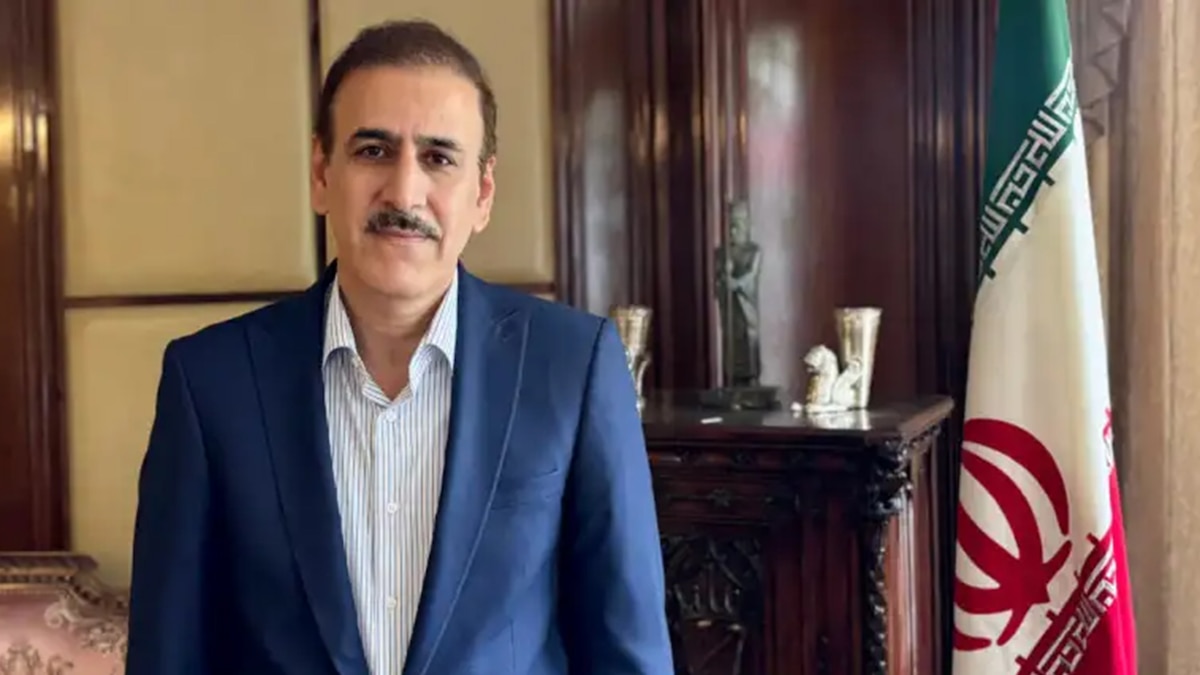
Buenos Aires, Argentina – In a dramatic escalation of geopolitical tensions, the Argentine government has expelled the highest-ranking Iranian diplomat stationed in the country, citing national security concerns and a recent designation of Iran’s Islamic Revolutionary Guard Corps (IRGC) as a terrorist organization. The move, announced on Tuesday, April 1, 2026, comes amidst heightened regional instability and follows years of accusations linking Iran to terrorist attacks on Argentine soil. This decision marks a significant shift in Argentina’s foreign policy and signals a closer alignment with the United States and Israel in countering perceived Iranian aggression.
The expulsion order was delivered to the chargé d’affaires of the Iranian embassy in Buenos Aires, instructing him to leave the country within 48 hours. Argentina’s Foreign Ministry stated the action was a direct response to the government’s decision to formally list the IRGC as a terrorist entity, a move that has drawn strong condemnation from Tehran. The Argentine government maintains that the IRGC has been directly involved in planning and executing terrorist attacks within Argentina’s borders, specifically referencing the 1992 bombing of the Israeli embassy in Buenos Aires, which killed 29 people, and the 1994 bombing of the Argentine Israelite Mutual Association (AMIA) Jewish community center, resulting in 85 fatalities. These attacks remain deeply sensitive issues in Argentina, and the pursuit of justice for the victims has been a long and arduous process.
Argentina Designates IRGC as Terrorist Organization
On Tuesday, President Javier Milei’s administration officially declared the IRGC a terrorist organization, citing official reports that substantiate the group’s illicit transnational activities, including acts of terrorism on Argentine soil. The decision, according to a statement released by the President’s office, is rooted in investigations that have established the IRGC’s direct participation in the planning, financing, and execution of both the Israeli embassy and AMIA bombings. The Argentine government’s move aligns with similar designations by the United States and other countries, reflecting a growing international consensus regarding the IRGC’s destabilizing role in the Middle East, and beyond. The designation triggers a series of measures, including the freezing of assets and a prohibition on financial transactions involving the IRGC within Argentina.
The timing of the announcement is particularly noteworthy, coinciding with escalating tensions between Iran and Israel, and the broader conflict in the Middle East. Argentina’s decision was made in coordination with the President’s office, the Foreign Ministry, the Ministry of Security, the Ministry of Justice, and the State Intelligence Secretariat, demonstrating a unified front within the Argentine government. This coordinated approach underscores the seriousness with which Argentina views the threat posed by the IRGC and its alleged ties to terrorist activities.
Iran Condemns Argentina’s Decision
Iran has vehemently condemned Argentina’s decision to designate the IRGC as a terrorist organization and expel its diplomat. Through its embassy in Uruguay, the Iranian government issued a statement calling the move “illegal and unfounded,” warning that it establishes a “dangerous precedent” in international relations and carries international responsibility for the Argentine government. La Nación reports that the Iranian embassy in Uruguay characterized the decision as detrimental to bilateral relations between Argentina and Iran.
The Iranian statement further accused Argentina of aligning itself with what it termed a “Zionist regime,” a common rhetorical device used by Iranian officials to criticize Israel. This condemnation reflects the deep-seated animosity between Iran and Israel, and the broader geopolitical rivalry that plays out across the Middle East. The expulsion of the Iranian diplomat is likely to further strain relations between the two countries, potentially hindering any future diplomatic efforts to address regional conflicts.
Impact on Argentina-Iran Relations and Regional Dynamics
The expulsion of the Iranian diplomat and the designation of the IRGC as a terrorist organization represent a significant rupture in Argentina-Iran relations. Historically, relations between the two countries have been complex, marked by periods of cooperation and tension. The unresolved investigations into the 1992 and 1994 bombings have been a major source of friction, with Argentina repeatedly seeking Iranian cooperation in bringing those responsible to justice. CNN Español reports that the decision was influenced by pressure from former U.S. President Donald Trump.
The move is also likely to have broader implications for regional dynamics. By aligning itself more closely with the United States and Israel, Argentina is signaling its commitment to countering Iranian influence in Latin America. This stance could potentially embolden other countries in the region to capture similar measures, further isolating Iran and limiting its ability to project power in the Western Hemisphere. Yet, it could also provoke retaliatory actions from Iran, potentially leading to increased instability in the region. The Argentine government has not yet publicly addressed the possibility of such retaliation, but security officials are reportedly monitoring the situation closely.
The AMIA and Israeli Embassy Bombings: A History of Unresolved Justice
The 1992 bombing of the Israeli embassy in Buenos Aires and the 1994 AMIA bombing remain open wounds in Argentine society. Investigations into both attacks have consistently pointed to the involvement of Iranian officials and Hezbollah operatives. However, despite numerous indictments and international arrest warrants, no one has been successfully prosecuted for these crimes. The Argentine government’s decision to designate the IRGC as a terrorist organization is seen by many as a renewed commitment to seeking justice for the victims of these attacks and holding those responsible accountable. The designation also aims to prevent future terrorist acts on Argentine soil by disrupting the IRGC’s ability to operate within the country.
The pursuit of justice in these cases has been hampered by political obstacles, bureaucratic delays, and alleged interference from Iranian agents. However, the current Argentine government, under President Milei, appears determined to overcome these challenges and finally bring closure to these long-standing investigations. The designation of the IRGC is a key step in this effort, and the expulsion of the Iranian diplomat sends a clear message that Argentina will not tolerate terrorism or impunity.
Key Takeaways:
- Argentina has expelled the highest-ranking Iranian diplomat in the country.
- The move follows Argentina’s designation of the IRGC as a terrorist organization.
- Iran has condemned the decision as “illegal and unfounded.”
- The expulsion is likely to further strain relations between Argentina and Iran.
- The decision reflects Argentina’s closer alignment with the United States and Israel.
The Argentine government is expected to continue to pursue justice for the victims of the 1992 and 1994 terrorist attacks, and to work with international partners to counter Iranian influence in the region. The next step in this process will be to implement the measures associated with the IRGC’s terrorist designation, including the freezing of assets and the disruption of financial networks. The situation remains fluid, and further developments are expected in the coming days and weeks. We encourage readers to share their thoughts and perspectives on this critical issue in the comments section below.