
NASA has released the first Artemis II Earth photos, capturing the home planet from a perspective few humans have ever experienced. These stunning images, transmitted from the Orion capsule, serve as a poignant reminder of Earth’s fragility and beauty as the crew pushes deeper into space on their journey toward the moon.
The release of these images marks a significant emotional and technical milestone for the mission. As the crew distances themselves from Earth, the photographs—accompanied by the sentiment, “You Appear Beautiful”—highlight the profound psychological impact of the “overview effect” experienced by astronauts seeing the planet as a single, borderless entity from the void of deep space.
This mission represents a critical step in NASA’s broader Artemis program, moving beyond uncrewed tests to place humans back in the vicinity of the moon. The current phase of the flight involves a complex series of maneuvers designed to ensure the crew’s safety and the spacecraft’s precision as it navigates the vast distance between Earth and its lunar neighbor.
A New Perspective from the Orion Capsule
The images captured by the Artemis II crew provide a rare glimpse of Earth from the Orion capsule, the state-of-the-art command module designed for deep space exploration. These photographs are not merely aesthetic achievements but are part of the crew’s ongoing engagement with the mission’s objectives, documenting the journey in real-time for a global audience.
The sentiment shared alongside the photos, “You Look Beautiful,” reflects the enduring awe that space exploration evokes. By sharing these visuals, NASA continues a tradition of using space photography to foster a global sense of stewardship and connection to the planet via NASA’s Artemis II updates.
Mission Progress: From TLI to Correction Burns
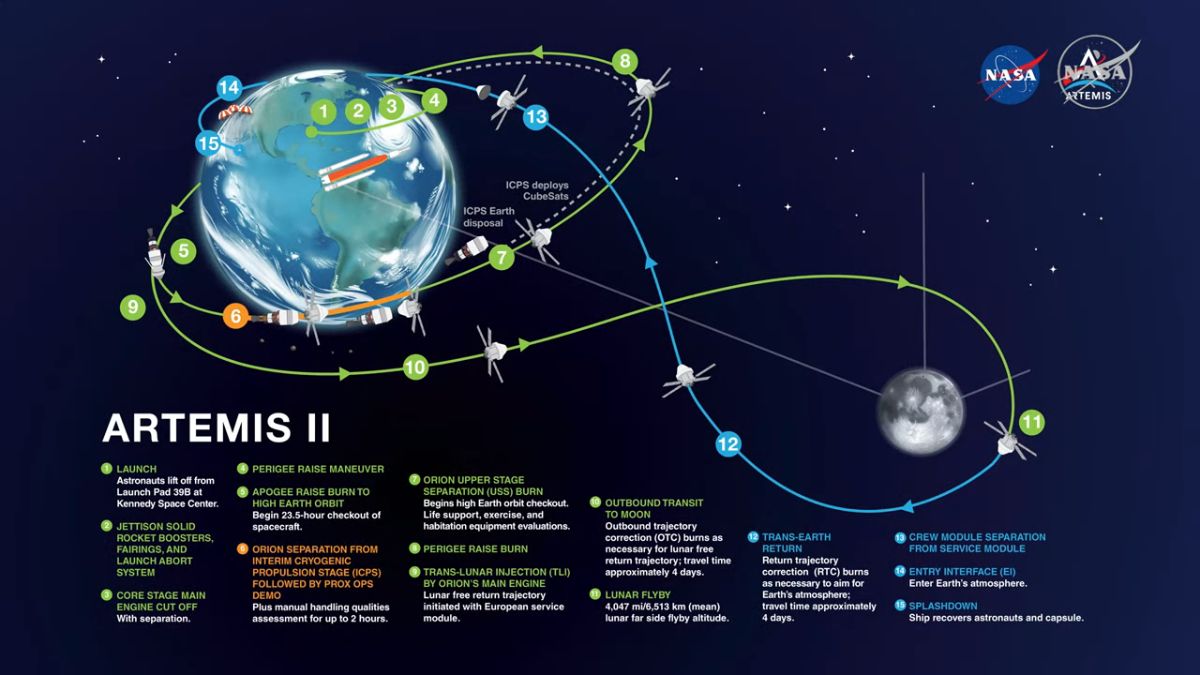
The journey to the moon is a meticulously timed sequence of events. On Flight Day 2, the Orion capsule successfully completed the Trans-Lunar Injection (TLI) burn, the critical engine firing that propelled the crew out of Earth’s orbit and set them on a direct trajectory toward the moon .
By Flight Day 3, the crew’s focus shifted toward maintaining their course. According to official mission reports, the crew began preparing for their first correction burn, a necessary maneuver to fine-tune the spacecraft’s trajectory and ensure a precise lunar arrival .
In addition to navigation, the crew is preparing to receive their lunar observation assignments. These assignments will dictate the specific scientific observations and data collection the astronauts will perform as they approach and orbit the moon, maximizing the scientific yield of the mission.
Overcoming Technical Hurdles in Deep Space
Despite the success of the primary flight maneuvers, the mission has not been without its technical challenges. NASA recently addressed a software issue involving an “Outlook glitch” that affected the crew’s systems. Even as seemingly minor compared to the complexities of lunar navigation, maintaining seamless communication and software stability is paramount for crew operations in deep space.
NASA engineers were eventually able to solve the glitch, ensuring that the crew’s digital tools remain operational for the remainder of the journey . This resolution underscores the continuous collaboration between the astronauts in the Orion capsule and the ground control teams on Earth.
Key Mission Milestones
| Flight Phase | Key Event | Objective |
|---|---|---|
| Flight Day 2 | TLI Burn | Depart Earth orbit for lunar trajectory |
| Flight Day 3 | Correction Burn Prep | Fine-tune trajectory for lunar arrival |
| Flight Day 3 | Observation Prep | Prepare for lunar scientific assignments |
As the Artemis II mission continues, the world awaits further updates and images from the crew. The next confirmed checkpoints for the mission include the execution of the first correction burn and the commencement of the crew’s lunar observation tasks.
We invite you to share your thoughts on these breathtaking images in the comments below and share this story with fellow space enthusiasts.