
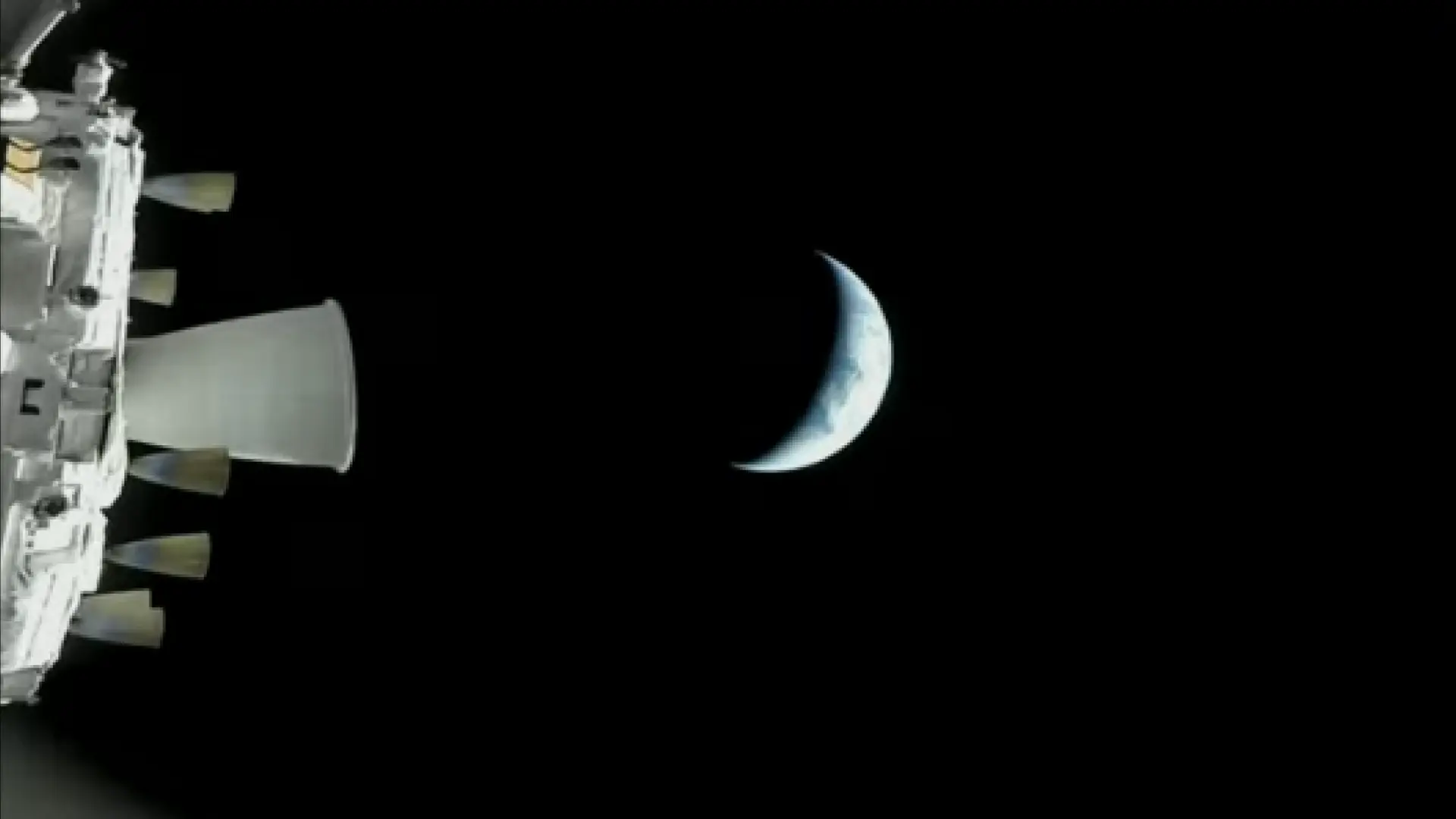
The Artemis II mission is underway, marking a pivotal moment in space exploration as NASA sends astronauts on a lunar flyby for the first time in over half a century. Launched on April 1, 2026, from Kennedy Space Center in Florida, the ten-day mission is carrying Commander Reid Wiseman, pilot Victor Glover, mission specialist Christina Koch, and Canadian Space Agency astronaut Jeremy Hansen on a journey to orbit the Moon and return to Earth. While the initial launch was successful, the crew has encountered some early challenges, including issues with communication, the spacecraft’s waste management system, and now, unexpectedly cold temperatures within the Orion capsule.
The ambitious Artemis II mission represents a crucial step in NASA’s broader Artemis program, which aims to establish a sustained human presence on the Moon and eventually pave the way for crewed missions to Mars. This flyby is designed to test critical systems with a human crew, verifying the capabilities of the Space Launch System (SLS) rocket and the Orion spacecraft in the harsh environment of deep space. The mission’s success is vital for building confidence in the technology and procedures needed for future lunar surface missions and long-term space exploration. The crew’s experiences and data collected during this flight will be invaluable in refining the systems and protocols for the Artemis III mission, which is slated to land astronauts on the Moon’s south pole.
Following a successful launch, the Orion spacecraft deployed its solar panels as planned and entered Earth orbit for initial systems checks. The crew then began the process of settling into life aboard the capsule, a process that hasn’t been without its hitches. Initial reports indicated a temporary loss of communication and a malfunction in the spacecraft’s toilet system, both of which were reportedly resolved by mission control. However, a new issue has emerged: a problem with the capsule’s temperature regulation. Astronauts have requested access to their personal storage to retrieve warmer clothing, with Christina Koch specifically requesting adjustments to increase the cabin temperature, stating, “It’s really cold.”
Early Mission Challenges and Crew Adjustments
The initial hours of the mission were focused on essential systems checks and crew acclimatization. The astronauts reviewed life support systems, including water, air purification, and waste management, and were able to remove their launch and entry suits. They also conducted a navigational exercise, practicing maneuvers to approach and dock with other objects in space – a crucial skill for future missions involving rendezvous and docking procedures. After approximately eight and a half hours in space, the crew enjoyed their first period of rest.

The crew awoke around 13:00 GMT on April 2, 2026, to the sound of “Sleepyhead” by Young & Sick, a song selected by the mission control team on Earth. Following their wake-up, the astronauts executed a critical maneuver known as the perigee raise. This involved firing the main engine of Orion’s European Service Module (ESM) for 43 seconds, adjusting the spacecraft’s orbit and aligning it with the trajectory towards the Moon. The ESM-2, built by Airbus, provides propulsion, power, thermal control, and life support for the Orion capsule. Artemis II is a complex undertaking, and these initial adjustments are vital for ensuring a precise and efficient journey.
During communications with mission control, the astronauts shared their awe-inspiring views of Earth from space. They described seeing the illuminated South Pole and the distinct line separating day and night, noting a subtle pink hue along the terminator. These observations highlight the unique perspective offered by space travel and the profound impact it can have on those who experience it. The crew’s descriptions provide a powerful reminder of the beauty and fragility of our planet.
Maintaining Physical Condition in Microgravity
Prior to the perigee raise, astronauts Reid Wiseman and Victor Glover installed and tested the Advanced Resistive Exercise Device (ARED), a crucial piece of equipment designed to combat the effects of microgravity on the human body. Prolonged exposure to weightlessness can lead to muscle atrophy and bone density loss, making regular exercise essential for maintaining astronaut health during long-duration spaceflights. The ARED, which functions similarly to a resistance-training machine using a flywheel system, allows astronauts to perform exercises like rowing, squats, and deadlifts with a resistance of up to 181 kilograms. NASA emphasizes the importance of physical fitness for the Artemis II crew, requiring them to dedicate at least 30 minutes each day to exercise.
Christina Koch, meanwhile, focused on preparations for the Trans Lunar Injection (TLI) burn, a critical maneuver that will propel Orion out of Earth orbit and onto a trajectory towards the Moon. Jeremy Hansen was also scheduled to participate in exercise later in the day. The crew’s dedication to maintaining their physical condition underscores the challenges of long-duration spaceflight and the importance of proactive measures to mitigate the physiological effects of weightlessness. The ARED is a key component of NASA’s strategy for ensuring astronaut health and performance throughout the Artemis program.
Next Steps: Trans Lunar Injection and Ongoing Monitoring
Over the coming hours, the Artemis II crew will continue to monitor spacecraft systems and acclimate to the space environment. They are also scheduled to participate in their first video conference with Earth, providing an opportunity for the public to connect with the astronauts and learn about their experiences firsthand. The mission management team will convene to assess the spacecraft’s status and determine whether to proceed with the TLI burn. This critical decision will determine whether Orion continues on its path to the Moon or returns to Earth.
The TLI burn is a complex and precisely timed maneuver that requires careful coordination between the crew and mission control. If approved, the burn will ignite Orion’s engine, increasing its velocity and propelling it towards the Moon. The success of the TLI burn is essential for achieving the mission’s primary objective: a lunar flyby. The crew will continue to monitor systems and conduct experiments throughout the journey, gathering valuable data that will inform future missions. The data collected will be crucial for refining the design and operation of spacecraft and life support systems, as well as for understanding the effects of deep space travel on the human body.
The Artemis II mission represents a significant leap forward in human space exploration. While the crew has encountered some initial challenges, their dedication and the expertise of the mission control team are ensuring that the mission remains on track. The successful completion of this mission will pave the way for a sustained human presence on the Moon and for crewed missions to Mars. The journey is not without its risks, but the potential rewards – scientific discovery, technological innovation, and the expansion of human knowledge – are immeasurable.
The next major milestone for the Artemis II mission is the planned Trans Lunar Injection burn, currently scheduled for April 5, 2026. NASA will provide updates on the mission’s progress and the status of the TLI burn through its website and social media channels. Stay tuned for further developments as the Artemis II crew continues their historic journey around the Moon. We encourage you to share your thoughts and questions about the mission in the comments below.