
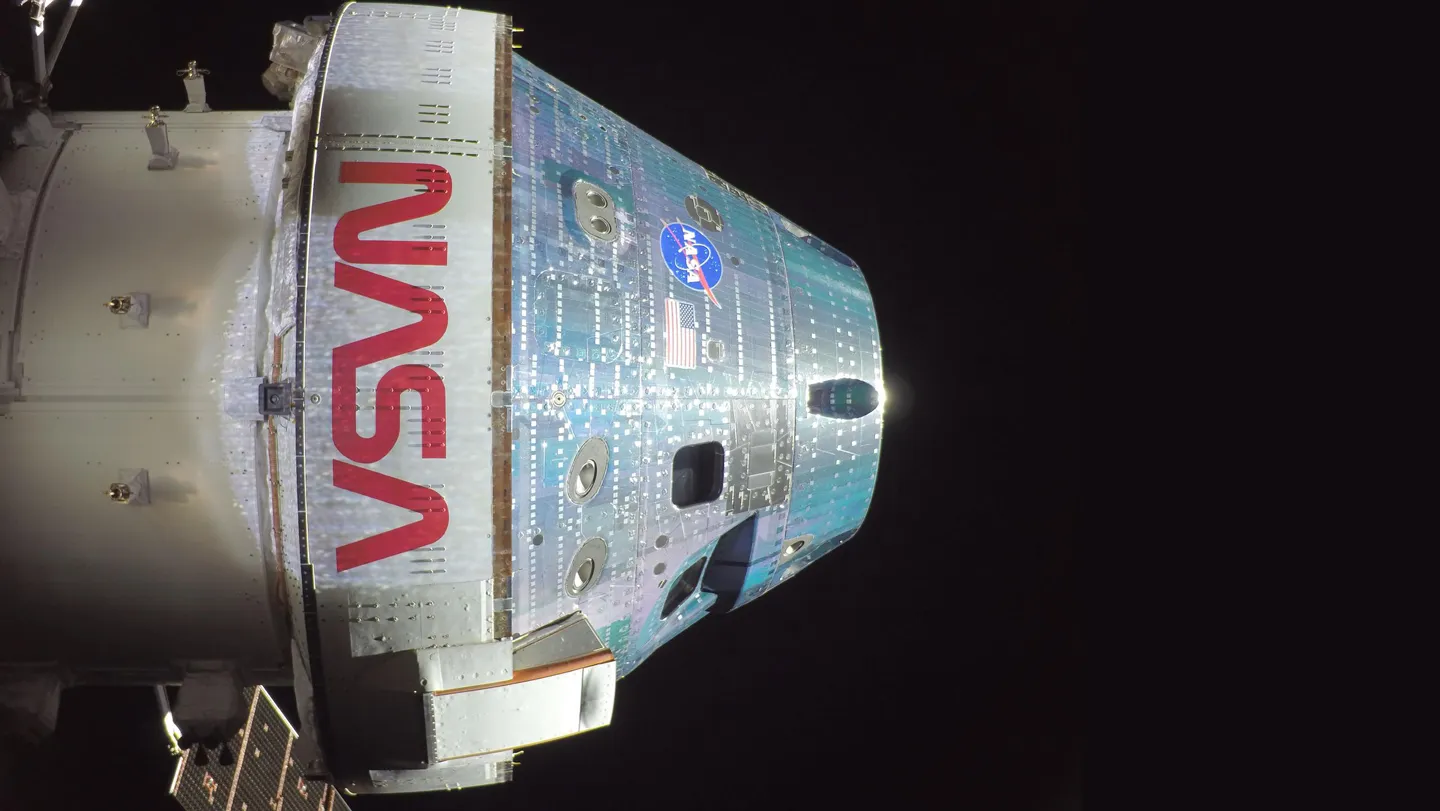
NASA’s Orion spacecraft has achieved a historic milestone, completing a loop around the moon as part of the Artemis II mission. This journey represents a significant leap in human space exploration, pushing the boundaries of how far humans have traveled from Earth.
The mission’s trajectory provided the crew with an extraordinary vantage point, offering a front-row view of the lunar farside. During this passage, the astronauts observed sunlit features of the moon’s hidden face, witnessed a lunar eclipse, and experienced a re-creation of the iconic “Earthrise” phenomenon.
This achievement is more than a visual spectacle; it is a technical triumph. The Artemis II crew has officially set a new record for the farthest human travel in history, according to reports from MSN.
Defining Moments of the Lunar Flyby
The trajectory of the Orion spacecraft was designed to maximize the scientific and observational opportunities of the mission. One of the most significant aspects of the flight was the opportunity to view the farside of the moon, a region that remains invisible from Earth. The crew was able to observe sunlit features of this remote terrain, providing a rare human perspective on the lunar surface.

Beyond the surface observations, the mission captured a sequence of celestial events. The crew witnessed a lunar eclipse and the “Earthrise,” where the Earth appears to rise over the lunar horizon. These moments are described as defining elements of the Artemis II experience, as detailed by Mashable.
Breaking Records in Deep Space Travel
The Artemis II mission serves as a critical stepping stone for NASA’s goal of returning humans to the lunar surface. By successfully navigating a loop around the moon, the crew has expanded the reach of human presence in the solar system. The record for the farthest human travel is a testament to the capabilities of the Orion spacecraft and the precision of the mission’s orbital mechanics.
Understanding the dynamics of a Moon flyby is essential for future missions that intend to land astronauts on the surface. The data gathered during this loop provides vital information on spacecraft performance and crew endurance in deep space, as noted in coverage by the Floyd County Times.
Key Mission Highlights
- Lunar Farside Observation: Astronauts viewed sunlit features of the moon’s far side.
- Celestial Events: The crew witnessed a lunar eclipse and a re-creation of the Earthrise.
- Distance Record: The crew established a new record for the farthest distance humans have traveled from Earth.
- Spacecraft Performance: The Orion spacecraft successfully completed a historic loop around the moon.
As NASA continues its Artemis program, the success of these flybys ensures that the systems required for lunar descent and ascent are thoroughly tested. The ability to maintain communication and life support although orbiting the moon is a prerequisite for the upcoming crewed landings.
We invite our readers to share their thoughts on this historic achievement in the comments below. How do you feel about humanity’s return to deep space?