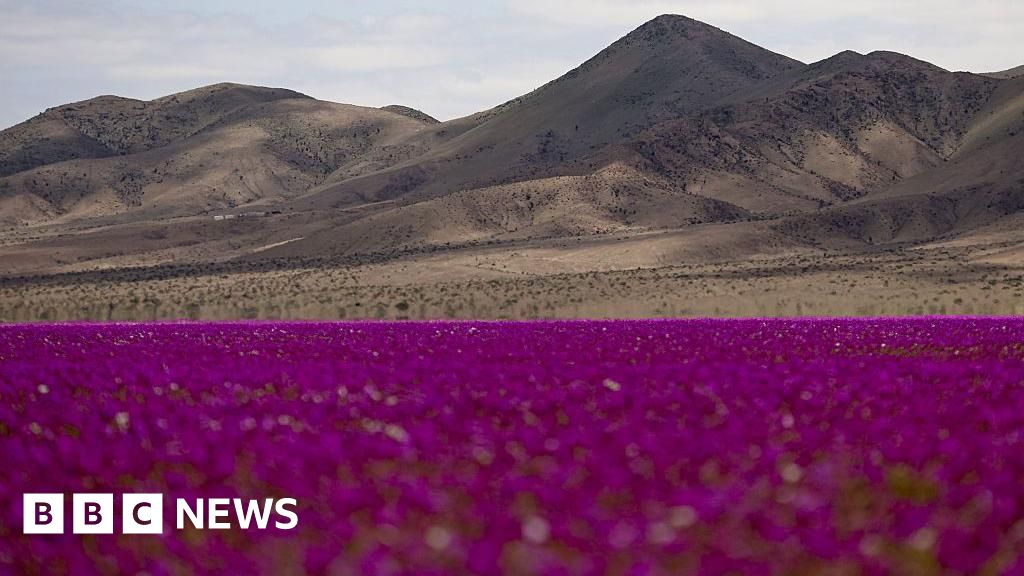
The Atacama Desert in bloom: A Rare Spectacle of Wildflowers
The Atacama Desert, a name synonymous with aridity and otherworldly landscapes, is currently experiencing a breathtaking transformation. Nestled between the towering Andes Mountains and the vast Pacific Ocean in Chile,this normally barren expanse has erupted in a vibrant carpet of wildflowers. This remarkable event,a phenomenon known as a desierto florido (flowering desert),is captivating scientists and nature enthusiasts alike. But what causes this incredible bloom, and how ofen does it occur? LetS delve into the secrets of this extraordinary natural wonder.
The Atacama Desert is renowned as the driest non-polar desert on Earth. Its extreme conditions make it a prime location for astronomical observation,housing the world’s largest radio telescope,ALMA (Atacama Large Millimeter/submillimeter Array). https://www.alma.cl/ However, it’s this very aridity that makes the flowering desert so special. The desert typically receives less than 15mm of rainfall annually, but recent unusual weather patterns have dramatically altered the landscape.
Did You Know? The Atacama Desert is often used by NASA to test instruments destined for Mars, due to its similar soil composition and extreme dryness.
The Science Behind the Bloom
The desierto florido isn’t a spontaneous event; it’s the result of a precise sequence of climatic conditions.Dormant seeds, lying patiently beneath the desert surface for years – sometimes decades – require a specific amount of rainfall to trigger germination. In August 2024 and again in 2025, the Atacama received significantly above-average rainfall, exceeding 12mm in a single month, with a significant portion falling in a single, impactful downpour.Adding to the unusual conditions,a rare snowfall blanketed parts of the desert in June 2025. This combination of moisture, coupled with favorable temperatures, created the perfect environment for a spectacular bloom.
| Characteristic | Atacama desert (Typical) | atacama Desert (Blooming) |
|---|---|---|
| Annual Rainfall | < 15mm | > 20mm (during bloom years) |
| Vegetation Cover | Sparse, xerophytic plants | Dense carpet of wildflowers |
| Bloom Frequency | Every 5-10 years (variable) | Occurred in 2024 & 2025 consecutively |
| Species Diversity | Limited | Over 200 species |
pro Tip: If you plan to visit the Atacama during bloom season, book accommodations and tours well in advance. The influx of tourists can make it tough to find availability.
A Biodiversity Hotspot Revealed
This isn’t just a pretty picture; it’s a testament to the resilience of life and the hidden biodiversity of the Atacama. The bloom showcases over 200 different species of wildflowers,many of which are endemic – meaning they are found nowhere else on Earth.These vibrant displays include Cistanthe longiscapa, Nolana atacamensis, and various species of Alstroemeria, creating a kaleidoscope of colors across the desert landscape. Recent research, published in the journal Ecological Monographs (November 2024), suggests that the Atacama’s unique microclimates contribute to this high level of endemism, allowing specialized plant species to thrive in isolation.
What impact does this bloom have on the desert ecosystem? Consider the pollinators – bees, flies, and even hummingbirds – that are drawn to the abundance of