Bangladesh Braces for Verdict in Sheikh Hasina Trial Amidst Rising Political Violence
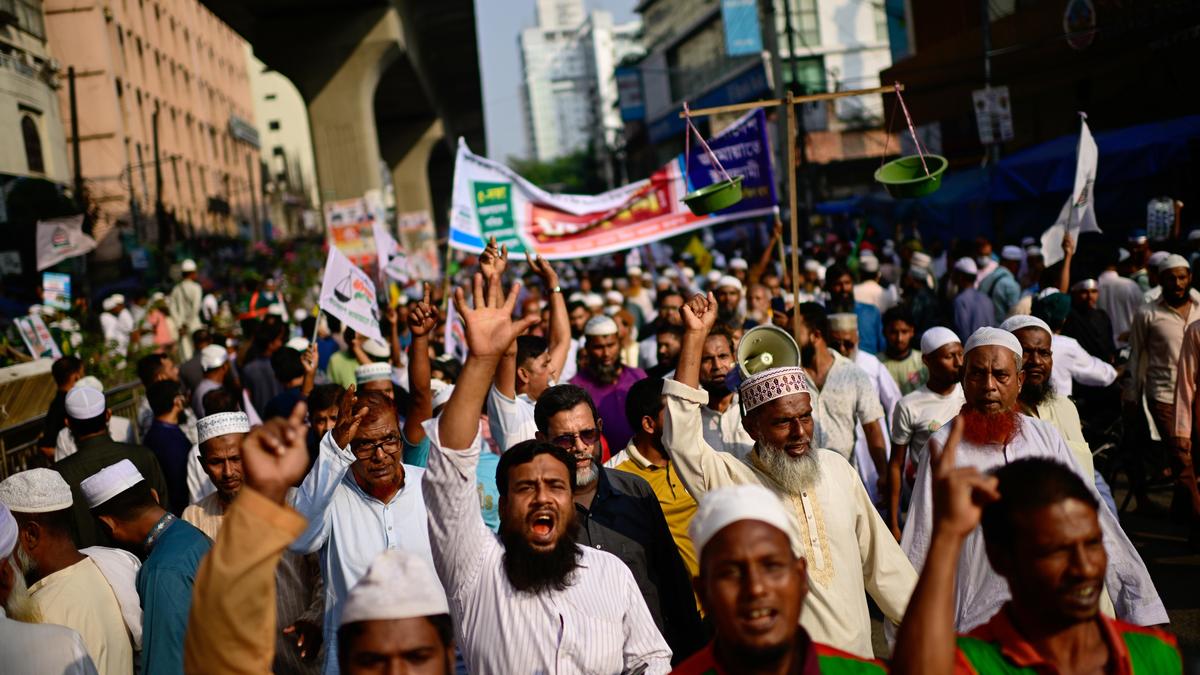
Dhaka, Bangladesh – November 13, 2025 – Bangladesh is on edge as it awaits the proclamation of a verdict date in the trial of former Prime Minister Sheikh Hasina, currently in exile in India. The escalating tension has manifested in a wave of coordinated attacks – including crude bomb explosions and arson – across Dhaka and other regions, raising concerns about potential widespread unrest. This situation unfolds against a backdrop of accusations of political repression leveled against the current interim government led by Nobel Laureate Muhammad Yunus.
The violence, which began intensifying earlier this week, saw a Grameen Bank branch in brahmanbaria targeted in a predawn arson attack, damaging property but leaving the vault secure. This follows a similar, albeit less damaging, attack on the bank’s Dhaka headquarters on Monday. A series of low-intensity blasts rattled the capital, and several buses where deliberately set ablaze, tragically resulting in the death of one driver.These incidents coincide with a planned “Dhaka Lockdown” called by Hasina’s now-disbanded Awami League, scheduled for Thursday, directly linked to the impending verdict announcement.
A Trial Marred by Controversy
Sheikh Hasina is being tried in absentia by the International Crimes Tribunal-Bangladesh (ICT-BD) on charges stemming from her alleged role in the violent suppression of the “July Uprising” of 2024 - protests that ultimately led to her government’s downfall on August 5th of the same year. Prosecutors are seeking the death penalty.
The trial has drawn meaningful international scrutiny. Concerns regarding due process and political motivations have been voiced by legal experts and human rights organizations. This week,the U.K.-based Doughty Street Chambers submitted an “urgent appeal” to the United Nations, alleging that Hasina’s trial is taking place “in an environment charged with political vengeance” under an interim government lacking a clear democratic mandate.
Escalating Accusations and International Appeals
The Awami League has launched a multi-pronged legal offensive, filing complaints with various international bodies. Last month, the party filed a case with the International Criminal Court (ICC) in the Hague, accusing the Yunus-led government of crimes against humanity, including allegations of extrajudicial killings and arbitrary arrests.
Further amplifying these concerns, former Foreign Minister and UN Permanent Representative A.K. Abdul Momen recently addressed the U.N. Human Rights Council, detailing alleged “political suppression, enforced disappearances, cases against military officers, impunity for criminals, and attacks on journalists” under the current management. These accusations paint a picture of a deeply fractured political landscape and a concerning erosion of civil liberties.
Government Response and Security Measures
The Home Ministry has responded to the escalating violence by placing law enforcement agencies on high alert, issuing orders for a “zero-tolerance” approach to unrest. Security drills have been conducted across Dhaka, with increased personnel deployed to key locations. Dhaka Metropolitan Police Commissioner Sheikh Mohammad Sajjat Ali attempted to reassure citizens, stating, “There is no cause for concern or fear. Dhaka city dwellers will stand against the Awami League’s subversive activities.”
however, the government’s actions have also been met with criticism.The Bangladesh Army recently withdrew half of its 60,000 personnel previously deployed for policing duties, citing “rest and training,” while simultaneously mobilizing additional Border Guard Bangladesh (BGB) units. This shift in deployment has raised questions about the government’s long-term security strategy.
Widespread Arrests and a Banned opposition
Authorities report arresting 552 Awami League activists in the past ten days, with another 44 detained on Wednesday alone. Officials estimate over 3,000 members of the “banned” party have been detained since last month, raising concerns about the suppression of political dissent.
Analysis: A Nation at a Crossroads
The current situation in Bangladesh represents a critical juncture. The trial of Sheikh Hasina, coupled with accusations of political repression and a crackdown on the opposition, has created a volatile environment. The attacks on Grameen Bank, an institution synonymous with microfinance and poverty alleviation founded by Muhammad Yunus, are particularly concerning, suggesting a purposeful attempt to destabilize the country and undermine its international reputation.
The international community is closely watching developments. The outcome of the trial, and the government’s response to the ongoing unrest, will have significant implications for Bangladesh’s future, its democratic institutions, and its standing on the global stage. The coming days are likely to be decisive, and a peaceful resolution will require a commitment to due process, respect for human rights, and a