
The Shocking Hunting strategy of Bird-Eating Bats: A Deep Dive
Have you ever imagined a bat taking down a bird? It sounds like something out of a fantastical creature feature, doesn’t it? For years, scientists knew that certain bats consumed birds – evidence found in thier guano revealed feathers and bone fragments. But how these relatively small mammals managed to capture prey so much larger, faster, and stronger than their typical insect diet remained a mystery. Now,groundbreaking research is finally shedding light on the brutal,yet incredibly efficient,hunting techniques of these avian predators.
Meet the Greater Noctule: Europe’s Largest Bat and a Bird Hunter
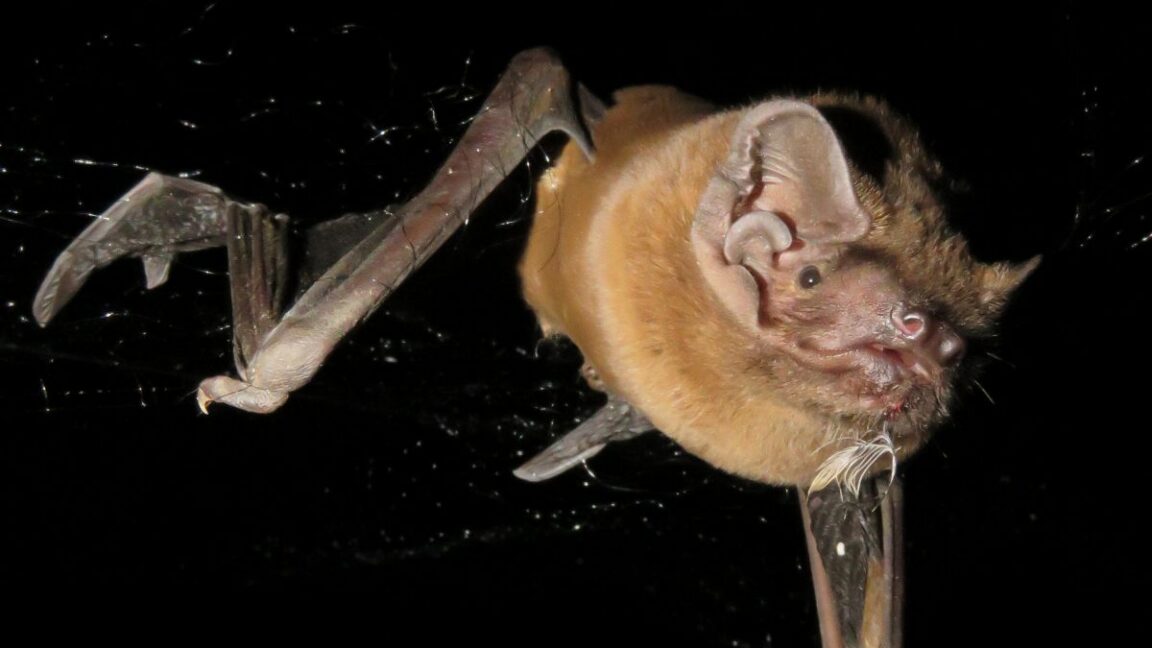
The primary focus of this engaging research centers around the Nyctalus lasiopterus, commonly known as the greater noctule bat. This species, the largest bat in Europe, boasts a wingspan reaching up to 45 centimeters. They typically weigh between 40 and 60 grams and sport reddish-brown or chestnut fur.
But don’t let their size fool you.These bats are apex predators in their own right, and understanding their hunting strategy required overcoming notable technological hurdles.
The Challenge: Tracking a High-Speed Predator
Traditional wildlife tracking methods simply wouldn’t work. Cameras, even with night vision, were too heavy for a bat to carry without impacting its flight. ”Bats hunt at night, so you’d need night vision cameras, which together with batteries are too heavy for a bat to carry.Our sensors had to weigh below 10 percent of the weight of the bat-four to six grams,” explains Elena Tena, a biologist at Doñana biological Station in Seville, Spain, and lead researcher on the project.
For a decade, Tena and her team explored alternatives – ground observation and even military-grade radar – but consistently hit roadblocks. Capturing the actual hunt in action proved unfeasible.
Breakthrough Technology Reveals a Brutal Tactic
Recent advancements in sensor technology finally provided the solution. Tena’s team developed and deployed ultra-light sensors weighing around four grams. These tags, attached to 14 greater noctule bats over two years, recorded crucial data:
* Sound: Capturing both ambient noise and the bats’ echolocation calls.
* Altitude: Tracking vertical movement.
* Acceleration: Mapping the bats’ rapid maneuvers.
This combination allowed researchers to reconstruct the bats’ flight paths and behaviors with unprecedented detail. The results? Surprisingly direct and aggressive.
How Do They Do It? Interception and Direct Assault
The data revealed that greater noctule bats don’t rely on complex aerial maneuvers or prolonged chases. Instead, they employ a strategy of direct interception. they identify birds – often flying at similar altitudes – and than execute a high-speed, straight-line attack.
Here’s a breakdown of the typical hunting sequence:
- Detection: The bat uses echolocation to locate a flying bird.
- Interception Course: It calculates an intercept course, aiming directly for the bird’s flight path.
- High-Speed Impact: The bat accelerates and collides with the bird mid-air.
- Immediate Consumption: The bat typically consumes the bird while still in flight, or shortly after landing.
This isn’t a graceful pursuit; it’s a forceful, almost shocking, collision. the bats appear to rely on the impact itself to stun or incapacitate their prey.
Why This Matters: Understanding Ecosystem Dynamics
This research isn’t just about uncovering a fascinating hunting strategy. It has broader implications for understanding ecosystem dynamics. Bird-eating bats represent a previously underestimated predatory pressure on bird populations.
* Predator-Prey Relationships: This discovery refines our understanding of the complex relationships within nocturnal ecosystems.
* Conservation Implications: Knowing which bird species are most vulnerable to bat predation can inform conservation efforts.
* Bat Ecology: It provides valuable insights into the energy requirements and foraging behavior of these often-misunderstood creatures.
You can learn more about bat conservation efforts and research at organizations like Bat conservation International (https://www.batcon.org/). For further details on the research itself, explore publications from Doñana Biological Station (https://www.ebd.csic.es/).
Evergreen Insights: The Future of Bio-Logging
The success of this study





![Wearable Tech & Frailty: Early Detection for Seniors | [Year]](https://i0.wp.com/www.futurity.org/wp/wp-content/uploads/2025/12/frailty-wearable-tech-elderly-care-1600.jpg?resize=150%2C100&ssl=1 "Wearable Tech & Frailty: Early Detection for Seniors | [Year]")


