The Tiny Brain, Vast Intelligence: How Bee Vision is Rewriting Our Understanding of AI
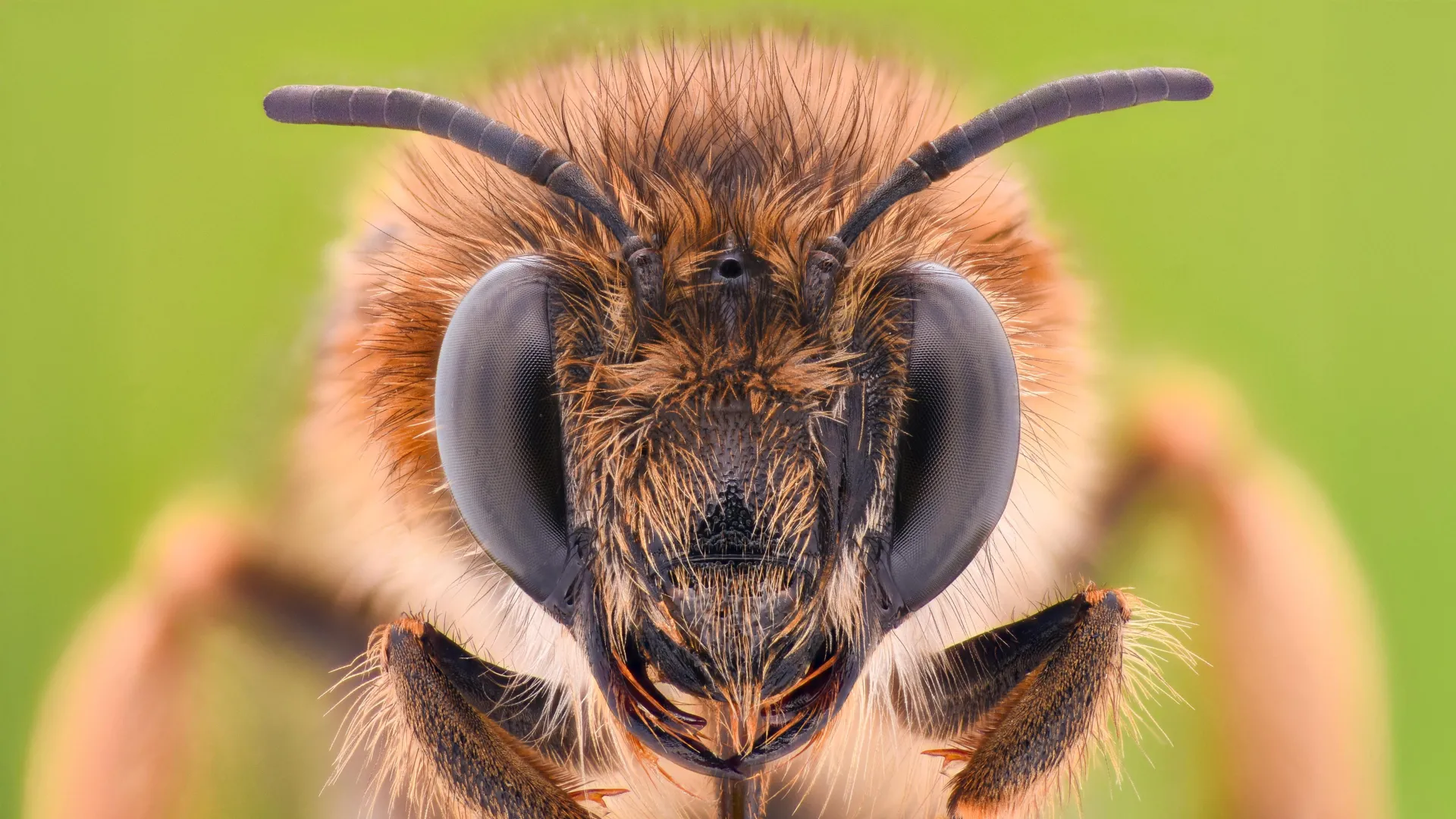
For decades, the pursuit of Artificial Intelligence has ofen focused on replicating the sheer scale of the human brain – building ever-larger neural networks and demanding ever-increasing computational power.However, groundbreaking research from the University of Sheffield and Queen Mary University of London is challenging this paradigm, revealing that remarkable intelligence can emerge from surprisingly small and efficient biological systems. A new study, published in eLife, demonstrates how bees, despite possessing brains no larger than a sesame seed, achieve complex visual pattern learning – even recognizing human faces – through a unique interplay of movement, perception, and neural adaptation. This isn’t just a fascinating insight into insect cognition; its a potential blueprint for a new generation of AI.
Beyond Passive Observation: The Power of Active Vision
The long-held understanding of bee visual capabilities – their ability to differentiate complex patterns – has been augmented by a deeper understanding of how they achieve this. This research builds upon previous work demonstrating “active vision” in bees, where their flight movements aren’t simply a means of locomotion, but an integral part of their visual processing. Instead of passively receiving visual information, bees actively scan their surroundings, strategically gathering data that optimizes recognition.
“We were fascinated to discover that bees employ a clever scanning shortcut to solve visual puzzles,” explains Dr. HaDi MaBouDi, lead author and researcher at the University of Sheffield.”But that just told us what they do; for this study, we wanted to understand how.”
The answer, it turns out, lies in the remarkable efficiency of their neural circuitry. The team developed a computational model of a bee’s brain,revealing that its neurons aren’t pre-programmed wiht associations or reliant on immediate rewards. Instead, they adapt through repeated exposure to stimuli, becoming finely tuned to specific directions and movements. This process refines their responses, allowing the bee to learn simply by observing while flying – a remarkably energy-efficient approach.
A Minimalist Approach to Complex Computation
The implications of this finding are profound. The model demonstrates that bees don’t require vast neural networks to perform complex tasks. In fact, the research suggests that a surprisingly small number of active neurons are sufficient for recognizing objects, including human faces.This challenges the conventional wisdom that brain size directly correlates with intelligence.
“Scientists have been fascinated by the question of whether brain size predicts intelligence in animals,” notes Professor Lars Chittka of Queen Mary University of London. “But such speculations make no sense unless one knows the neural computations that underpin a given task. Here we determine the minimum number of neurons required for tough visual discrimination tasks and find that the numbers are staggeringly small, even for complex tasks such as human face recognition. Thus insect microbrains are capable of advanced computations.”
To validate their model, researchers tasked it with a classic visual discrimination challenge: differentiating between a ‘plus’ sign and a ‘multiplication’ sign. Crucially, the model’s performance significantly improved when it mimicked the bees’ observed scanning strategy – focusing on only the lower half of the patterns. This confirmed that the model accurately captured the underlying neural mechanisms driving bee vision.
Implications for the Future of AI
This research isn’t simply an academic exercise in insect neurobiology. It offers a compelling alternative pathway for AI advancement. By understanding how bees achieve complex tasks with minimal resources, we can begin to design AI systems that are more efficient, adaptable, and robust.
“This work strengthens a growing body of evidence that animals don’t passively receive information – they actively shape it,” emphasizes Professor Mikko Juusola of the University of Sheffield. “Our new model extends this principle to higher-order visual processing in bees, revealing how behaviorally driven scanning creates compressed, learnable neural codes.”
The principles uncovered in this study – the integration of perception and action, the efficiency of adaptive neural networks, and the power of active exploration – have the potential to revolutionize fields like robotics, self-driving vehicles, and real-world learning. Harnessing nature’s elegant designs for intelligence could unlock a new era of AI, one that prioritizes efficiency and adaptability over sheer computational power.This research serves as a powerful reminder that the key to unlocking true intelligence may not lie in replicating the complexity of the human brain, but in understanding and emulating the ingenious solutions already present in the natural world.