
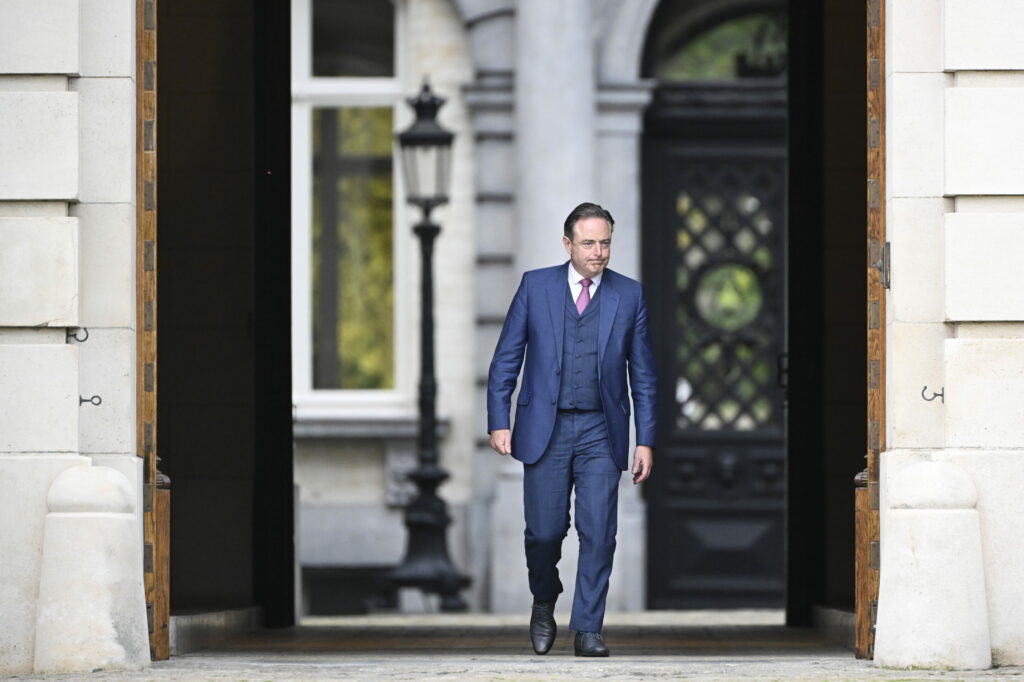
Belgium is grappling with a fiscal crossroads that has left its leadership admitting a stark reality: there are no straightforward ways out of the country’s deepening financial turmoil. Premier Bart De Wever, leading a federal government tasked with stabilizing a volatile economy, has signaled that the initial efforts to curb spending were insufficient, leaving the nation to face a modern wave of structural cuts to avoid economic collapse.
The Belgian federal budget crisis has evolved into a high-stakes balancing act between meeting strict European Union spending norms and managing domestic political instability. While the government previously reached an agreement to secure billions in savings, the Premier recently disclosed that the “holes” in the budget remain too deep, requiring further aggressive sanation to keep the state solvent.
For a global audience, the Belgian situation serves as a case study in the difficulties of reforming a complex federal state. With a high debt-to-GDP ratio and a tradition of social protections, the current administration is finding that the “Belgian fort”—a metaphor for the country’s rigid institutional structures—is often more resistant to reform than to external economic pressure.
The Gap in the Ledger: 9.2 Billion is Not Enough
In November 2025, the federal government under Premier De Wever reached a hard-fought budget agreement that “found” 9.2 billion euros through a combination of new taxes and social adjustments. This package was designed to put the “derailed” public finances back on track, though it notably failed to achieve a full budget balance, even looking toward 2029.
Despite this significant sum, the fiscal relief was temporary. In February 2026, Premier De Wever admitted in an interview that the government must structurally cut an additional 3 to 4 billion euros per year. The Premier was blunt about the necessity of these measures, stating that anyone claiming there are “painless ways” to rescue the country is lying, as taxes are already high and investments remain low.
The 2025 agreement relied heavily on increasing the burden on consumers and businesses. Key measures included:
- VAT Increases: Rates were raised to 12 percent for hotel stays, camping, recreation, and takeaway meals .
- Agricultural Taxes: VAT on pesticides was significantly increased, jumping from 12 percent to 21 percent .
- Hospitality Sector: To simplify the system, drinks in the hospitality industry (horeca) are now taxed at the same 12 percent rate as food .
- The ‘Centenindex’: A partial index jump was implemented under the name “centenindex” to limit automatic wage increases .
The ‘Sinking Titanic’ and European Pressure
The urgency of these cuts is driven by the necessitate to comply with European spending norms. The ultimate goal is to reduce the budget deficit to 3 percent of the gross domestic product (GDP). However, De Wever has acknowledged that this target is likely unrealistic for the current term, suggesting it may only be achievable during the next legislature.
The Premier has used stark imagery to describe the state of the national treasury, comparing the budget to a “sinking Titanic.” He argues that Belgium is carrying a legacy of poor management, rising interest rates, and a “crushing” national debt. In his view, this makes any calls for “large gifts” or expanded social spending unrealistic, as the interest payments on the debt act as a “millstone” around the neck of national prosperity.
This narrative of “cycling steeply uphill” and “tightening the belt” has become the hallmark of De Wever’s first year as Premier. He maintains that the country must endure a period of austerity—a “desert” of sorts—before it can reach a “green valley” of financial stability.
Political Friction and the Monitoring Committee
While the government presents these cuts as a courageous necessity, critics argue that the current administration is failing to deliver on its promises of efficiency. Some political opponents, particularly from the Vlaams Belang party, have characterized the budget agreement as a collection of new burdens that primarily penalize ordinary citizens while failing to cut costs associated with asylum reception or benefits for foreigners .
More damaging to the government’s narrative are reports from the Monitoring Committee. Recent figures from the committee suggest that the De Wever government may actually leave the budget in a worse state than they found it . This contradicts the Premier’s image as a “courageous guide” cleaning up the fiscal messes left by previous left-leaning administrations.
This discrepancy highlights the central tension of the Belgian federal budget crisis: the struggle to implement structural reforms in a system where political compromise often outweighs fiscal discipline. The Premier’s own admission that federal Belgium is “unworkable” suggests that the problem may be as much institutional as it is financial.
Summary of Fiscal Targets and Shortfalls
| Measure/Target | Amount/Value | Status/Outcome |
|---|---|---|
| 2025 Budget Agreement | 9.2 billion euros | Implemented via taxes/VAT |
| Additional Structural Needs | 3 to 4 billion euros/year | Required; amount to be finalized late 2026 |
| EU Deficit Norm | 3% of GDP | Targeted for next legislature |
| Pesticide VAT Increase | 12% to 21% | Implemented |
What Happens Next
The Belgian government is now entering a critical phase of fiscal planning. While the general need for 3 to 4 billion euros in additional cuts has been established, the exact measures and the final amount will be determined by the government by the end of 2026 .
Whether Premier De Wever can secure these cuts without triggering widespread social unrest or a government collapse remains to be seen. The coming months will reveal if the administration can move beyond tax increases toward the deeper structural reforms required to satisfy both the European Union and the Belgian electorate.
We invite our readers to share their perspectives on the balance between austerity and social stability in the comments below.