
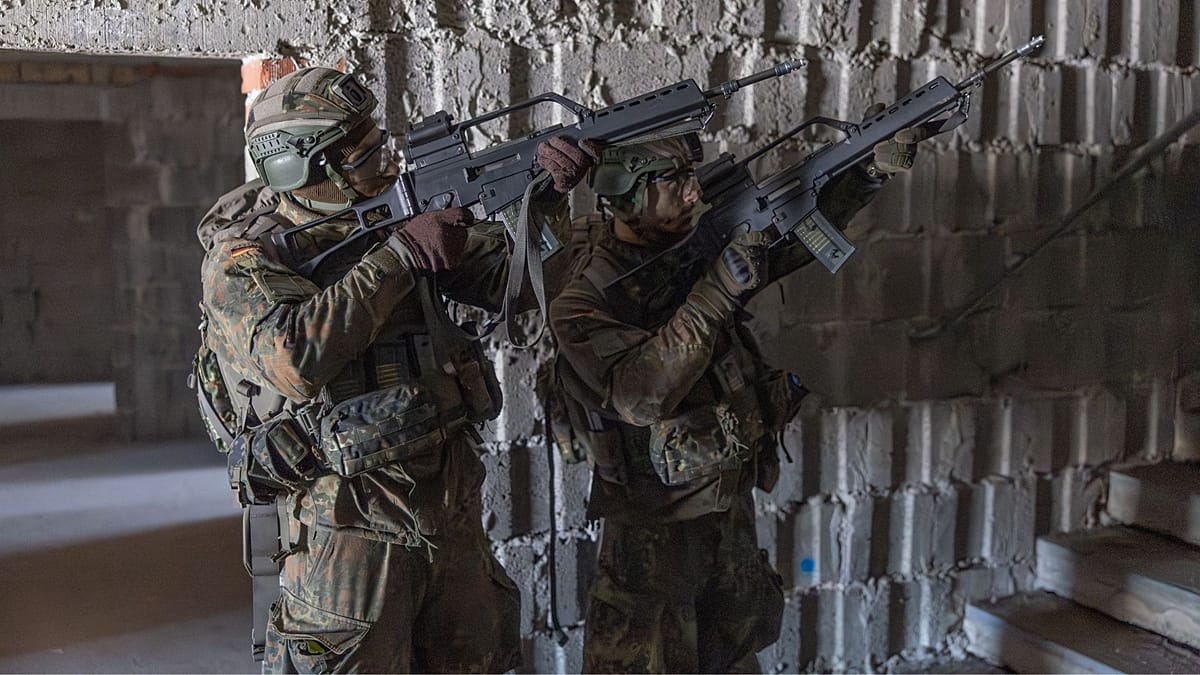
Berlin fortified: Inside Germany’s Intensified Urban Warfare Training Amidst European Security Concerns
The streets of Berlin are echoing with a new kind of activity. Not the usual bustle of city life, but the focused movements of German soldiers engaged in “bollwerk Bärlin III,” a five-day urban warfare exercise. This isn’t a drill from a bygone era; it’s a direct response to the dramatically altered security landscape in Europe, triggered by Russia’s ongoing invasion of Ukraine. But what does this intensified training signify, and what challenges are Germany’s armed forces preparing for?
The exercise, launched on November 17th, 2025, isn’t confined to military bases. The Bundeswehr‘s guard battalion is strategically deploying across the capital, utilizing locations like Jungfernheide underground station, the Ruhleben police training ground, and a former chemical plant in Rüdersdorf. This deliberate choice of locations underscores the core purpose of the training: preparing for rapid deployment and effective operation within a complex urban environment.
Why Berlin? The Unique Challenges of City Warfare
Berlin presents a unique set of challenges for military operations. Unlike open battlefields, the city’s dense network of narrow streets, towering buildings, and intricate underground infrastructure – particularly its extensive metro tunnels – demand specialized skills and tactics. Securing critical infrastructure, countering potential sabotage, and effectively evacuating casualties in such a confined space require a level of preparedness that conventional training simply can’t provide.
“The guard battalion fulfils its core mission in Berlin in the event of defense,” a Bundeswehr spokesperson stated. This isn’t about projecting aggression; it’s about bolstering germany’s defensive capabilities in a world where the threat of conflict feels increasingly tangible.
What’s Happening on the Ground?
The “Bollwerk Bärlin III” exercise simulates a wide range of scenarios. Soldiers are practicing urban combat techniques, honing their skills in securing vital infrastructure, and developing strategies to neutralize potential threats.A particularly noteworthy aspect of the training involves tunnel combat drills conducted in the pre-dawn hours at Jungfernheide station.
Security teams, including snipers, are taking up positions throughout the exercise areas. Though, to ensure public safety, all operations are being conducted using blank ammunition. While the exercise may cause minor traffic disruptions and potential delays on public transport – as noted by Berlin’s transport operator, BVG – authorities are working to minimize inconvenience to residents.
A Stark Reminder: The Bavaria Incident
The intensification of military training hasn’t been without incident. During the separate “Marshal Power 2025” exercise in Bavaria, a soldier was regrettably shot in the face after a miscommunication led to police mistakenly opening fire with live ammunition.
According to bavaria’s Interior Minister Joachim Herrmann, officers responded to an emergency call and initially fired warning shots, prompting a return of blank fire from the soldiers.The subsequent use of live ammunition by police is currently under investigation by prosecutors and state criminal police. The incident highlights the critical importance of clear communication and coordination during joint exercises, and serves as a sobering reminder of the inherent risks involved in military training.
“Marshal Power 2025” itself is described by the Bundeswehr as one of its most complex domestic exercises, specifically designed to simulate a full-scale national defence scenario. This underscores the seriousness with which germany is approaching the evolving security situation.
What Does This Mean for Europe?
Germany’s increased focus on urban warfare training isn’t an isolated event. It’s part of a broader trend across europe, as nations reassess their defence strategies considering the conflict in ukraine. The war has exposed vulnerabilities and prompted a renewed emphasis on preparedness, particularly in the realm of rapid response and urban defence.
The “Bollwerk Bärlin III” exercise, and others like it, demonstrate a commitment to strengthening national security and deterring potential aggression. It’s a clear signal that Germany is taking proactive steps to protect its citizens and contribute to the collective security of Europe.
Evergreen Insights: The Evolution of Urban Warfare
Urban warfare has always presented unique challenges for military forces. Historically, fighting in cities has resulted in higher casualty rates and prolonged conflicts.The rise of asymmetric warfare, where non-state actors utilize urban environments for cover and concealment, has further complicated matters. Modern urban warfare demands not only advanced weaponry and tactics but also a deep understanding of the social, political, and infrastructural complexities of the city itself. Technological advancements, such as drones, AI-powered surveillance systems, and advanced communication networks, are playing an increasingly significant role in


![ISIS Activity Today: Current Hotspots & Threats [2024]](https://i0.wp.com/media.npr.org/include/images/facebook-default-wide-s1400-c100.jpg?resize=330%2C220&ssl=1 "ISIS Activity Today: Current Hotspots & Threats [2024]")


