

Timing is Key: Maximizing Vitamin Absorption for Optimal Health
As spring approaches, many individuals turn to multivitamin supplements to combat fatigue and address potential nutritional deficiencies. However, simply swallowing a pill isn’t enough to reap the full benefits. Emerging research suggests that when you take your vitamins can significantly impact their effectiveness. Our bodies process nutrients differently throughout the day, and understanding these rhythms is crucial for maximizing absorption and overall health. The optimal timing for multivitamin intake, according to nutrition experts, is during breakfast – a strategy that aligns with the body’s natural metabolic processes and enhances nutrient assimilation.
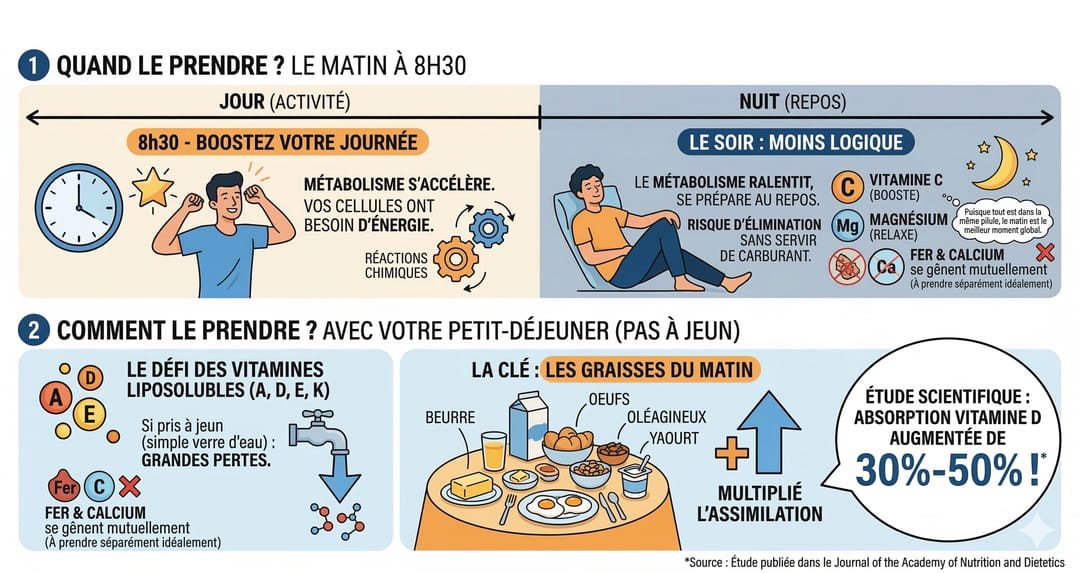
Multivitamins, often described as “all-in-one” nutritional powerhouses, present a unique challenge due to their complex composition. Different vitamins and minerals interact with each other in various ways; some, like iron and calcium, can even hinder each other’s absorption. Conversely, vitamin C can enhance the uptake of certain nutrients, while magnesium promotes relaxation. Given this intricate interplay, researchers and nutritionists have identified a strategic timing that maximizes the overall efficacy of a multivitamin formula. This timing centers around aligning vitamin intake with the body’s natural rhythms and digestive processes.
The consensus among experts is that taking a multivitamin mid-morning, alongside breakfast, is the most effective approach. Dr. Jeffrey Blumberg, a professor of nutrition at Tufts University, explains, “We have circadian rhythms for all of our metabolism. Taking vitamins in the morning helps to deliver these micronutrients at the time when your metabolism is speeding up and your cells need them most to produce energy.” As reported in The Boston Globe, vitamins act as “keys” that activate essential chemical reactions, fueling the body’s functions throughout the day. Taking them in the evening, when metabolism slows down, risks eliminating these valuable nutrients before they can be utilized.
The Science Behind Morning Vitamin Intake
This mid-morning timing addresses two key considerations. First, multivitamins often contain fat-soluble vitamins (A, D, E, and K). Consuming these vitamins on an empty stomach can significantly reduce their absorption. Pairing them with the fats present in breakfast – whether from butter, eggs, nuts, or yogurt – dramatically increases their bioavailability. A study published in the Journal of the Academy of Nutrition and Dietetics demonstrated that the absorption of certain nutrients, including vitamin D, can increase by 30% to 50% when consumed with a meal containing fats, compared to taking them on an empty stomach.
Second, taking vitamins with a meal minimizes the risk of gastrointestinal discomfort. Multivitamins are dense and can cause nausea or acid reflux if taken on an empty stomach. Mixing them with food slows down absorption and protects the stomach lining. Beyond energy production, this morning timing also supports better sleep. Taking B vitamins (particularly B12) late in the day can overstimulate the nervous system and disrupt melatonin production, the hormone that regulates sleep, potentially hindering restorative rest.
Beyond Timing: Optimizing Multivitamin Effectiveness
While timing is crucial, it’s not the only factor influencing multivitamin absorption. The form of the vitamin also plays a significant role. For example, methylcobalamin is a more readily absorbed form of vitamin B12 compared to cyanocobalamin. Similarly, folate in its methylated form (5-MTHF) is more bioavailable than folic acid, particularly for individuals with certain genetic variations.
individual nutritional needs vary based on age, sex, health status, and lifestyle. A comprehensive approach to supplementation involves considering these factors and potentially tailoring vitamin intake accordingly. Consulting with a healthcare professional or registered dietitian can assist determine the most appropriate multivitamin formulation and dosage for your specific needs. The recent COSMOS study, published in Nature Medicine on March 13, 2026, provides further insight into the potential benefits of long-term multivitamin use. This large-scale trial involving over 21,000 adults suggests that daily multivitamin and multimineral supplementation may slow down biological aging, as measured by epigenetic clocks.
The COSMOS Study: A New Perspective on Aging
The COSMOS trial, a randomized, placebo-controlled study, tracked participants for two years. Researchers observed a modest but statistically significant decrease in the progression of two key epigenetic clocks – PCGrimAge and PCPhenoAge – in the group taking multivitamins and minerals. These clocks are biomarkers that measure cellular age beyond chronological age. While the study did not find improvements in overall mortality or incidence of major cardiovascular events, the findings suggest a potential role for multivitamins in promoting healthier aging.
It’s important to note that the study’s findings are preliminary and require further investigation. However, they add to a growing body of evidence suggesting that targeted nutritional interventions may influence the aging process. The researchers emphasize that this study “opens the way to learning new, accessible, and safe interventions that contribute to healthier and better-quality aging,” according to Howard Sesso, an epidemiologist at Mass General Brigham and the study’s senior author.
Key Takeaways
- Timing Matters: Take your multivitamin with breakfast to maximize absorption and energy production.
- Fat-Soluble Vitamins Need Fat: Consume multivitamins with foods containing healthy fats to enhance the absorption of vitamins A, D, E, and K.
- Consider Vitamin Forms: Opt for more bioavailable forms of vitamins, such as methylcobalamin (B12) and 5-MTHF (folate).
- Personalize Your Approach: Consult with a healthcare professional to determine the best multivitamin formulation and dosage for your individual needs.
- Long-Term Benefits: Emerging research, like the COSMOS study, suggests that consistent multivitamin use may contribute to healthier aging.
The ongoing research into the benefits of multivitamin supplementation highlights the importance of a proactive approach to health and wellness. While not a magic bullet, strategically timed and personalized vitamin intake can play a valuable role in supporting overall health and potentially slowing down the aging process. Further research is expected to build upon the findings of the COSMOS trial, providing a more comprehensive understanding of the long-term effects of multivitamin supplementation. The next phase of the COSMOS study, scheduled for publication in early 2027, will focus on analyzing the impact of specific micronutrients on cognitive function and immune response.
What are your thoughts on the timing of vitamin intake? Share your experiences and questions in the comments below. And please, share this article with anyone who might benefit from this information.