
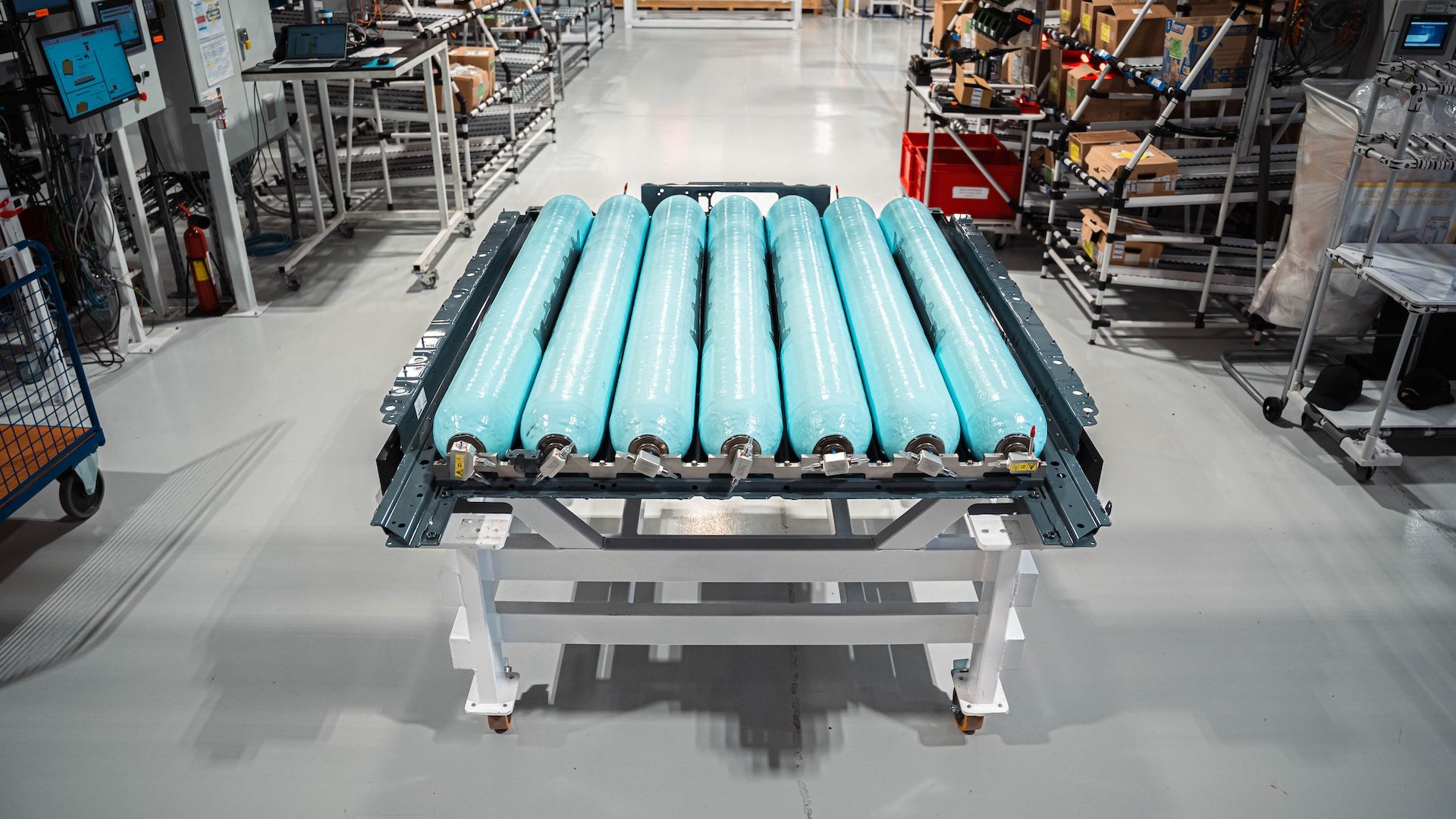
The debate over the future of zero-emission transport often pits battery electric vehicles (BEVs) against hydrogen fuel cell technology. While batteries currently dominate the consumer market, BMW is signaling that hydrogen remains a critical pillar of its long-term strategy. The automaker has recently shared new details regarding the BMW iX5 Hydrogen fuel cell system, revealing a sophisticated approach to fuel storage that aims to solve one of the biggest hurdles for hydrogen vehicles: the trade-off between range and interior space.
At the center of this development is the newly confirmed range of 385 miles between fill-ups. This figure is made possible by a significant engineering shift in how the vehicle stores its fuel, moving away from bulky, individual pressure vessels toward a more integrated, space-efficient architecture. By optimizing the footprint of the fuel system, BMW intends to offer a hydrogen-powered SUV that does not compromise the cabin experience or the utility expected of the X5 line.
This evolution in hydrogen-based mobility highlights a strategic move by BMW to maintain a flexible powertrain portfolio. By refining the packaging of the fuel cell system, the company is positioning the iX5 Hydrogen not as a niche experiment, but as a viable alternative for drivers who require the rapid refueling times of hydrogen without the range anxiety often associated with early fuel cell prototypes.
The BMW Hydrogen Flat Storage System: Engineering “Installation Tetris”
The primary innovation enabling the iX5 Hydrogen’s efficiency is the “BMW Hydrogen Flat Storage System.” Unlike traditional hydrogen vehicles that often rely on a few large, cylindrical tanks that eat into cargo or passenger space, this new system utilizes seven carbon-fibre reinforced composite high-pressure tanks. These tanks are connected in parallel and integrated into a sturdy metal frame, creating a cohesive, enclosed unit controlled by a central main valve.

According to Dr. Joachim Post, BMW’s development chief, the design process was akin to “installation Tetris,” where the goal was to fit the drive system into the vehicle in a way that ensures every customer receives a true BMW X5 experience with no compromises to the interior. This optimized storage concept is what allows the vehicle to achieve its confirmed range while preserving the cabin space that defines the SUV segment.
Beyond the interior benefits, the flat storage architecture has significant implications for manufacturing. BMW has indicated that the iX5 Hydrogen can be built on the same production line as its electric, hybrid, and combustion-engined variants. This integration reduces the need for dedicated, costly factories and allows the company to scale hydrogen production more fluidly based on market demand.
Performance Metrics and Range Capabilities
Performance remains a priority for the iX5 Hydrogen, ensuring that the shift to fuel cell power does not result in a sluggish driving experience. The concept vehicle delivers approximately 401 hp, allowing it to accelerate from 0 to 60 mph in under six seconds, with a maximum speed exceeding 112 mph via BMW USA.
When examining the range, there are varying figures depending on the testing cycle. While more recent confirmations point to 385 miles of range, earlier specifications based on the WLTP (Worldwide Harmonised Light Vehicles Test Procedure) suggested a range of up to 504 miles via BMW UK. This discrepancy is common in the industry as vehicles move from theoretical concept testing to real-world application and confirmed production specifications.
Efficiency is too a key metric for the iX5. Data from the UK market specifications indicates a consumption rate of 1.19 kg of hydrogen per 100 miles, supported by two hydrogen tanks with a total capacity of 6 kg via BMW UK. This balance of capacity and consumption is essential for making hydrogen a practical choice for long-distance motoring.
Comparison of iX5 Hydrogen Performance Specs
| Metric | Detail |
|---|---|
| Power Output | Approximately 401 hp |
| Acceleration (0-60 mph) | Under 6 seconds |
| Maximum Speed | Over 112 mph |
| Confirmed Range | 385 miles |
| Hydrogen Capacity | 6 kg (Total) |
Why Hydrogen Still Matters in an EV World
The continued investment in the iX5 Hydrogen raises the question of why hydrogen remains relevant in an era of rapidly improving battery technology. For many users, the primary appeal lies in the refueling experience. While a BEV may take 20 to 60 minutes to reach a significant charge even at prompt-chargers, hydrogen refueling happens in a matter of minutes, mirroring the experience of a traditional petrol or diesel station.
the “emissions-free motoring” offered by the fuel cell system is distinct. The only byproduct of the chemical reaction between hydrogen and oxygen in the fuel cell is pure water vapor. For heavy SUVs like the X5, hydrogen can offer a weight advantage over massive battery packs, which can significantly increase the curb weight of a vehicle and impact handling and tire wear.
By utilizing the BMW Hydrogen Flat Storage System, BMW is addressing the “packaging” problem that has historically plagued fuel cell vehicles. The ability to integrate these tanks into a metal frame without sacrificing the “true BMW X5” utility suggests that the company sees hydrogen not as a replacement for electricity, but as a complementary technology for specific use cases—particularly for those who prioritize long-range capability and rapid turnaround times.
As the global infrastructure for hydrogen refueling continues to evolve, the iX5 Hydrogen serves as a technical bridge, proving that the hardware can be integrated seamlessly into existing luxury vehicle platforms without compromising the user experience.
BMW continues to refine the iX5 Hydrogen as it moves toward broader availability. While a specific final release date for the production model has not been detailed in the latest technical updates, the focus remains on the integration of the storage system and the validation of real-world range. Future updates from BMW are expected to focus on the availability of refueling infrastructure and the final production specifications for various global markets.
Do you think hydrogen is the right path for luxury SUVs, or are batteries the only way forward? Share your thoughts in the comments below.