The Unexpected Psychology of Game Night: What Your Board Game Habits Reveal About You
do you find yourself meticulously planning your moves in Settlers of Catan? Perhaps you thrive on the deception of a good game of Werewolf? You’re not alone. And surprisingly, how you play might say more about who you are than you think. For years,the connection between personality and gaming has been a fascinating area of study,and the results are frequently enough counterintuitive.
This article dives deep into the psychology behind our gaming preferences, exploring what drives us to compete, cooperate, and occasionally, betray our friends around the game table. We’ll unpack the science, address common concerns, and ultimately, show you how your game night habits might actually be making you a better person.
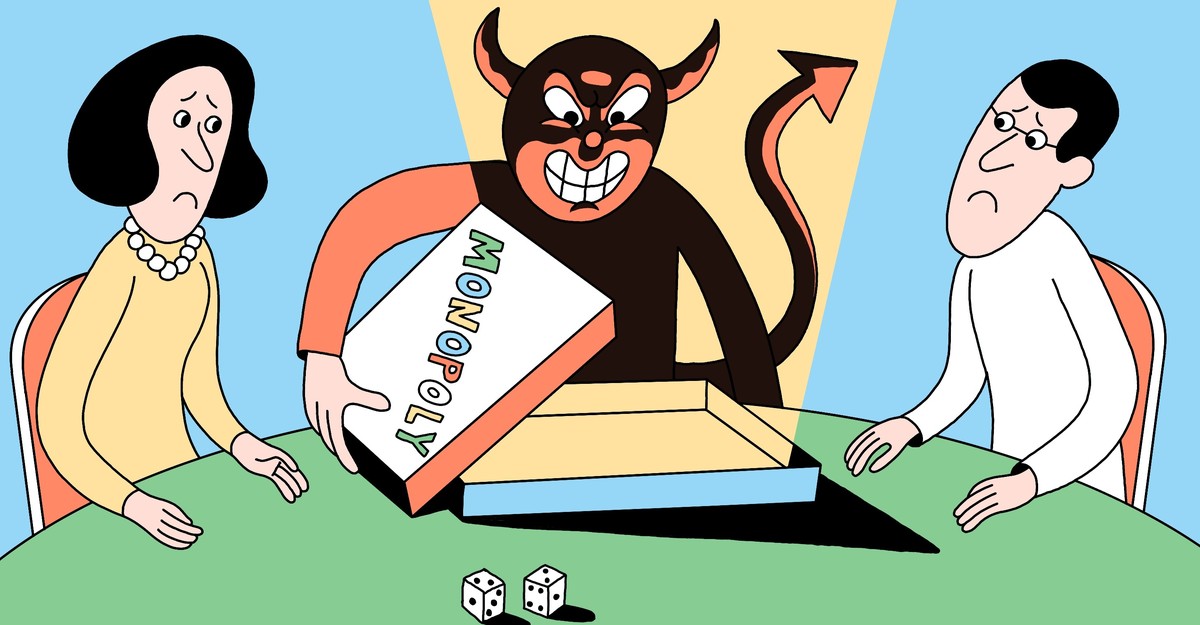
The Dark side of Play: Machiavellianism and Games
It’s natural to wonder if a competitive streak crosses a line. A study from the 1980s revealed a correlation between high Machiavellianism – a personality trait characterized by manipulation and ruthlessness – and success in bluffing games. This can feel unsettling. Does enjoying strategic deception mean you’re inherently…less scrupulous?
The answer, thankfully, is nuanced. Experts emphasize that drawing firm conclusions about personality based solely on gaming behavior is difficult. Games are diverse, appealing to a wide spectrum of personalities.
What Your Game Choices Really Say About You
Psychologist Rachel Kowert,who studies gaming extensively,offers a more encouraging perspective. She suggests that your gaming preferences often point to positive traits:
* Playfulness: You enjoy the inherent fun and lightheartedness of games.
* Competitiveness: You’re driven to achieve and excel.
* Strong Social Connections: You value spending quality time with friends.
Kowert’s observations align with research from Quantic Foundry, a market-research company specializing in gaming motivations. Their “Board Game Motivation” quiz (you can take it here: https://apps.quanticfoundry.com/surveys/start/tabletop/) can provide surprisingly accurate insights. Many players, like myself, score high on metrics like:
* Need to Win: A desire for achievement and success.
* Social Manipulation: Strategic thinking and influencing others.
* Social Fun: Enjoyment of the social interaction and camaraderie.
It’s perfectly normal to enjoy both competitive and cooperative games. A love for Telestrations (where laughter is the primary goal) doesn’t negate a competitive drive in games like 7 Wonders.And crucially, most of us can compartmentalize – leaving the intensity at the game table.
The Line Between Playful Deception and Real-Life Integrity
A valid concern is whether in-game behavior bleeds into real-life interactions.Could a penchant for backstabbing in Werewolf translate to untrustworthy behavior elsewhere?
The good news is that our brains are remarkably adept at distinguishing between fantasy and reality. Kowert points out,”We know what’s real and what’s not.” She readily admits to enthusiastically ”throwing her husband under the bus” in a game, but wouldn’t dream of doing so in real life.
However, it’s important to be mindful. Poor sportsmanship, bending the rules, or excessive deception can damage relationships. But generally, people recognize playful behavior for what it is.
Games as Social Laboratories: Building Essential Life Skills
Both gaming experts, Tilton and Kowert, agree on a central benefit of games: they are powerful tools for developing social skills.Tilton has even utilized Werewolf in educational settings to enhance small-group dialogue.
Here’s how games hone those skills:
- Reading People: You learn to interpret nonverbal cues and detect deception.
- Communication: You practice articulating your thoughts and persuading others.
- Negotiation: you develop the ability to compromise and find mutually beneficial solutions.
- Emotional Regulation: You learn to manage frustration and handle both victory and defeat gracefully.
Such as, a key Werewolf strategy – doubling down on a lie when challenged – is rarely advisable in everyday life. Yet, the practice of confidently defending your position, even under pressure, can translate to improved self-advocacy and persuasive communication skills.