Bob MacIntyre‘s Ryder Cup Secret: How Shinty Saved Europe’s Victory
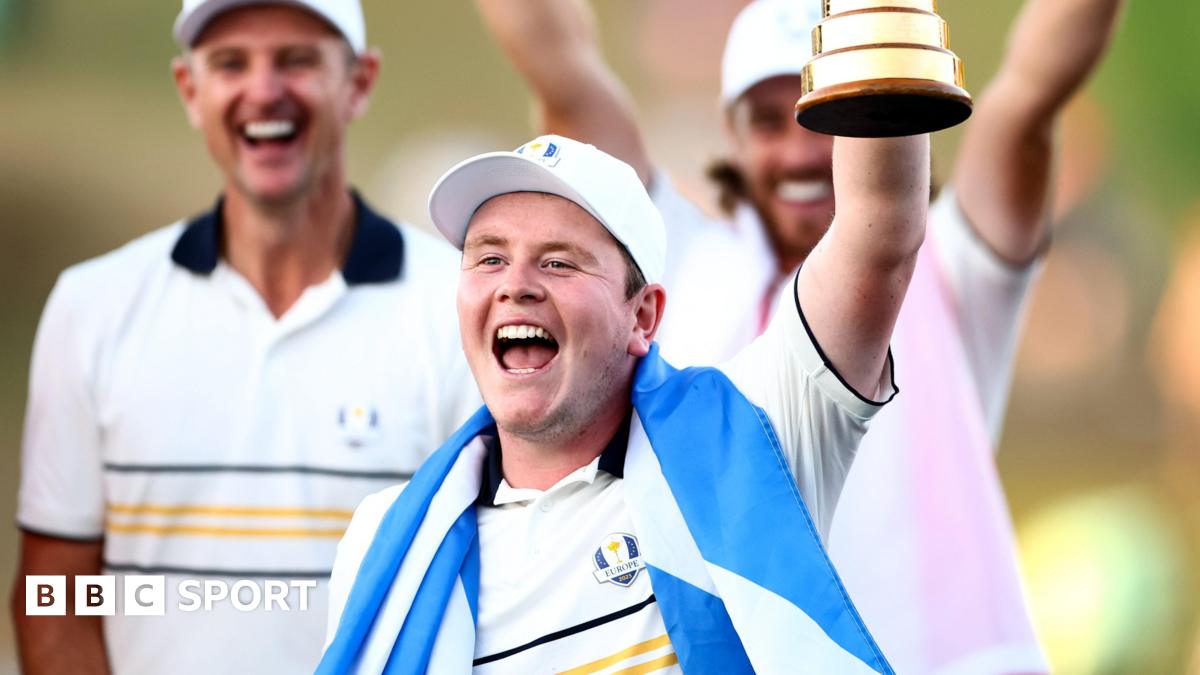
Bob MacIntyre recently revealed a surprising source of composure during the nail-biting final moments of the 2023 Ryder Cup: the fast-paced, physically demanding Scottish sport of shinty. The European golfer admitted to battling intense pressure as the competition hung in the balance, ultimately drawing on lessons learned from his youth to steady himself.
Initially, the Ryder Cup appeared to be firmly in Europe’s grasp. Though, a fierce American comeback on the final day dramatically tightened the contest. Ultimately, Tyrell Hatton secured the winning point for the European team, but not before MacIntyre faced a moment of profound pressure.
MacIntyre found himself as the last player on the course for Europe, with the possibility of the entire competition resting on his shoulders.he described the experience as isolating, noting the absence of vice-captains and the feeling of facing the American team with only his caddie for support.
“You feel as though it’s you and your caddie against America,” he explained. He initially anticipated a swift victory, but as the scoreboard shifted, the match became increasingly close.Red - representing American wins – began to appear more frequently, and the realization dawned that his match could determine the outcome.
The pressure peaked when he missed a crucial putt on the 15th hole. “I honestly thoght ‘I’m going to lose the Ryder Cup for us’,” MacIntyre confessed. This wasn’t a new feeling for him; he experienced the same anxiety during the previous Ryder cup in Rome after missing a putt on the 14th.
However, this time, MacIntyre had a mental strategy to combat the rising panic. He instinctively drew a parallel to his childhood game of shinty,a traditional Scottish team sport played with sticks and a ball.
Here’s how the principles of shinty helped him refocus:
* Resilience under pressure: Shinty demands quick thinking and unwavering determination, even when trailing late in the game.
* Refusal to surrender: Giving up isn’t an option when your team relies on you.
* Focus on the remaining time: even with limited time left, there’s always an chance to turn the tide.
“I just thought ‘what would I do in a game of shinty when they score a goal in the 80th minute to go 1-0 up?'” MacIntyre recalled. ”You can’t just put your head down and give up. You’ve still got 10 minutes to come back, same in football.”
This mindset shift allowed MacIntyre to regain his composure and contribute to Europe’s hard-fought victory. His story highlights the power of drawing on personal experiences and the unexpected ways in which seemingly unrelated skills can translate to success on the world’s biggest sporting stages. Ultimately, it’s a testament to the mental fortitude required to thrive under pressure and the enduring influence of one’s roots.