
Unlocking the Secrets of Bone Marrow: Groundbreaking Map Offers New Hope for Myeloma Treatment
For decades, the fight against multiple myeloma – a devastating and currently incurable blood cancer – has been hampered by a limited understanding of its complex habitat within the bone marrow. Now, researchers at the Walter and Eliza Hall Institute of Medical Research (WEHI) in Australia have achieved a monumental breakthrough: the creation of the first detailed molecular map of human bone marrow. This “Google Map” of the bone marrow, as described by the research team, promises to reshape our understanding of myeloma growth and pave the way for more effective, targeted therapies.(Image: WEHI researchers Dr Raymond Yip (left) and Jeremy Er (right) led the work to create a molecular ‘Google map’ of human bone marrow, imaging over 5000 genes within individual cells. Image credit: WEHI.)
The Challenge of Myeloma: A Disease Rooted in Complexity
Multiple myeloma affects plasma cells within the bone marrow, and tragically, approximately 90% of patients are diagnosed with multiple bone lesions. Each year, over 2,500 Australians alone receive this diagnosis. While current treatments can manage symptoms and slow disease progression, a cure remains elusive.
Historically, the prevailing theory suggested that myeloma cells uniformly altered the bone marrow environment, implying that a “one-size-fits-all” treatment approach could be effective. However, this new research fundamentally challenges that notion. The WEHI team’s findings, published in the prestigious journal Blood in July, reveal a far more nuanced reality: each myeloma cell cluster cultivates its own unique microenvironment within the bone marrow.
A Molecular ‘Google Map’ of the Bone Marrow
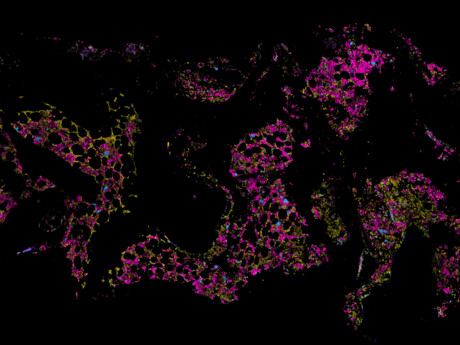
Using cutting-edge spatial technology, the researchers were able to image over 5,000 genes within individual cells, creating a high-resolution molecular atlas of the bone marrow. this wasn’t simply identifying what cells were present, but where they were located and what they were doing within the tissue.
“We found that each group of cancerous plasma cells creates its own distinct space, with different supporting cells and gene activity,” explains Dr. Raymond Yip, a postdoctoral researcher in the Hawkins Lab at WEHI and co-first author of the study. “It’s like discovering that each tumour has its own postcode.”
(Image: The first detailed molecular map of human bone marrow, created by WEHI researchers using state-of-the-art spatial technology, with each color representing a different cell type. Image credit: WEHI.)
This spatial transcriptomics approach, combined with an optimized biobanking method for bone marrow samples, allowed the team to analyze the cellular landscape in unprecedented detail. They discovered that malignant plasma cells don’t spread evenly throughout the bone marrow; instead,they cluster in spatially restricted areas,each exhibiting a unique biological signature.
Implications for Treatment and Future Research
The implications of this finding are profound.By recognizing the individuality of these microenvironments, researchers can move beyond broad-spectrum treatments and begin to develop therapies tailored to the specific characteristics of each patient’s disease.
“our findings challenge current thinking on myeloma and could redefine how we understand and treat the disease,” says Dr.Yip. “Ultimately, this research lays the foundation for more effective treatment strategies for myeloma and potentially for other blood cancers.”
Dr. Jeremy Er, clinician PhD researcher and study co-first author, adds, “We hope this work is the first step in developing more tailored strategies and new ways to detect, monitor and treat myeloma.”
A Collaborative Effort & The Power of Spatial Technologies
This groundbreaking research was a collaborative effort, involving researchers from WEHI, the Peter MacCallum Cancer Center, and The Royal Melbourne hospital. the success of the project highlights the transformative power of spatial technologies in cancer research.
these technologies are revolutionizing how scientists study complex diseases by revealing how cells behave within their natural environment. By understanding the intricate interplay between cancer cells and their surroundings, we can unlock new targets for therapeutic intervention.
Resources:
WEHI Website: https://www.wehi.edu.au/
Research Publication (Blood): https://doi.org/10.1182/blood.2025028896
* WEHI Myeloma Research: [https://www.we





