
Rome – Concerns are mounting in Italy over rising fuel costs, prompting criticism of the government’s response from opposition figures like Angelo Bonelli. Bonelli, a member of Alleanza Verdi e Sinistra (AVS), has characterized recent government measures to address the issue as insufficient, arguing they represent a short-term fix funded by Italian taxpayers. The debate comes amid broader anxieties about energy security and economic stability, exacerbated by geopolitical tensions.
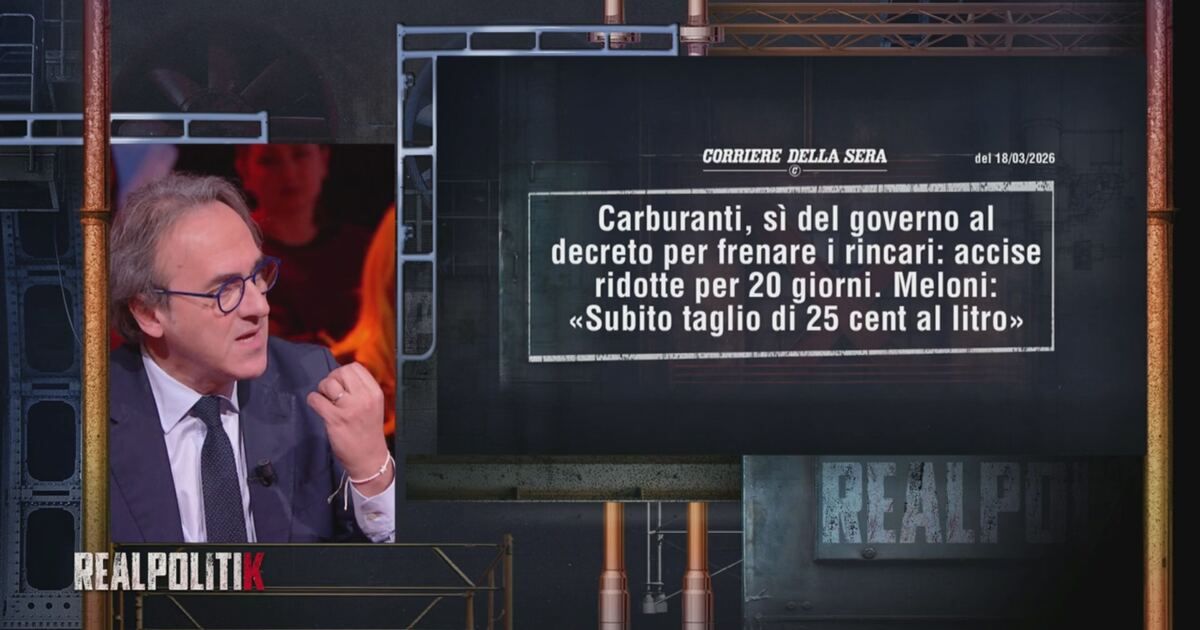
Bonelli’s comments center on the government’s decision to temporarily reduce excise taxes on fuel. While intended to provide immediate relief to consumers, he contends that the measure is ultimately unsustainable and fails to address the underlying causes of price volatility. He argues that energy companies have accumulated substantial profits – reportedly 70 billion euros over the past three years – and that the government should instead focus on taxing these “extra profits” and implementing price controls to curb speculation. According to a report in Il Quotidiano, Bonelli stated, “This government does not tell the truth.”
Rising Fuel Costs and Government Response
The situation unfolds against a backdrop of fluctuating global energy markets. While current gasoline prices haven’t reached the levels seen during the Draghi government – when prices peaked at 2.25 euros per liter – Bonelli emphasizes the psychological impact of rising costs and the anxieties fueled by unpredictable geopolitical events. He believes immediate intervention is necessary to reassure the public and mitigate the economic consequences of high fuel prices. The government, led by Giorgia Meloni, has so far resisted calls for a broader tax on energy company profits, citing the complexities of the current economic climate and the need to avoid disrupting market forces.
Italy’s Minister of Enterprises and Made in Italy, Urso, has defended the government’s position, dismissing calls for an excise tax cut as unnecessary. But, Bonelli counters that Urso’s assessment is “confused” and that the government lacks a coherent strategy to address the energy crisis. The delay in implementing a planned reduction in mobile excises has further fueled criticism from both transport operators and consumers, who argue that the delays are causing significant hardship. As reported by Il Quotidiano, both autotrasportatori (hauliers) and consumers have expressed their frustration with the delays.
The Debate Over Extra Profits and Price Controls
The core of Bonelli’s argument lies in the belief that energy companies are benefiting disproportionately from the current crisis. He points to the record profits reported by companies like Eni, with its CEO Descalzi acknowledging strong financial performance. Bonelli advocates for a windfall tax on these profits, arguing that the revenue could be used to fund measures to alleviate the burden on consumers and promote a transition to renewable energy sources. He also proposes implementing a price cap on fuel, which he believes would limit speculative practices and stabilize prices.
However, the implementation of such measures faces significant challenges. Concerns have been raised about the potential impact on investment in the energy sector and the risk of creating unintended consequences. The government has also indicated a preference for targeted support measures for vulnerable families, rather than broad-based price controls. This approach reflects a broader debate about the role of government intervention in the energy market and the balance between protecting consumers and fostering economic growth.
Shifting Energy Policies and the Role of Renewables
Bonelli’s criticism extends beyond the immediate issue of fuel prices to encompass the government’s broader energy policy. He argues that the Meloni government has been “insensitive” to the importance of renewable energy, hindering investment and slowing down the transition to a more sustainable energy system. He claims that many companies are ready to invest in renewable energy projects, but are being blocked by government bureaucracy and a lack of clear policy signals. According to Europa Verde, Bonelli stated that the government has “demolished the climate policies and the energy transition.”
This critique aligns with broader concerns about Italy’s progress towards its climate goals. The country has committed to reducing its greenhouse gas emissions and increasing its reliance on renewable energy sources, but progress has been uneven. The transition to renewables requires significant investment in infrastructure, technology and workforce development. Bonelli argues that the government needs to create a more favorable environment for renewable energy investment, including streamlining permitting processes and providing financial incentives.
From Russian Gas to American LNG
Bonelli has also been critical of the government’s energy sourcing decisions, specifically highlighting a shift from Russian gas to liquefied natural gas (LNG) from the United States. He views this transition as a strategic misstep, arguing that it perpetuates Italy’s dependence on foreign energy sources and undermines efforts to promote energy independence. As reported by La Repubblica, Bonelli has described the government’s approach as “suicidal” in terms of gas and bills.
The shift in energy sourcing reflects broader geopolitical considerations, as Europe seeks to reduce its reliance on Russian energy following the invasion of Ukraine. However, Bonelli argues that this transition should be accompanied by a more aggressive push towards renewable energy sources, rather than simply replacing one form of fossil fuel with another. He believes that investing in renewables would not only enhance Italy’s energy security but also create new economic opportunities and contribute to a more sustainable future.
The debate over Italy’s energy policy is likely to continue as the country grapples with the challenges of rising fuel costs, geopolitical instability, and the need to transition to a more sustainable energy system. Bonelli’s criticisms highlight the growing pressure on the government to address these issues and provide a clear vision for the future of Italy’s energy sector.
The next key development to watch is the government’s response to ongoing pressure from opposition parties and consumer groups regarding fuel prices. Further announcements regarding potential tax adjustments or support measures are expected in the coming weeks. The progress of renewable energy projects and the implementation of new policies to promote investment in the sector will be closely monitored.
What are your thoughts on Italy’s energy policy? Share your comments below and join the conversation.