
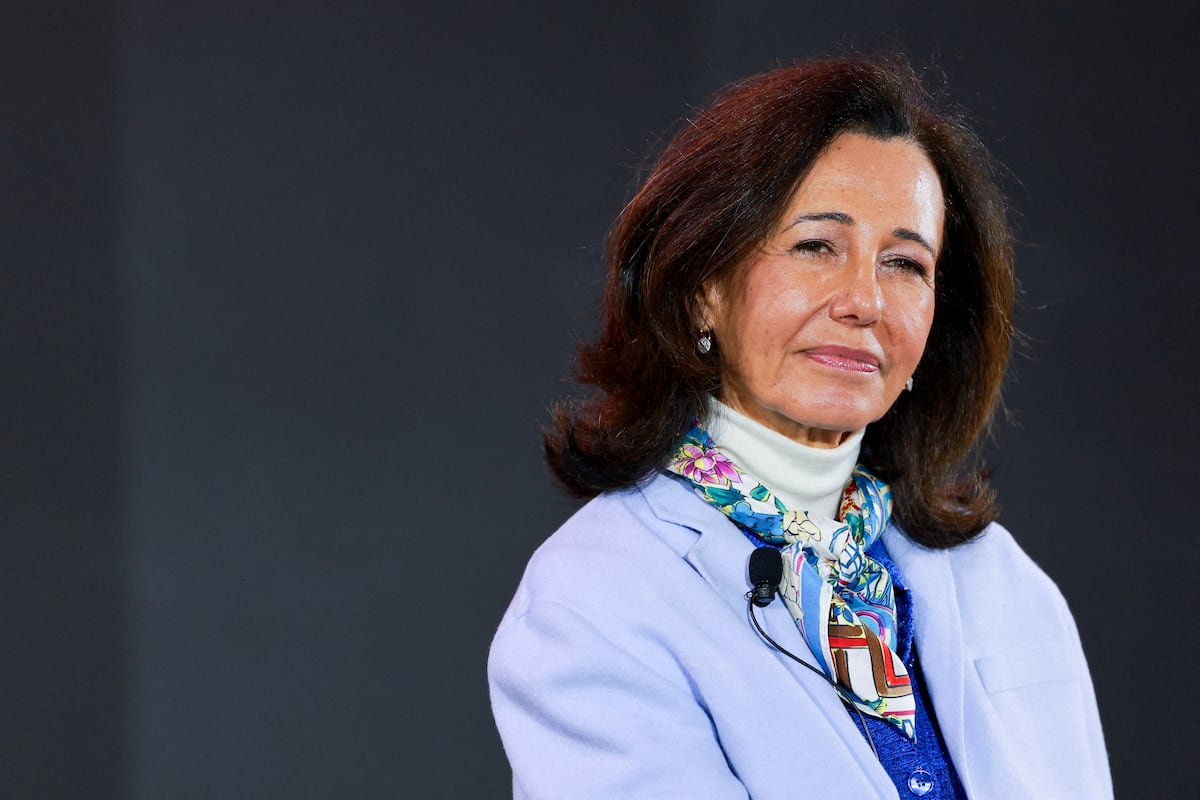
The Botín family, the founding dynasty of Banco Santander, is set to see its ownership stake in the Spanish banking giant decline for the first time in six years. This shift comes as a direct result of the bank’s strategic move to expand its footprint in the United States through the acquisition of Webster Bank.
The Botín family’s stake in Santander will be diluted as the bank executes a capital increase to facilitate the share exchange required for the Webster deal. While the family’s percentage of ownership will dip, the move is viewed as a tactical trade-off to propel the bank into the top tier of the U.S. Retail banking market.
The acquisition of the U.S.-based entity, announced in February 2026, is expected to close by the complete of the year. To fund the transaction, Santander has proposed a combination of cash and equity, which necessitates the issuance of new shares, thereby reducing the proportional holding of existing shareholders, including the Botín family according to reports on the capital increase.
The Mechanics of the Webster Bank Acquisition
The deal to acquire Webster Financial Corporation is a cornerstone of Executive Chair Ana Botín’s ambition to transform Santander into a dominant force in North American finance. The total valuation of the U.S. Bank is estimated at more than $12.2 billion per Reuters reporting.
Under the terms of the agreement, Santander is offering $48.75 in cash and 2.0548 shares of the Spanish bank for every Webster share. This structure means that approximately 65% of the purchase price will be paid in cash, while the remaining 35% will be settled via a share exchange. To accommodate the new shareholders from Webster, Santander must execute a capital increase of 3.7 billion euros—a significant move for a bank with a total valuation of 150 billion euros as detailed in recent financial filings.
For the Botín family, this means a transition from their current holding of 1.29% of the entity down to 1.26% following the execution of the capital increase. This ownership figure includes the direct holdings of Emilio Botín’s six children—Emilio, Carmen, Carolina, Paloma, Javier, and Ana—who operate under a shareholders’ agreement led by Javier Botín, as well as the holdings of the Fundación Botín.
Strategic Ambitions: The ‘Triple Crown’ Strategy
The dilution of the family’s stake is a small price to pay for what Ana Botín describes as a “Triple Crown” strategic maneuver. This plan involves three primary pillars: penetrating the top 10 of the U.S. Banking sector by asset volume, consolidating operations in the United Kingdom through TSB, and rotating assets within the Polish market according to financial analysis.
The acquisition of Webster Bank is the catalyst that allows Santander to break through its “glass ceiling” in the U.S. Market. By integrating Webster, the bank secures a position among the top 10 commercial banks in the United States by assets. The long-term financial goal is aggressive: the group expects the U.S. Market to contribute nearly 30% of its total profits by 2028, with a target profitability of 18% for that region as reported by Cronica Legal.
This expansion follows a period of historic financial performance. In the 2025 fiscal year, Banco Santander reported a record attributed net profit of 14.1 billion euros, marking a 12% increase over the previous year according to official results. This capital cushion has provided the bank with the stability and resources necessary to pursue such a massive acquisition without compromising its overall financial health.
Key Takeaways of the Santander-Webster Deal
- Ownership Shift: The Botín family’s stake will drop from 1.29% to 1.26% due to the issuance of new shares.
- Deal Value: The acquisition of Webster Financial Corporation is valued at approximately $12.2 billion.
- Payment Structure: 65% cash and 35% shares, requiring a 3.7 billion euro capital increase.
- U.S. Market Goal: Entry into the Top 10 U.S. Banks by assets, targeting 30% of group profits from the U.S. By 2028.
- Financial Strength: The move is backed by a record 2025 net profit of 14.1 billion euros.
What This Means for the Global Banking Landscape
The move signals a shift in how European banks approach the North American market. Rather than relying on organic growth or small-scale acquisitions, Santander is utilizing a “surgical” reordering of capital to achieve immediate scale. This approach transforms the bank from an international entity with a U.S. Presence into a legitimate North American banking power.
For investors, the dilution of the founding family’s stake is largely symbolic. The Botín family continues to maintain significant influence over the bank’s leadership and strategic direction. The priority has shifted from maintaining a specific percentage of equity to maximizing the bank’s global competitiveness and profitability in the world’s most competitive financial market.
The execution of the capital increase was recently approved by the shareholders’ meeting, clearing the path for the finalization of the deal. As the bank moves toward the closing date at the end of 2026, the industry will be watching to see how smoothly the integration of Webster’s assets occurs and whether the projected 18% profitability in the U.S. Can be realized.
The next confirmed milestone for the group is the expected closing of the Webster Bank acquisition by the end of 2026.
We invite our readers to share their thoughts on Santander’s aggressive U.S. Expansion in the comments below.