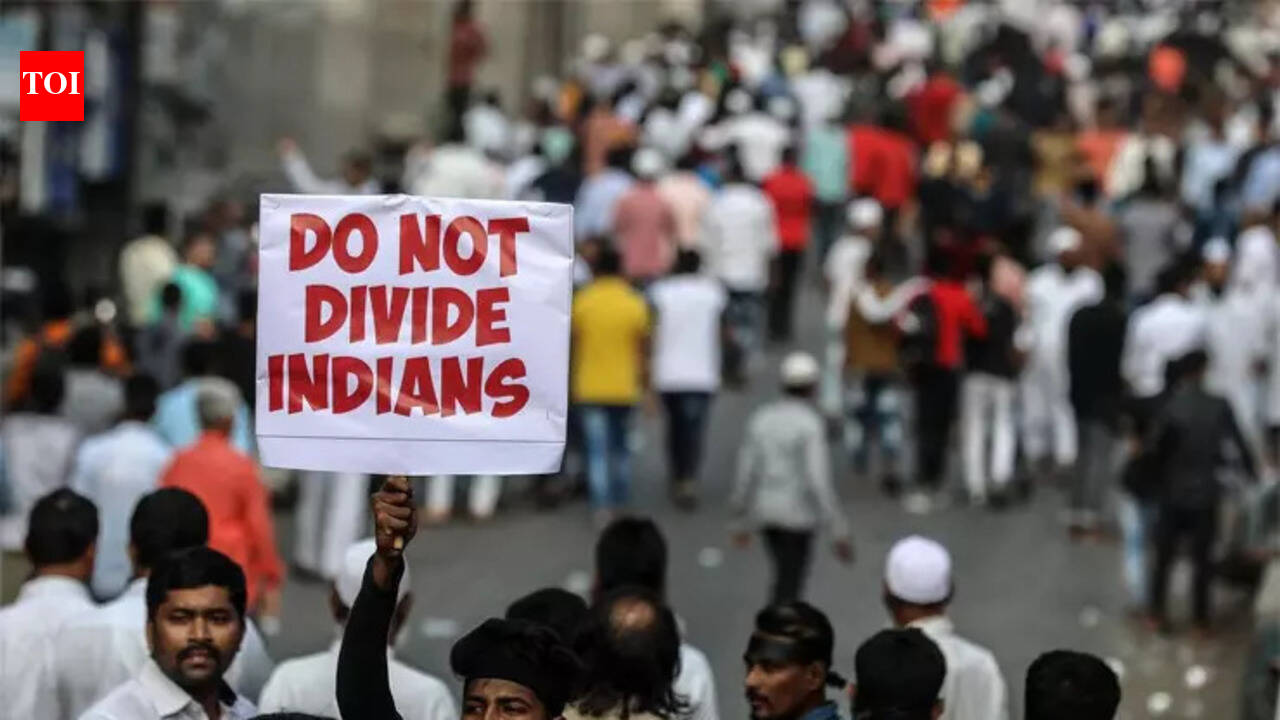
New Delhi – The Supreme Court of India has scheduled a four-day final hearing, beginning May 5, 2026, to address a multitude of petitions challenging the constitutionality of the Citizenship (Amendment) Act (CAA) of 2019. The CAA, enacted in December 2019, offers a path to Indian citizenship for religious minorities – specifically Hindus, Sikhs, Buddhists, Jains, Parsis, and Christians – who have fled persecution from Pakistan, Bangladesh, and Afghanistan. The upcoming hearing represents a pivotal moment in the legal battle surrounding the controversial legislation, which has sparked widespread protests and debate across India and internationally.
The bench, comprised of Chief Justice of India (CJI) Surya Kant and Justices Joymalya Bagchi and Vipul M Pancholi, outlined the hearing schedule on Thursday, February 19, 2026. Petitioners, including the Indian Union Muslim League (IUML) – designated as the lead petitioner – alongside representatives from the Indian National Congress, the All India Trinamool Congress (TMC), and the All India Majlis-e-Ittehadul Muslimeen (AIMIM), will present their arguments over one and a half days. The Union government, defending the CAA, will then have a similar timeframe to present its case. Rejoinder submissions from the petitioners are scheduled for May 12, 2026, potentially bringing the legal challenge to a conclusion after more than six years of contention.
A History of Legal Challenges and Protests
The CAA was swiftly met with legal challenges following its enactment. On December 18, 2019, a three-judge bench, including Justice Kant, issued notice to the Centre regarding the petitions questioning the law’s discriminatory aspects, particularly its exclusion of Muslims. As reported by Onmanorama, the court last heard arguments in the case on March 19, 2024, coinciding with the framing of the Citizenship (Amendment) Rules by the Centre. The Centre filed its response in October 2022, characterizing the CAA as a “benign piece of legislation” designed to offer refuge to persecuted communities.
The passage of the CAA ignited widespread protests across India, most notably a prolonged demonstration in Shaheen Bagh, Delhi, from December 15, 2019, to March 24, 2020. Protesters, largely Muslim women and supported by various political organizations, blocked a major road, voicing concerns about the law’s potential impact on India’s secular fabric. The protests, while largely peaceful, were marred by escalating tensions that culminated in violent riots in northeast Delhi in February 2020, resulting in at least 53 deaths. The Times of India details the context of these protests and the subsequent unrest.
Core Arguments Against the CAA
The petitions challenging the CAA center on the argument that the law violates the fundamental principle of secularism enshrined in the Indian Constitution. Critics contend that by explicitly linking citizenship to religious identity, the CAA discriminates against Muslims and undermines the country’s commitment to treating all religions equally. The exclusion of other persecuted groups, such as Rohingya Muslims from Myanmar and Ahmadiyyas from Pakistan, further fuels these concerns. Petitioners argue that the CAA’s criteria for eligibility are overly broad and lack a clear, objective basis.
The Centre, however, maintains that the CAA is not discriminatory. Government officials have argued that the law is intended to address the specific historical persecution faced by the six designated religious communities in the aforementioned neighboring countries. They assert that the CAA does not seek to revoke the citizenship of any existing Indian citizen, nor does it prevent Muslims from seeking citizenship through existing legal pathways. The government’s stance, as reported by India Today, is that the CAA addresses a specific humanitarian concern without infringing upon the rights of any other group.
Separate Considerations for Assam and Tripura
Recognizing the unique context of Assam and Tripura, states bordering Bangladesh with distinct migration histories, the Supreme Court bench has agreed to consider challenges related to these regions separately. Both Assam and Tripura have existing agreements governing the entry of migrants from Bangladesh, establishing specific cut-off dates for citizenship eligibility. Solicitor General Tushar Mehta argued that the legal issues in these states are distinct from those concerning the pan-India application of the CAA, prompting the court to de-link the cases. This approach acknowledges the complexities of migration patterns and historical agreements in these border states.
The court has indicated that it will first address the broader challenges to the CAA’s constitutionality across India before turning its attention to the specific concerns raised in Assam and Tripura. This phased approach aims to streamline the proceedings and ensure a comprehensive examination of all legal arguments. The court has also requested that parties submit any additional documents or written submissions within the next four weeks, further solidifying the evidentiary basis for its decision.
The Scale of the Legal Challenge
The sheer number of petitions challenging the CAA – currently standing at 243 – underscores the widespread concern and opposition to the law. The IUML’s petition is considered the lead case, but numerous other organizations and individuals have also filed challenges, reflecting a broad spectrum of perspectives. The extensive legal battle highlights the deeply divisive nature of the CAA and its potential implications for India’s social and political landscape.
The upcoming hearing is expected to be a closely watched event, not only within India but also internationally. The CAA has drawn criticism from human rights organizations and foreign governments, who have expressed concerns about its potential to exacerbate religious discrimination and undermine India’s secular principles. The Supreme Court’s decision will have far-reaching consequences for the future of citizenship laws in India and the rights of religious minorities.
Key Takeaways:
- The Supreme Court will begin final hearings on the CAA challenge on May 5, 2026.
- The case involves 243 petitions, with the IUML as the lead petitioner.
- Arguments will be heard over four days, with a decision expected by May 12, 2026.
- The court will address challenges related to Assam and Tripura separately.
- The CAA’s constitutionality hinges on arguments regarding secularism and religious discrimination.
The Supreme Court’s deliberation on the CAA represents a critical juncture in India’s ongoing debate about citizenship, identity, and religious freedom. The outcome of this legal challenge will undoubtedly shape the country’s future for years to reach. The next confirmed checkpoint is the commencement of the final hearing on May 5, 2026. We encourage readers to follow this developing story and share their perspectives in the comments below.