
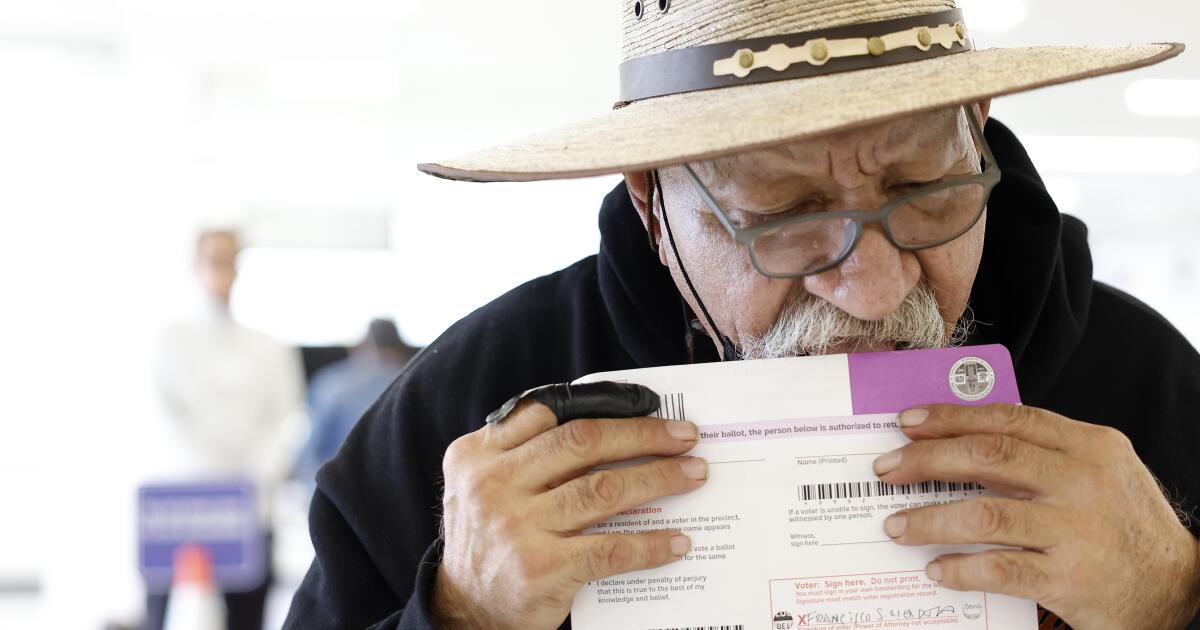
Debunking Ballot Envelope Claims: Ensuring Secure and Accessible Voting in California’s Special Election
Recent online claims alleging that mail-in ballots in California are designed to reveal voter choices are demonstrably false and rooted in a misunderstanding of accessibility features implemented to aid voters with disabilities. As Californians prepare to vote in a special election concerning proposed congressional district changes,it’s crucial to separate fact from fiction and ensure all eligible citizens feel confident in the integrity of the voting process. This article provides a comprehensive overview of the situation, addressing the origins of the claims, the reality of ballot envelope design, and the importance of participation in this pivotal election.
The Source of the Disinformation:
The current wave of misinformation originated with posts circulating on social media platform X (formerly Twitter).A post from “Libs of TikTok” falsely asserted that a “NO” vote on proposition 50 - the measure concerning California’s redistricting plan - would be visible through holes in the ballot envelope. This claim was amplified by prominent figures, including U.S. Senator Ted Cruz, who retweeted a similar assertion, and Steve Hilton, a conservative commentator who called for suspending the election. These allegations echo similar, debunked claims made during previous California elections.
understanding the Ballot Envelope Design:
California Secretary of State Shirley Weber has unequivocally stated that the small holes in mail ballot envelopes are specifically designed as an accessibility feature for voters with visual impairments. These holes allow voters to orient themselves to the signature area on the envelope, ensuring they can independently and securely complete the process. Election workers also utilize these holes to verify that ballots have been fully removed from the envelopes before tabulation,a standard procedure to maintain ballot integrity.
“The small holes on ballot envelopes are an accessibility feature to allow sight-impaired voters to orient themselves to where they are required to sign the envelope,” Weber clarified in a statement released Monday. She further emphasized that voters can easily maintain ballot secrecy by inserting their ballot in a way that conceals their vote choice,or by utilizing early voting stations or in-person voting on November 4th.
The Context: California’s Redistricting Debate
The controversy surrounding the ballots is inextricably linked to a contentious debate over California’s congressional districts. Governor Gavin Newsom and other Democratic leaders initiated the special election in response to former President Trump’s calls for Republican-led states to redraw their congressional maps to favor the GOP. California Democrats proposed a mid-decade redrawing of the state’s 52 congressional boundaries,aiming to increase Democratic representation in Congress. Traditionally, congressional districts are redrawn every ten years by an autonomous commission established by voters in 2010. Proposition 50 asks voters to approve the proposed new map.
Data & Participation So Far:
As of Monday evening, nearly 600,000 Californians had already returned their mail ballots, according to data from Political Data, a voter data firm led by Democratic strategist Paul Mitchell, who was also involved in drafting the proposed congressional boundaries on the ballot.This demonstrates a critically important level of engagement despite the circulating misinformation.
republican Concerns & Calls to Action:
While some Republican leaders have rightly denounced the conspiracy theories, fearing they will suppress voter turnout, others have expressed concern.Roxanne Hoge,chair of the Los Angeles County Republican Party,urged voters to simply turn their ballots around to conceal their choices,emphasizing the need for “every no vote.” Jessica Millan Patterson, former chair of the state GOP and a leader of the opposition to Proposition 50, stressed the importance of voting despite concerns, comparing abstaining to sitting on the sidelines during a crucial game. She acknowledged voter concerns about ballot secrecy but reiterated that participation is paramount.
Why This Matters: Protecting the Integrity of the Vote
The spread of false details about voting procedures poses a serious threat to democratic participation. Undermining public trust in the electoral process can lead to voter suppression and ultimately erode the foundations of our democracy. It’s vital to rely on credible sources of information, such as official election websites and statements from election officials, to ensure informed participation.
Resources for California Voters:
* California Secretary of State: https://www.sos.ca.gov/
* Your County Elections Office: (Find your local office through the Secretary of State’s website)
* Political Data Ballot Tracker: https://politicaldata.com/ (for tracking ballot returns)
Conclusion:
The claims regarding intentionally revealing ballots through envelope holes are unequivocally false. The holes are a vital accessibility feature designed to empower voters with disabilities.





