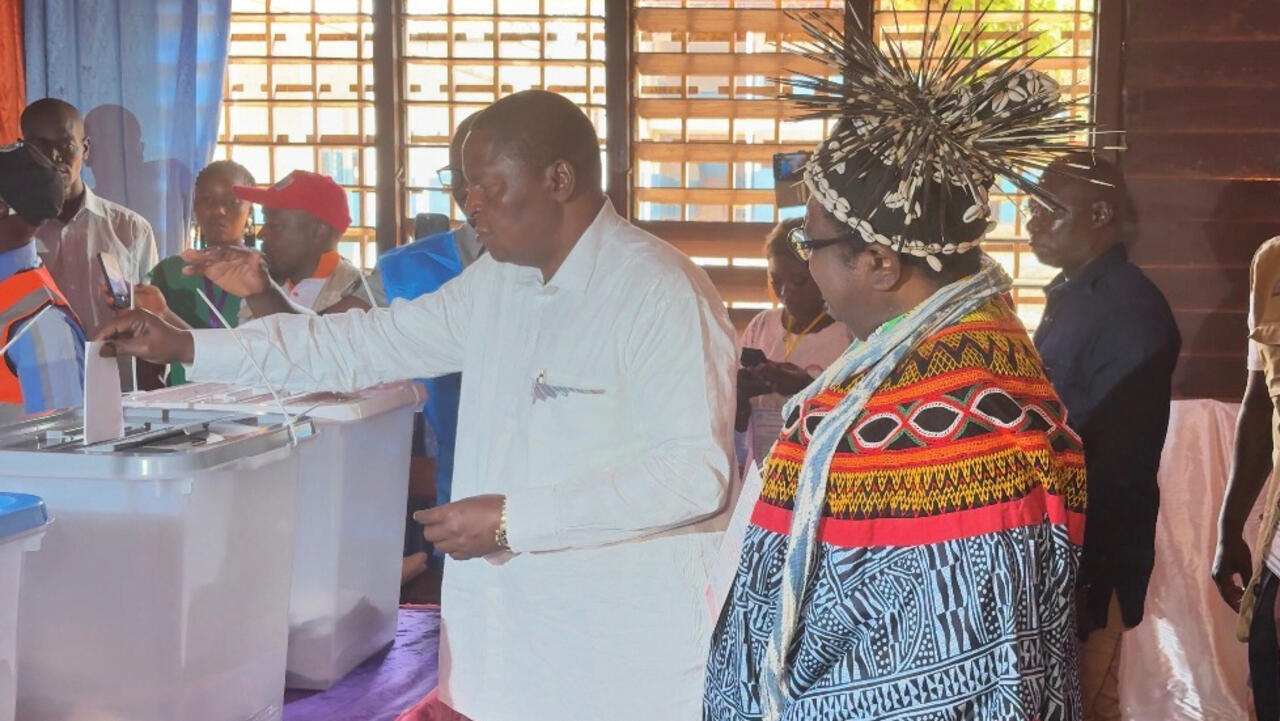
Faustin-Archange Touadéra Secures Second Term as President of Central African Republic Amidst fraud Allegations
Faustin-Archange Touadéra has been declared the winner of the presidential election in the Central African Republic (CAR),extending his rule into a potential second decade. The results, announced this week, confirm Touadéra’s continued hold on power despite widespread concerns about electoral integrity and a boycott from key opposition groups. This outcome has important implications for the country’s stability and its evolving relationship with international powers, particularly Russia.
Election Results and Immediate Fallout
Touadéra secured a commanding victory with 56.42% of the vote. Anicet-Georges Dologuele followed with 14.66%, while former Prime Minister Henri-Marie dondra received 3.19%. Voter turnout reached 52.42%, according to electoral officials.
Though, the election was promptly contested. Both Dologuele and Dondra publicly denounced the results as fraudulent, raising serious questions about the fairness of the process. Dologuele, who was the runner-up in the 2020 election, specifically cited a “methodical attempt to manipulate” the outcome.
Opposition Boycott and Claims of Irregularities
The main opposition coalition, BRDC, opted to boycott the election entirely, arguing that it would be inherently unfair. This decision underscored a lack of confidence in the electoral process and the existing political landscape. You might recall that similar concerns surrounded the 2023 referendum that allowed Touadéra to seek another term, fueling accusations that he intends to remain president for life.
Implications for Russia and Western Partnerships
Touadéra’s victory is expected to strengthen ties with russia. Russia has been increasingly influential in CAR, providing security assistance in exchange for access to the country’s valuable natural resources, including gold and diamonds.
Though,Touadéra has also indicated a willingness to explore renewed partnerships with Western nations. he has expressed interest in attracting investment to develop CAR’s reserves of lithium, uranium, and gold. This signals a potential balancing act in the country’s foreign policy.
Fragile Security and the Integration of Armed Groups
while the December 28th vote proceeded without major disturbances – a stark contrast to the 2020 election where rebel groups disrupted voting – analysts caution that the security situation remains precarious. Its important to understand that armed groups haven’t simply disappeared.
Instead, many have been integrated into the system through peace deals that often involve government positions. Nathalia Dukhan, a Central africa analyst for the Global Initiative Against Transnational Organized Crime, explains that this arrangement is fragile. If these groups feel their interests aren’t being met,the situation could quickly deteriorate.
A Look Ahead
Touadéra’s control over state institutions and his access to significant financial resources undoubtedly contributed to his victory. The Constitutional Court now has until January 20th to review any challenges and certify the final results.
Ultimately, the future of the Central African Republic hinges on addressing the underlying issues of political inclusion, security, and economic possibility. Successfully navigating these challenges will be crucial for ensuring long-term stability and fostering genuine progress for the people of CAR.
(FRANCE 24 with Reuters)
Key Takeaways for You:
* Contested Results: The election was marred by allegations of fraud and a significant opposition boycott.
* Russian Influence: Touadéra’s victory likely solidifies Russia’s position in CAR.
* Fragile Peace: While the election was peaceful, underlying security concerns remain.
* Economic Potential: CAR possesses significant natural resources that could drive economic development.
* Political Stability: The long-term stability of CAR depends on addressing political and economic grievances.