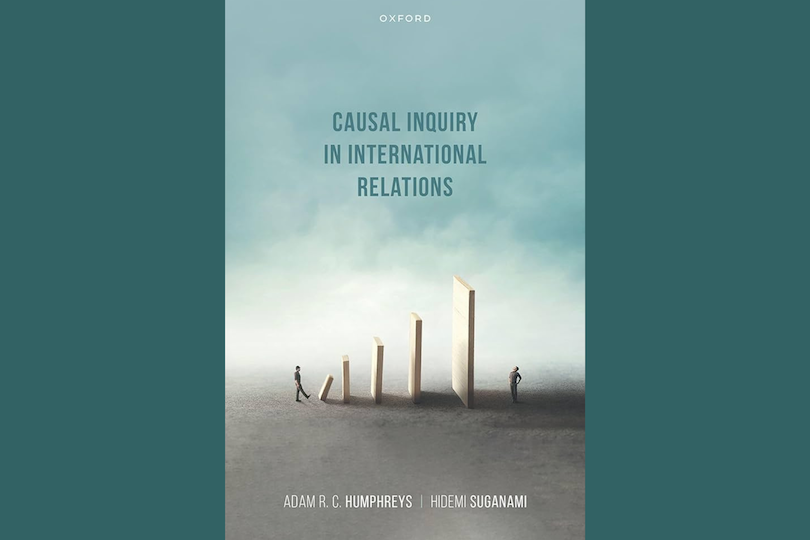
Navigating the Complexities of Causation in World Politics
Understanding how and why events unfold in international relations is a central challenge for scholars and policymakers alike. Recent debates have centered on the very nature of causation,moving beyond simple assumptions to explore its nuances and implications. This exploration delves into these complexities, drawing on key insights from contemporary scholarship.
The Foundations of Social Reality
John Searle‘s work on the construction of social reality provides a crucial framework for understanding how we establish facts and meanings in the world. Searle argues that social reality isn’t simply “out there” but is actively created through shared intentionality and recognition. This means that concepts like power, sovereignty, and even “causation” itself are not inherent properties of the world, but rather exist because we collectively agree they do.
Different Approaches to Causation
Several perspectives on causation have emerged within international relations theory.These can broadly be categorized as realist, agnostic, and constructivist, each with distinct implications for how we study and explain world events.
Realism posits that causal relationships exist independently of our minds, rooted in the material properties of the international system.
Causal agnosticism acknowledges the possibility of mind-independant causation but refrains from taking a definitive stance on its existence. it focuses instead on identifying patterns and correlations without necessarily claiming a direct causal link.
Constructivism, building on Searle’s insights, emphasizes the role of shared understandings and social constructions in shaping causal perceptions.
Explanatory vs. abstract Causal Statements
A key distinction lies between explanatory and abstract causal statements. Consider these examples:
Explanatory: “Zorri was unhappy today because she did not go on a walk this morning.” (Past tense, specific instance)
* Abstract: “Not going on morning walks causes unhappiness.” (Present tense, general principle)
The difference isn’t merely grammatical. Explanatory statements relate to specific events, while abstract statements propose general causal relationships. Recognizing this distinction is vital for rigorous analysis.
Inference to the Best Description & Randomized Controlled Trials
How do we determine which explanations are most valid? Many scholars employ a method akin to “inference to the best explanation” – a process of systematically eliminating less plausible explanations to arrive at the most compelling one. This approach mirrors the investigative techniques of detective fiction, where clues are pieced together to reveal the truth.
Randomized controlled trials (RCTs),often used in the social sciences,also rely on this principle. By isolating variables and comparing outcomes, RCTs aim to identify causal effects with greater confidence. However, applying RCTs to the complexities of international relations presents significant challenges.
A Formula for Abstract Causation
A useful way to frame abstract causal statements is: “A causes B in context C.” This formula acknowledges that causal relationships are rarely absolute and are always contingent on specific circumstances. It also echoes Searle’s own formula for social facts: “X counts as Y in context C.”
The Role of “Vetting” in Scholarly Work
You might be surprised to learn that much of what we call “theory” in academic research is actually a form of “vetting.” This process isn’t the same as a laboratory experiment, but it shares a similar goal: to demonstrate the plausibility of a causal tendency or power. Through rigorous analysis and argumentation, scholars aim to convince you – the reader – that a particular explanation is worthy of consideration.
moving Forward
Ultimately, understanding causation in world politics requires a nuanced approach. It demands that you acknowledge the role of both material factors and social constructions,embrace the complexities of explanation,and remain open to option perspectives. By doing so,you can navigate the challenges of international relations with greater clarity and insight.



![Nigeria Mosque Blast: Deaths & Latest Updates | [Year]](https://i0.wp.com/s.france24.com/media/display/edad9848-e0fb-11f0-aa07-005056bf30b7/w%3A1280/p%3A16x9/AP25077805366921.jpg?resize=330%2C220&ssl=1 "Nigeria Mosque Blast: Deaths & Latest Updates | [Year]")