
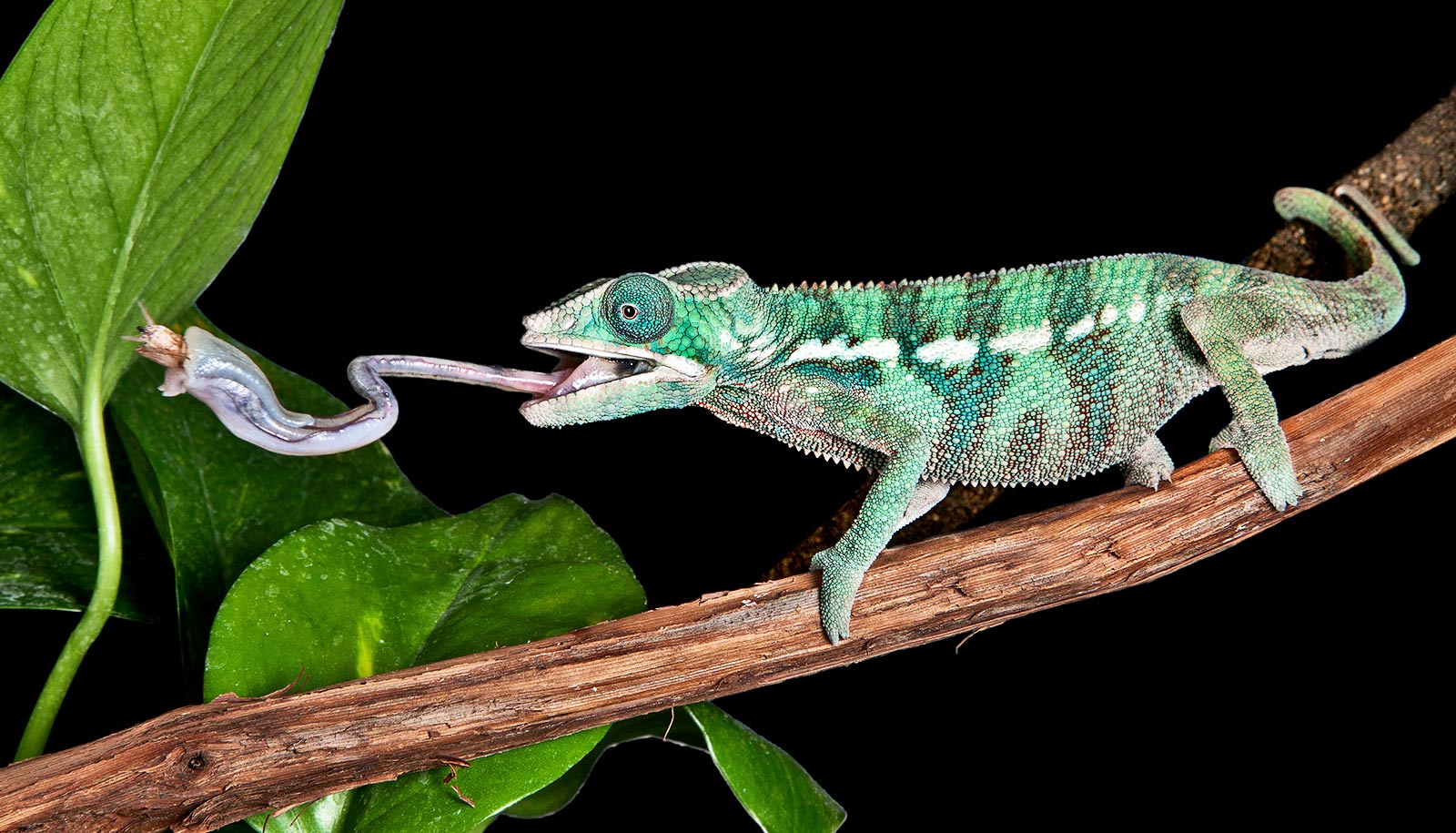
The surprisingly Similar Secret Behind Salamander & Chameleon Tongues – And How It’s Fueling Engineering innovation
For decades, scientists have been captivated by the astonishing speed and precision of chameleon and salamander tongues. Now, groundbreaking research from the University of South Florida is revealing a shared biological mechanism behind this remarkable ability - and unlocking exciting possibilities for engineering breakthroughs that could impact everything from healthcare to space exploration.
This isn’t just about understanding animal biology; it’s about bioinspiration – learning from nature’s elegantly solved problems to create innovative solutions for your world. let’s dive into what makes these tongues so special and how researchers are translating that knowledge into tangible technologies.
A Tale of Two Tongues: An Unexpected Discovery
Chameleons basking in warm trees and salamanders thriving in cool, damp caves seem worlds apart. In fact, they’ve likely never encountered each other in the wild. Yet, a recent study published in Current Biology reveals a stunning similarity: both animals utilize the same “ballistic” tongue-firing system.
Postdoctoral researcher Yu Zeng and Professor Stephen Deban’s work demonstrates that despite vastly diffrent evolutionary paths, both species converged on the same physical architecture to achieve incredible tongue projection speeds – up to 16 feet per second! This isn’t about specialized, exotic tissues; they’re achieving this with the same basic components found in other vertebrates: tendons, bone, and ordinary tissues.
How Does It Work? The Slingshot effect
The secret lies in a mechanism remarkably similar to a slingshot.Here’s a breakdown of the key principles:
* Energy Storage: The tongue builds up elastic energy through muscle contraction and tissue deformation.
* Rapid Release: This stored energy is then released explosively, launching the tongue forward with incredible force.
* Collagenous Accelerator: A specialized collagenous structure acts as a crucial accelerator, amplifying the tongue’s speed.
This elegant system is surprisingly efficient and adaptable, which is why it’s attracting so much attention from engineers.
Beyond Biology: Engineering Applications on the Horizon
The potential applications of this research are far-reaching. The beauty of this biological mechanism is its scalability and adaptability to different materials. Here are just a few areas where this bioinspired technology could make a significant impact:
* Biomedical Devices: Imagine miniature devices capable of navigating the body to clear blood clots or deliver targeted medication. The tongue mechanism could inspire the design of these flexible, precise tools.
* Search & Rescue: Retrieving objects from collapsed buildings or other disaster zones often requires navigating tight spaces. A tongue-inspired device could access areas inaccessible to traditional tools.
* Space Exploration: Collecting debris in orbit or performing delicate repairs on spacecraft demands precision and adaptability. A bioinspired grabbing tool could be a game-changer for space missions.
* Soft Robotics: The principles behind the tongue’s movement can be applied to create more agile and adaptable soft robots for a variety of applications.
“This mechanism can be scaled up or down, using soft or flexible materials,” explains Zeng.”We’re already talking with engineers about possible biomedical applications.”
The Future of Bioinspiration: Retraction & Beyond
Deban and Zeng’s research isn’t stopping at tongue projection. They’re now focusing on understanding the equally impressive speed and precision of tongue retraction.
This work exemplifies the growing field of bioinspiration, where scientists are increasingly looking to nature for solutions to complex engineering challenges. As Deban puts it, “Nature has already solved these problems, now we’re learning how to adapt those solutions for us.”
want to learn more? check out these resources:
* Original Research: https://doi.org/10.1016/j.cub.2025.07.085
* University of South Florida News: [https://www.usf.edu/news/2025/how-the-high-speed-tongues-of-salamanders-and-chameleons-are-helping-usf-unlock-engineering-breakthroughs.aspx](https://www.usf.edu/news/2025/how-the-high-





