
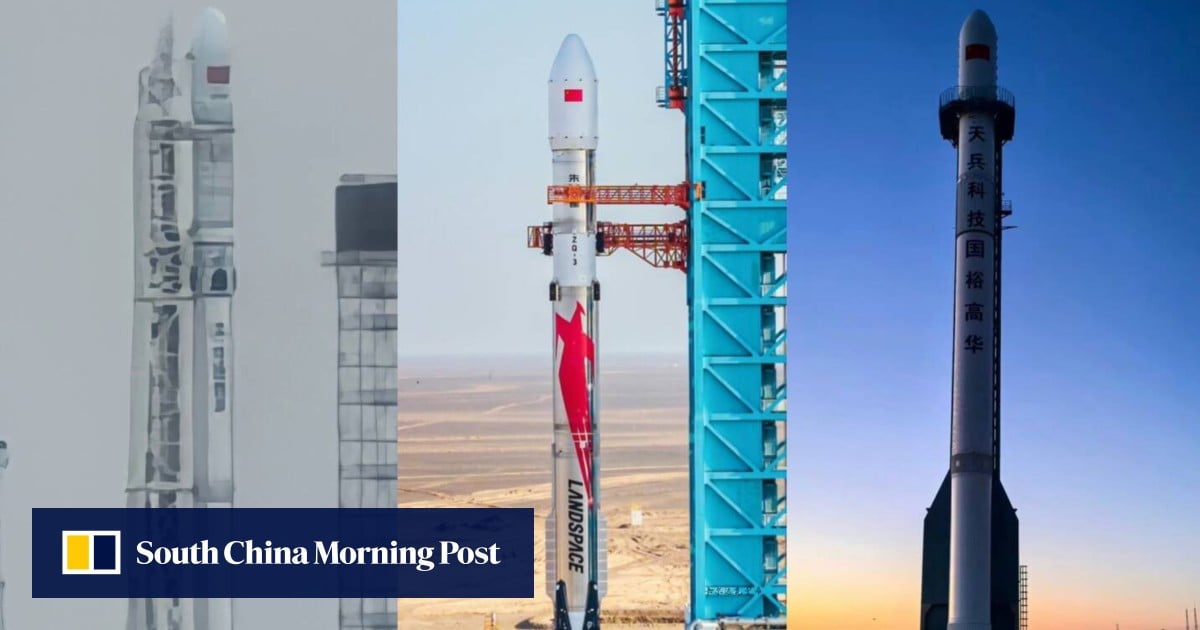
China’s Race to Reusable Rockets: A December Showdown Looms
A pivotal moment in China’s space program is rapidly approaching. Both the Long March 12A and the Zhuque-3 rockets are poised for launch in December, each vying to achieve a historic first: a controlled return to Earth for their first stages. This enterprising goal marks a significant leap toward fully reusable launch systems, dramatically lowering the cost of space access.
These aren’t the only contenders in China’s reusable rocket development. The Tianlong-3 is also designed with reusability in mind, but its initial flight won’t include a landing attempt. However, all eyes are currently on the Long March 12A and Zhuque-3 as they prepare for their groundbreaking missions.
A Tight Race to the Launchpad
Currently, both rockets are nearing launch readiness.According to industry insiders, the technical preparedness of the Long March 12A is comparable to that of the Zhuque-3.Yet, a subtle competition exists regarding which rocket will be granted the honor of attempting the first landing.
Successfully landing a rocket would be a monumental achievement for china’s space ambitions. It’s understandable, then, that state-owned contractors might be maneuvering to secure the first attempt. This internal dynamic adds an intriguing layer to the already exciting race.
Recent Developments & Delays
LandSpace, the developer of Zhuque-3, recently completed crucial pre-launch tests. These included full fueling rehearsals and a full-duration engine firing at the Jiuquan Satellite Launch Center. However, the launch was initially delayed following an incident involving debris from the Tiangong space station in early November.
Unfortunately, the Zhuque-3 launch has been postponed again. Meanwhile, compelling images circulating on social media reveal the long March 12A being moved to the launchpad and erected, seemingly in planning for a major engine test. This suggests a potential shift in the launch timeline.
What This Means for You & the Future of Space Travel
What does this all mean for the future of space exploration? Reusable rockets are the key to unlocking more frequent and affordable access to orbit. Consider these benefits:
* Reduced Costs: Reusing rockets significantly lowers the expense of each launch.
* Increased Launch Frequency: faster turnaround times mean more launches are possible.
* Greater Accessibility: Lower costs open up space to a wider range of users and applications.
China’s pursuit of reusable rocket technology is a clear signal of its commitment to becoming a leading space power. The December launches of the Long March 12A and Zhuque-3 represent a critical step toward realizing that vision. You can expect to see rapid innovation and further advancements in this field as the competition heats up.
This race isn’t just about national pride; it’s about fundamentally changing how we access space, paving the way for a future where space travel is more commonplace and accessible than ever before. Keep an eye on these developments – they’re shaping the future of space exploration right now.


