
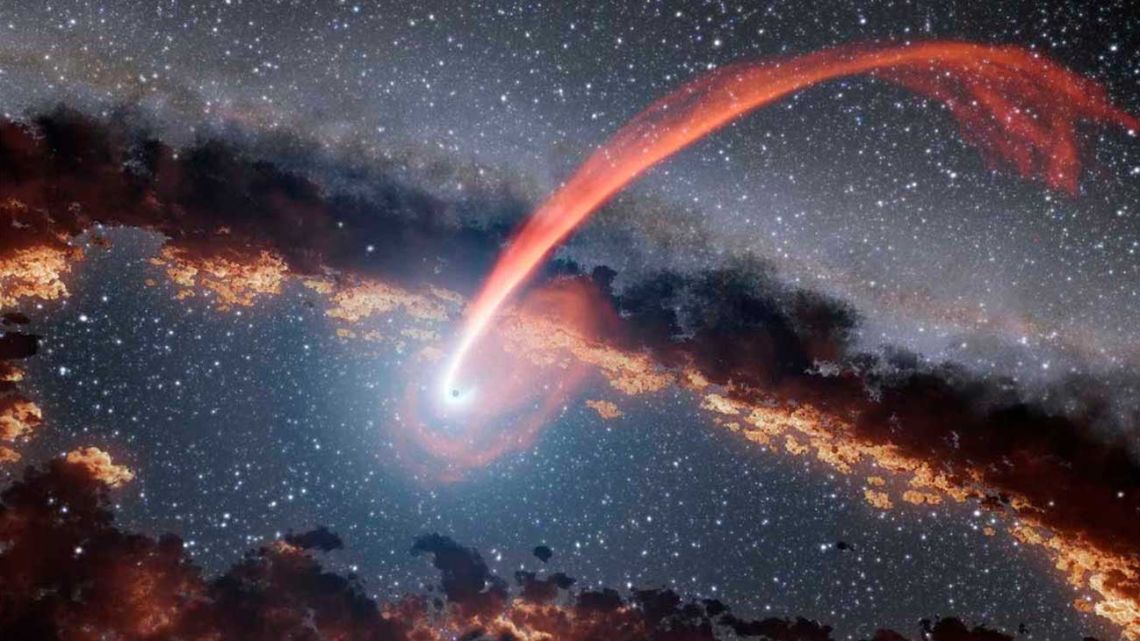
Astronomers are closely analyzing the properties of comet 3I/ATLAS, an interstellar visitor that has captured the attention of the global scientific community. This rare object, which originates from outside our solar system, is providing unprecedented insights into the chemistry of distant star systems and the early history of the universe.
Recent observations from the James Webb Space Telescope (JWST) suggest that 3I/ATLAS may be one of the oldest objects ever detected, potentially acting as an “interstellar messenger” from a time nearly as aged as the universe itself Live Science. By analyzing its composition, researchers are attempting to piece together the conditions of the icy system from which it was expelled billions of years ago.
The comet has likewise displayed striking visual characteristics, including a strange green glow observed during its close approach to the Sun BBC Sky at Night Magazine. While some sensationalist reports have suggested the comet contains “nuclear fuel” or is a fragment of an artificial structure, the scientific community emphasizes that these claims are unsupported and fall into the category of misinformation.
The Science Behind the Interstellar Visitor
The designation “3I” identifies this object as the third confirmed interstellar visitor to enter our solar system, following the famous ‘Oumuamua and Comet Borisov. Unlike native comets that originate from the Kuiper Belt or Oort Cloud, 3I/ATLAS comes from a different star system entirely, meaning its chemical makeup serves as a direct sample of an alien environment.

NASA has emphasized the importance of open data regarding 3I/ATLAS to accelerate discoveries astrobiology.com. By sharing spectroscopic data, scientists worldwide can analyze the gases and dust trailing the comet, which reveals the temperature and pressure of its home system.
The “strange green glow” mentioned in recent imagery is a common phenomenon for many comets. This typically occurs when ultraviolet sunlight interacts with diatomic carbon (C2) and cyanogen in the comet’s coma, causing them to fluoresce. In the case of 3I/ATLAS, the intensity of this glow has provided a window into how the comet’s volatile materials react as it enters the warmer regions of our solar system.
Age and Origin: A Window into the Early Universe
One of the most profound aspects of 3I/ATLAS is its estimated age. Data from the James Webb telescope indicates that the object could be nearly as old as the universe itself Live Science. This suggests it may have been ejected from its parent system billions of years ago, drifting through the vacuum of interstellar space before being captured by the Sun’s gravity.
Such an ancient origin makes 3I/ATLAS a “time capsule.” If the comet contains primitive organic molecules or specific isotopic ratios, it could facilitate astronomers understand how the first generations of stars and planets formed. The study of these “interstellar messengers” is critical for understanding whether the chemical building blocks of life in our solar system are common throughout the galaxy or unique to our local environment.
Addressing Misinformation and “Nuclear” Claims
As 3I/ATLAS gained popularity on social media, several misleading narratives began to circulate. Some reports claimed that scientists had “confirmed” the presence of nuclear fuel or that the comet was an artificial fragment. These claims are categorically false and are not supported by any peer-reviewed research or official statements from space agencies.
The confusion often stems from a misunderstanding of “nucleosynthesis”—the process by which stars create heavier elements. While comets contain elements created through nuclear processes in stars, What we have is a natural cosmic occurrence, not the presence of man-made nuclear fuel. Experts have warned that the gap between legitimate scientific discovery and “clickbait” narratives can lead to public confusion regarding the nature of these celestial visitors.
Key Takeaways on Comet 3I/ATLAS
- Interstellar Origin: This proves the third confirmed interstellar object to visit our solar system.
- Extreme Age: JWST data suggests it may be nearly as old as the universe.
- Visual Markers: The green glow is a result of solar radiation reacting with carbon-based molecules.
- Scientific Value: Open NASA data allows global researchers to study the chemistry of other star systems.
- Fact Check: Claims of “nuclear fuel” or artificial origins are baseless and considered misinformation.
The ongoing study of 3I/ATLAS continues as it moves further from the Sun. The next phase of research will involve analyzing the “outgassing” patterns as the comet cools, which may provide final clues about its original home. For those interested in tracking the object, official updates and datasets are typically released through NASA’s open-access portals.
What do you think about the possibility of ancient interstellar visitors carrying the secrets of the early universe? Share your thoughts in the comments below.