
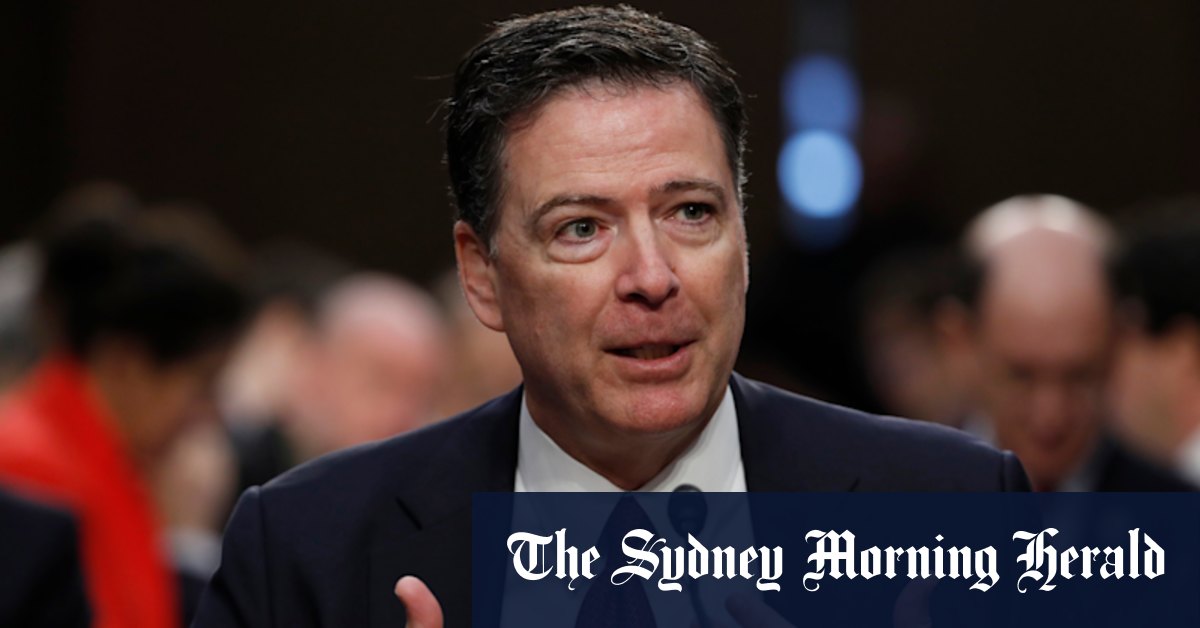
Teh Indictment of James Comey: A Deep Dive into a Fraught Relationship with donald Trump
The legal saga surrounding former FBI Director James Comey took a dramatic turn with his recent indictment, sparking immediate scrutiny and raising complex questions about the intersection of politics and justice. Assigned to the case is Judge Michael Nachmanoff, a nominee of the Biden administration and a former public defender – a background that has already drawn criticism from Donald Trump, who labeled him a “Crooked Joe Biden appointed Judge.” This case isn’t unfolding in isolation; the Justice Department is simultaneously investigating other perceived adversaries of the former president, including New York Attorney General Letitia James and California Senator Adam Schiff, signaling a perhaps broader pattern of legal challenges.
The timing and circumstances surrounding the indictment are particularly noteworthy. Several members of the Comey family were present for the arraignment, including his daughter Maurene, who recently departed her role as a federal prosecutor in Manhattan. Perhaps even more striking was the immediate resignation of Troy Edwards Jr., Comey’s son-in-law, from his position as a prosecutor in the Eastern District of Virginia – the very office prosecuting the case. These events raise questions about potential conflicts of interest and the personal toll of this legal battle.
A History of Conflict: trump and Comey’s Tumultuous Relationship
To understand the gravity of this indictment, it’s crucial to revisit the deeply strained relationship between Donald Trump and James comey. their paths collided in January 2017, when Trump assumed the presidency while Comey, appointed by Barack Obama four years prior, was leading the FBI’s investigation into potential collusion between Russia and the Trump 2016 campaign.
From the outset, the dynamic was fraught with tension. Weeks before his inauguration, Trump was briefed by Comey on the existence of a dossier containing unverified and damaging allegations compiled by a former British intelligence officer. This briefing, and the information it contained, instantly set a contentious tone.
The early months of the Trump administration were marked by a series of private interactions where,according to Comey’s own account,the President repeatedly sought assurances of loyalty and attempted to influence the FBI’s investigations. Trump allegedly requested Comey to drop the investigation into his first National Security Advisor, Michael Flynn, and to publicly declare that he himself was not a subject of the broader Russia inquiry. Comey resisted these requests.
This escalating tension culminated in Comey’s abrupt dismissal in May 2017, while he was on a work trip in Los Angeles. Trump later stated that the “Russia thing” was on his mind when he made the decision to fire him. This firing triggered a special counsel investigation led by Robert Mueller, wich examined the possibility of obstruction of justice.
Beyond the Investigation: A Public Fallout
The fallout extended far beyond the confines of the Russia investigation. In 2018, Comey published A higher Loyalty, a memoir that offered a scathing critique of Trump’s character and leadership. He likened the President to a mafia boss, characterizing him as lacking a moral compass and dismissing him as “untethered to truth.”
Trump responded with characteristic fury, relentlessly attacking Comey on social media, accusing him of “treason” (a claim Comey dismissed as “dumb lies”) and labeling him an “untruthful slime ball.” This public feud underscored the deep personal animosity between the two men and fueled the narrative of a politically motivated investigation.
The implications of Comey’s indictment are far-reaching. It represents not just a legal challenge for the former FBI Director, but a continuation of the ongoing political battles that have defined the Trump era. As the case unfolds, it will undoubtedly attract intense media scrutiny and further polarize public opinion.The selection of Judge Nachmanoff, the family resignations, and the history of conflict all contribute to a complex and compelling narrative that demands careful examination.
![Helping Others: Benefits & The Joy of Giving | [Your Brand/Site Name]](https://i0.wp.com/cdn2.psychologytoday.com/assets/styles/manual_crop_1_91_1_1528x800/public/teaser_image/blog_entry/2025-10/VPTG%20photo%202.png.jpg?resize=150%2C150&ssl=1 "Helping Others: Benefits & The Joy of Giving | [Your Brand/Site Name]")


