
Fortifying Healthcare Against Cyber Threats: A Proactive guide to Resilience
The healthcare industry is under siege. Not from illness, but from a relentless wave of increasingly sophisticated cyberattacks. These attacks aren’t just about data breaches; they threaten patient safety, disrupt critical care, and carry staggering financial consequences. this guide, informed by leading cybersecurity experts and real-world experiences, provides a comprehensive overview of the challenges facing healthcare organizations and a roadmap for building robust cyber resilience.
The Escalating Threat Landscape
Healthcare is a prime target for cybercriminals for several reasons. The sector holds valuable protected health information (PHI), operates complex and interconnected systems, and often faces budgetary constraints that hinder security investments. Ransomware attacks, in particular, have become devastatingly common, paralyzing hospital operations and demanding exorbitant payouts. But the threat isn’t limited to direct attacks. Increasingly, vulnerabilities lie within the expanding network of third-party vendors that healthcare organizations rely upon for essential services.
Proactive Preparation: Tabletop Exercises & Incident Response
Waiting for an attack to happen before preparing is a recipe for disaster. A cornerstone of effective cybersecurity is proactive preparation, and that begins with regular, realistic simulations.
Tabletop exercises – discussion-based scenarios simulating a cyberattack – are invaluable. They move beyond theoretical planning and force teams to confront the practical realities of an incident.These exercises aren’t simply IT drills; they must involve representatives from IT, legal, governance, and clinical teams.
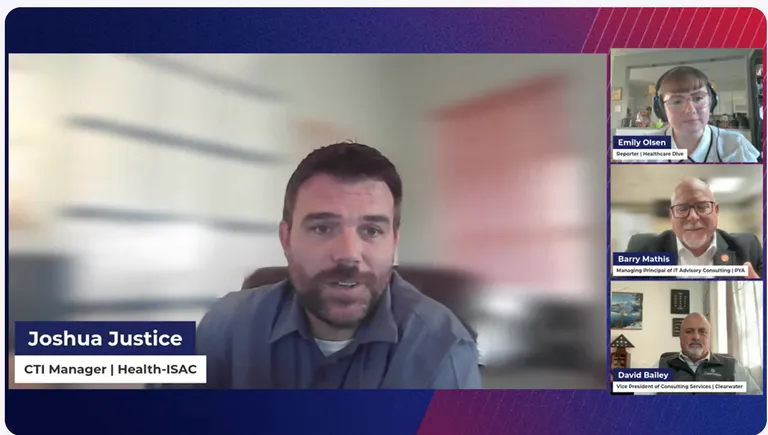
“One of the biggest mistakes I see is the belief that incident response is a linear process. It’s not. It’s a matrix process,” explains Barry mathis,Managing Principal of IT Advisory Consulting at PYA. “The plan has to be multifaceted.”
These exercises should:
* identify Roles & Responsibilities: clearly define who does what during each phase of an attack.
* Uncover Weaknesses: Pinpoint gaps in existing response plans and communication protocols.
* Develop Contingency Plans: Prepare for scenarios where critical systems are unavailable, including manual workarounds for patient care. Practicing documentation on paper, for example, is crucial for maintaining continuity of care during downtime.
* Foster Collaboration: Break down silos and encourage cross-departmental communication.
Vendor Risk Management: A Critical Line of Defense
the interconnected nature of modern healthcare creates a notable vulnerability: third-party vendors. Claims processing, remote patient monitoring, electronic health records (EHRs) – these services are often outsourced, expanding the attack surface. A breach at a vendor can quickly cascade into a compromise of patient data and operational disruption.
Robust vendor risk management is thus paramount. This includes:
* Cyber Due Diligence: Thoroughly assess a vendor’s security posture before signing a contract. Don’t rely solely on self-assessments; demand evidence of security certifications and independent audits.
* Ongoing Monitoring: Continuously monitor vendor security practices. What mechanisms do they have in place for threat detection and incident response?
* Scoring & Tiering: Rank vendors based on their risk profile and the sensitivity of the data they handle.
* AI Vendor Scrutiny: With the rapid proliferation of AI-powered healthcare solutions, heightened vigilance is required.New companies emerge quickly, but thorough vetting remains essential.As Allina’s Scandrett advises, “Providers need to ensure they’re still carefully vetting these companies.”
Sanjeev Sah,SVP of Enterprise Technology Services and CISO at Novant health,emphasizes a proactive approach: “We look at multiple potential vendors and score them based on their operations and past incidents. What is their mechanism for monitoring? How do they ensure that their security practices are sound?”
navigating the Regulatory Maze
Healthcare organizations operate within a complex web of state and federal regulations, primarily driven by the Health Insurance Portability and Accountability Act (HIPAA).Compliance is essential, but it’s not a substitute for robust security.
“I think one of the most common things that everybody gets wrong is that they think compliance is security, or security is compliance,” cautions Pavel Slavin, CISO of Endeavor Health. “They’re not synonymous.”
Key considerations include:
* Reporting Requirements: Understand and adhere to all reporting obligations for data breaches, both to federal and state authorities. Be prepared to report incidents promptly, as vendor contracts may mandate even faster notification timelines.
* Staying Current: Regulations are constantly evolving. maintain a dedicated team or resource to track changes and ensure ongoing compliance.
* Beyond the Minimum: Focus on building a security program that exceeds the minimum requirements of





![Christmas Babies 2023: First Newborns Bring Joy to Parents | [Location – if applicable]](https://i0.wp.com/www.rte.ie/images/0023ac13-1600.jpg?resize=150%2C100&ssl=1 "Christmas Babies 2023: First Newborns Bring Joy to Parents | [Location – if applicable]")


