Unlocking the Secrets of Candida auris: New Research Reveals Potential Weakness in Deadly Fungus
candida auris, a rapidly emerging and often lethal fungal pathogen, has become a significant threat in hospital intensive care units worldwide.Its resilience and ability to withstand harsh conditions have made it notoriously challenging to study and treat. Though, groundbreaking research from the University of Exeter, published in Communications Biology (a Nature portfolio journal), offers a beacon of hope, identifying a potential “Achilles heel” in this dangerous fungus and paving the way for novel treatment strategies. This research was supported by Wellcome, the Medical Research Council (MRC), and the National Center for Replacement, Reduction and Refinement (NC3Rs).
The Challenge of Candida auris and Why Traditional Methods Failed
Since its emergence, C. auris has caused widespread concern due to its high mortality rate,particularly among vulnerable patients. Health systems have invested substantial resources in containing outbreaks, often with limited success. A key obstacle to understanding and combating this pathogen has been its unique biology. C. auris thrives in high temperatures and demonstrates remarkable salt tolerance,leading to speculation about its origins in tropical marine environments. These characteristics rendered conventional laboratory models – and even commonly used animal models like mice and zebrafish – largely ineffective for studying the infection process in a realistic context.
A Novel Approach: Leveraging the Arabian Killifish
To overcome these limitations, researchers at the University of Exeter’s MRC centre for Medical Mycology (CMM) pioneered a new infection model utilizing the Arabian killifish (Aphanius dispar). This innovative approach capitalizes on the killifish’s ability to survive at temperatures comparable to the human body, allowing for observation of infection under conditions closely mirroring those experienced by patients. This model, developed with support from an NC3Rs project grant, represents a significant advancement in fungal infection research, offering a crucial option to traditional animal studies. As Dr.Katie Bates, NC3Rs Head of Research Funding, notes, “This new publication demonstrates the utility of the replacement model to study Candida auris infection and enable unprecedented insights into cellular and molecular events in live infected hosts.”
Unveiling Genetic Vulnerabilities During Infection
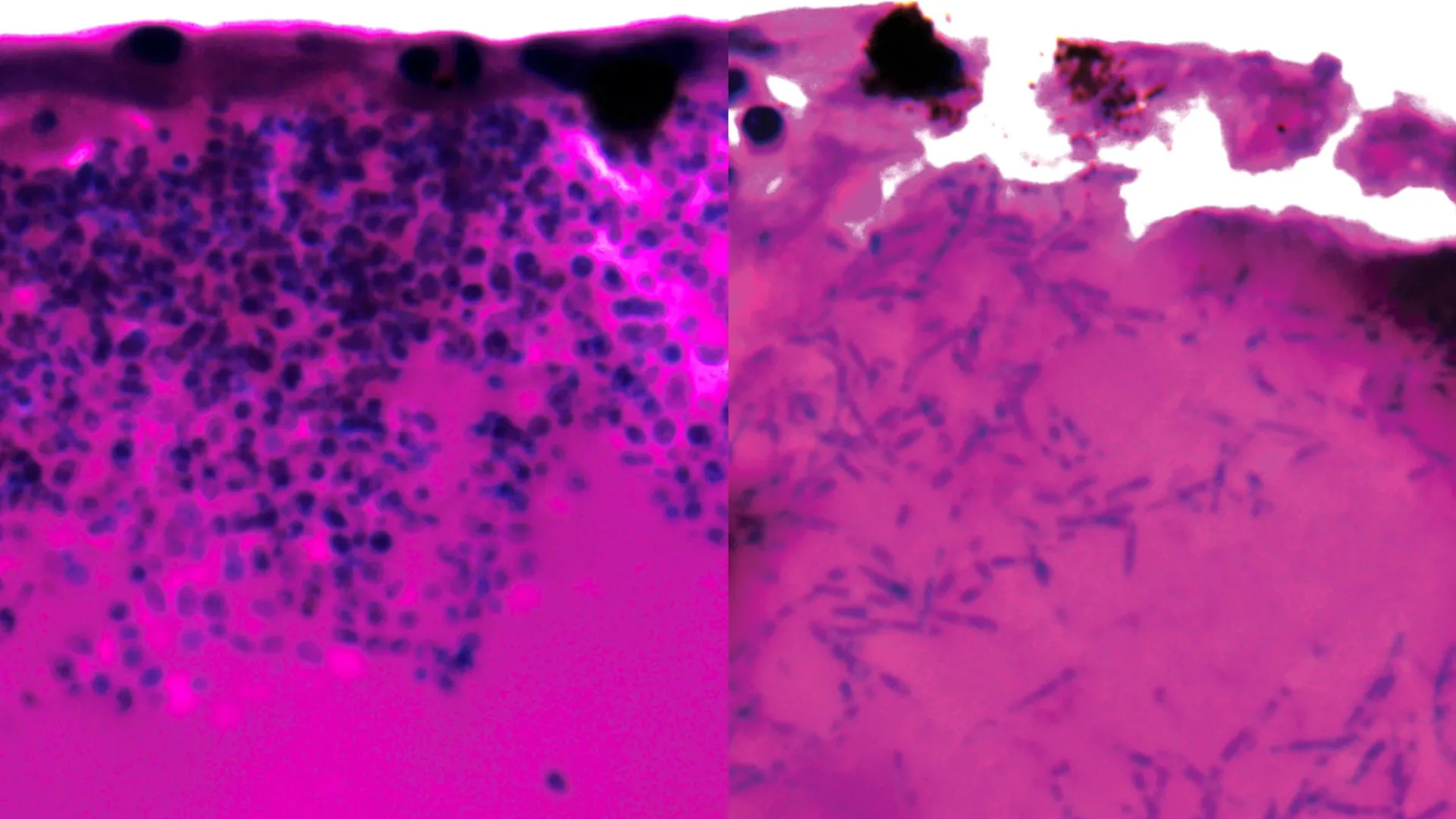
Using the Arabian killifish model, the research team meticulously observed the behavior of C. auris during infection. They discovered that the fungus adapts by forming elongated, filamentous structures – a process likely aimed at enhancing nutrient acquisition within the host. Crucially, they also conducted a thorough analysis of gene activity, identifying which genes were activated or suppressed during infection.
This genetic analysis revealed a compelling vulnerability: a significant upregulation of genes responsible for producing nutrient pumps. These pumps are specifically designed to capture iron-scavenging molecules and transport iron into fungal cells. Iron is an essential element for fungal survival,making this process a potential critical weakness.
“Until now, we’ve had no idea what genes are active during infection of a living host,” explains dr. Rhys farrer, co-senior author of the study. “We now need to find out if this also occurs during human infection. The fact that we found genes are activated to scavenge iron gives clues to where Candida auris may originate, such as an iron-poor surroundings in the sea. It also gives us a potential target for new and already existing drugs.”
Implications for Treatment and Future Research
The findings hold significant promise for the development of new antifungal therapies. Dr. Hugh Gifford, co-lead of the project and an NIHR Clinical Lecturer, emphasizes the clinical relevance of the research. “We think our research may have revealed an Achilles heel in this lethal pathogen during active infection, and we urgently need more research to explore whether we can find drugs that target and exploit this weakness.”
The team is now focused on determining whether the observed iron-scavenging activity occurs during human infections. Importantly, existing drugs already target iron scavenging pathways, raising the possibility of repurposing these medications to combat C. auris. Dr. Gifford, who also practices in intensive care and respiratory medicine, adds, “We have drugs that target iron scavenging activities. We now need to explore whether they could be repurposed to stop Candida auris from killing humans and closing down hospital intensive care units.”
this research, detailed in the paper titled ‘xenosiderophore transporter gene expression and clade-specific filamentation in Candida auris killifish (Aphanius dispar) infection,’ represents a major step forward in our understanding of C. auris and offers a tangible pathway towards developing effective treatments for this increasingly prevalent and dangerous fungal infection. the innovative use of the Arabian killifish model underscores the importance of exploring alternative research approaches to overcome the challenges posed by complex pathogens like *