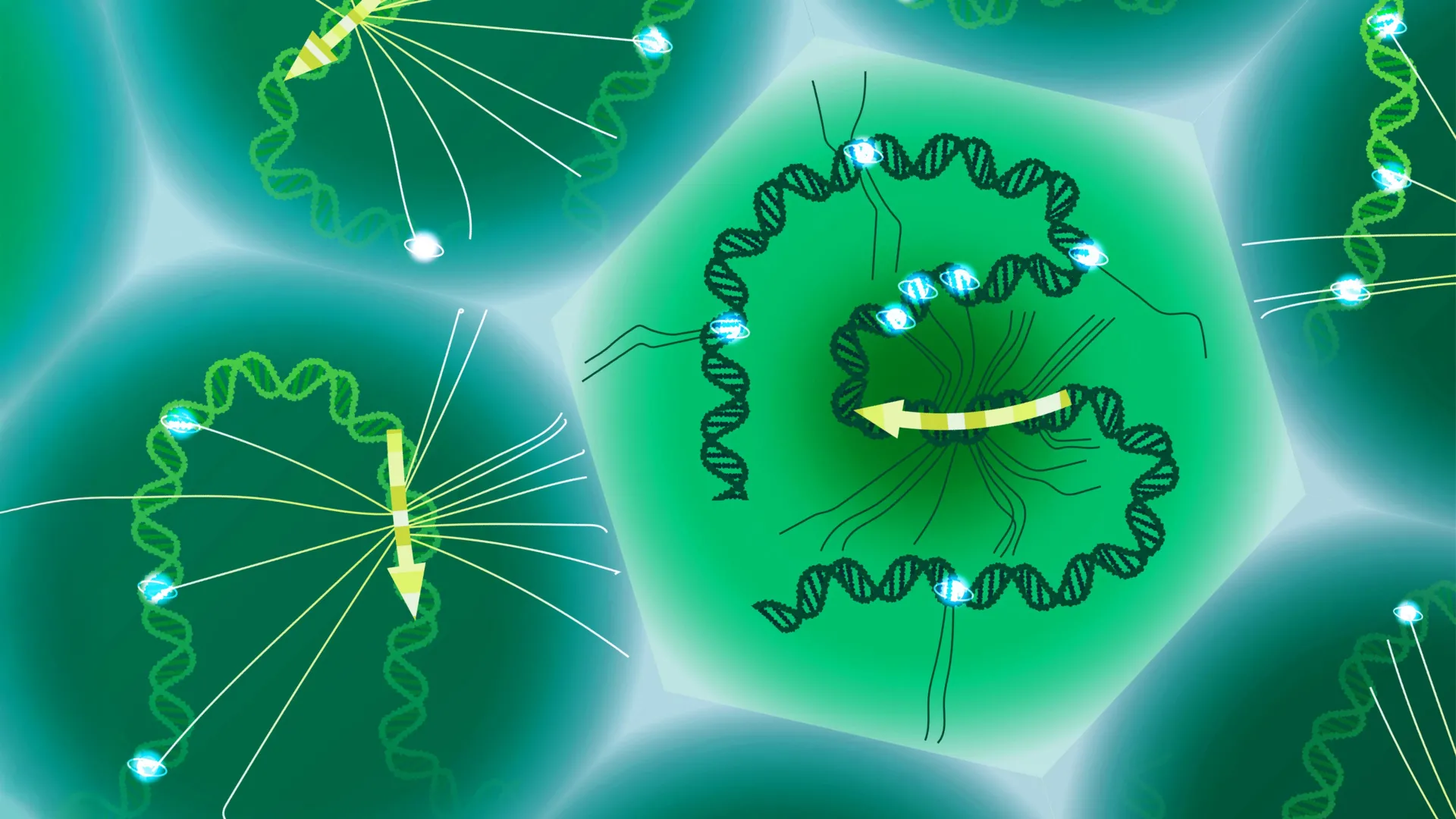
Unlocking the Genome’s Hidden Language: Single-Cell SDR-Seq Reveals the Impact of Non-Coding DNA Variants on Disease
For decades,genomic research has focused heavily on the protein-coding regions of our DNA – the ”instruction manuals” that dictate cellular function. However,the vast majority of genetic variations linked to disease reside outside these coding regions,in the often-overlooked non-coding DNA. Now, a groundbreaking new technology, Single-cell DNA adn RNA sequencing (SDR-seq), developed by researchers at EMBL and collaborating institutions, is poised to revolutionize our understanding of these critical genetic elements and their role in complex diseases like cancer, autism, and schizophrenia.Published recently in Nature Methods, SDR-seq offers an unprecedented ability to connect genetic variations, nonetheless of location, to gene activity within individual cells.
The Challenge of the Non-Coding Genome
The human genome is a complex landscape. While coding regions provide the blueprints for proteins, non-coding regions act as sophisticated regulatory elements, controlling how and when genes are expressed. Over 95% of disease-linked DNA variants are found within these non-coding regions, highlighting their profound importance. Though, traditional single-cell methods have lacked the sensitivity and scale to effectively study them.
“on a single-cell level, you could read out variants in thousands of cells, but only if they had been expressed - so only from coded regions,” explains Dr. Benjamin Lindenhofer, lead author of the study and a postdoctoral fellow in EMBL’s Steinmetz Group. “Our tool works, irrespective of where variants are located, yielding single-cell numbers that enable analysis of complex samples.”
This limitation meant researchers were previously unable to simultaneously observe DNA and RNA from the same cell on a large scale, hindering a comprehensive understanding of how DNA variations influence gene activity and contribute to disease development.The inability to bridge this gap has left a critically important portion of the genetic basis of disease unexplored.
SDR-Seq: A Technological Breakthrough
SDR-seq overcomes these limitations by leveraging the power of microfluidics. Researchers encapsulate individual cells within tiny oil-water droplets,creating isolated reaction chambers where both DNA and RNA can be analyzed simultaneously. This high-throughput approach allows for the examination of thousands of cells in a single experiment, directly linking genetic changes to patterns of gene expression.
The development of SDR-seq was a collaborative effort, bringing together expertise from EMBL’s Genome Biology and Structural and Computational Biology units, Stanford University School of Medicine, and Heidelberg University Hospital. Key innovations included:
* RNA Preservation: Researchers, led by Judith Zaugg and Kyung-Min Noh at EMBL, developed a “fixing” process to preserve the delicate RNA molecules within cells, ensuring accurate analysis.
* Complex Data Decoding: Computational biologists in Oliver Stegle’s group designed a specialized program to decode the intricate DNA barcoding system essential for analyzing the vast amounts of data generated by SDR-seq. This software, while initially developed for this project, holds promise for broader applications in single-cell genomics.
Early Insights: B-Cell Lymphoma and the Path to Malignancy
To validate the technology, the team applied SDR-seq to samples from patients with B-cell lymphoma, a cancer characterized by significant genetic variation. The results were compelling. Lindenhofer and his team observed a direct correlation between DNA variations and disease processes.
“We are using these small reaction chambers to read out DNA and RNA in the same single cell,” Lindenhofer states. “This lets us accurately tell whether a variant is on one or both copies of a gene and measure it’s effects on gene expression in the same single cells.”
Specifically, they found that cancer cells with a higher number of genetic variants exhibited stronger activation signals associated with tumor growth. Furthermore, the technology revealed that the specific combination of variants within a cell influenced its cellular state, and an increasing number of variants correlated with a more malignant lymphoma state.This demonstrates the power of SDR-seq to not only identify variants but also to understand their functional consequences within the complex context of a living cell.
The Future of Genomic Medicine
SDR-seq represents a significant leap forward in genomic technology, offering researchers unprecedented scale, precision, and speed. While the potential applications are vast, ranging from understanding the genetic basis of complex diseases to developing personalized therapies, the initial impact is likely to be felt in the realm of diagnostics.
“We have a tool that can link variants to disease,” emphasizes Dr.Lars steinmetz, senior author on the paper, EMBL group leader, and genetics professor at Stanford University School of Medicine.”This capability opens up a wide range of biology that we can now discover. If we can discern how variants actually regulate disease and understand that disease process better, it means we have a better prospect to