
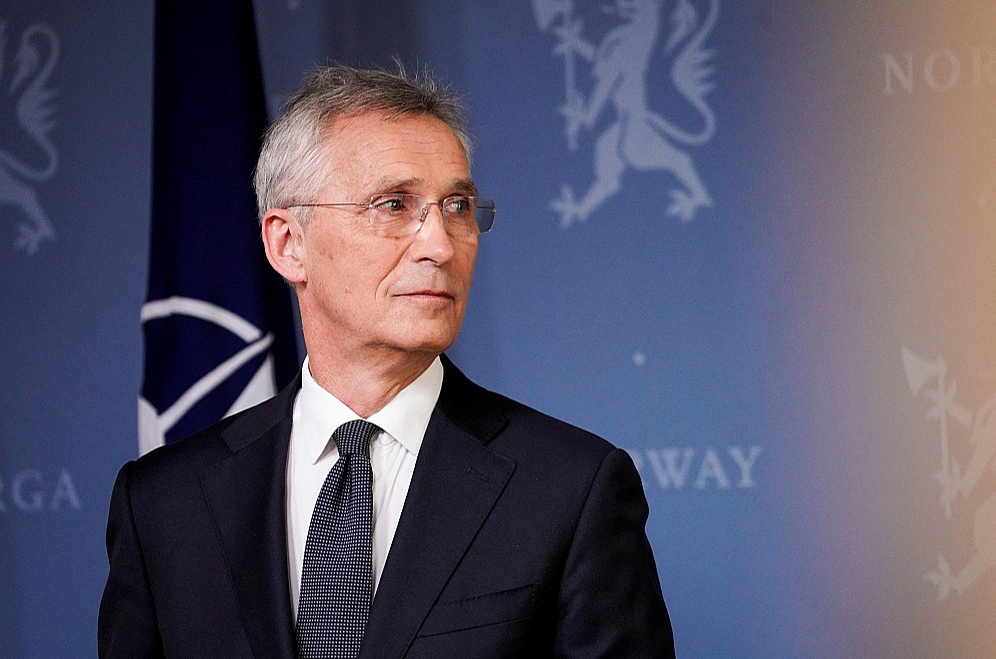
The diplomatic landscape in Northern Europe has been unsettled by a brewing controversy surrounding the memoirs of former NATO Secretary General Jens Stoltenberg. While the Norwegian politician has transitioned into a modern chapter of public service, fragments of his reflections on his decade-long leadership of the alliance have sparked intense debate across the Baltic states, raising questions about the historical nuances of NATO’s security guarantees.
The tension centers on the interpretation of specific passages in Stoltenberg’s upcoming memoirs. In Latvia and neighboring Baltic capitals, the discourse has shifted from professional curiosity to a heated geopolitical argument. The core of the dispute involves how the alliance viewed the strategic vulnerability of the Baltic states and whether there were internal discussions regarding concessions to the Kremlin during periods of extreme tension.
As of February 4, 2025, Jens Stoltenberg has served as Norway’s Minister of Finance after previously holding the position, marking a significant return to domestic governance following his tenure as the 13th Secretary General of NATO from October 1, 2014, to October 1, 2024 according to official records. However, his legacy at the helm of the alliance remains the focal point of current regional scrutiny.
The Nature of the Memoirs Controversy
The current friction stems from leaked fragments or interpretations of Stoltenberg’s writings, which some commentators in the Baltic region have characterized as a “loud flash” of controversy. Specifically, reports in Latvian media have highlighted a debate over whether the text suggests a willingness to “deliver” or trade the security interests of the Baltic states to Vladimir Putin to avoid wider conflict.

The reaction has been polarized. Some regional analysts and public figures, including Māris Antonevičs, have pointed to these interpretations as a cause for alarm, suggesting they reveal a gap between the public rhetoric of “unbreakable” solidarity and the private strategic calculations of alliance leadership. The sensitivity of this issue is rooted in the existential nature of security for Estonia, Latvia, and Lithuania, given their proximity to Russia and the history of Soviet occupation.
Conversely, other voices have urged caution against overreacting to isolated fragments. Armands Puče has framed the current atmosphere as a form of “diplomatic hysteria,” suggesting that the outcry may be based on a narrow or incorrect reading of the text rather than a reflection of actual policy or intent.
Divergent Interpretations of NATO Strategy
The controversy highlights a recurring tension within NATO: the balance between the “deterrence” strategy favored by the Eastern flank and the “de-escalation” approach often managed by the alliance’s central leadership. For the Baltic states, any suggestion that their territory could be viewed as a negotiable asset is viewed not just as a diplomatic slight, but as a security failure.
The debate is further complicated by the “correct” interpretation of the memoir fragments. Some argue that Stoltenberg may have been documenting the pressures he faced from other member states or the realities of the strategic dilemmas he navigated, rather than advocating for the abandonment of the Baltics. This distinction is critical, as the Secretary General’s role is often to synthesize the conflicting demands of 32 different nations into a single cohesive strategy.
Stoltenberg has previously been vocal about the strategic errors made by the Russian leadership. In a joint meeting on September 7, 2023, he stated that President Putin had made “at least two big strategic” mistakes as recorded in NATO transcripts. This public stance of strength stands in stark contrast to the allegations currently being debated in the Baltic press.
Stoltenberg’s Legacy and the “Putin Calculus”
To understand the weight of this controversy, one must seem at the era Stoltenberg presided over. From 2014 to 2024, he navigated the alliance through the annexation of Crimea, the COVID-19 pandemic, and the full-scale invasion of Ukraine. His tenure was defined by an effort to modernize NATO’s command structure and increase the permanent presence of allied forces on the Eastern flank.
Even after leaving NATO, Stoltenberg has continued to analyze the motivations of the Kremlin. On October 1, 2025, during the Warsaw Security Forum, he discussed the necessity of changing “Putin’s calculus” to ensure long-term European stability in an interview with DW. This ongoing focus on the psychology of the Russian leadership suggests that his memoirs are likely intended as a study of power and deterrence rather than a confession of weakness.
For the residents of the Baltic states, however, the nuance of a memoir is secondary to the certainty of protection. The “scandal” serves as a reminder that trust between the alliance’s periphery and its core remains a fragile commodity, easily disrupted by a single misinterpreted paragraph.
Key Context: Stoltenberg’s Career Transitions
| Period | Role | Key Focus |
|---|---|---|
| 2014 – 2024 | Secretary General of NATO | Alliance expansion and Eastern flank deterrence |
| October 2025 | Former NATO Chief (Public Speaker) | Analyzing Putin’s strategic calculus |
| Feb 4, 2025 – Present | Minister of Finance, Norway | Domestic Norwegian economic policy |
As the full text of the memoirs becomes available, the international community will likely witness whether these “loud flashes” were the result of genuine strategic revelations or the byproduct of a highly charged political environment in the Baltics. For now, the episode underscores the enduring anxiety of the region and the immense pressure placed on those who lead the Western security architecture.
The next significant checkpoint will be the official release and publication of the full memoirs, which is expected to provide the complete context for the passages currently under scrutiny. We will continue to monitor official statements from the Norwegian government and NATO headquarters regarding these claims.
Do you believe that memoirs of high-ranking officials should be vetted by alliance members before publication to avoid diplomatic friction? Share your thoughts in the comments below.