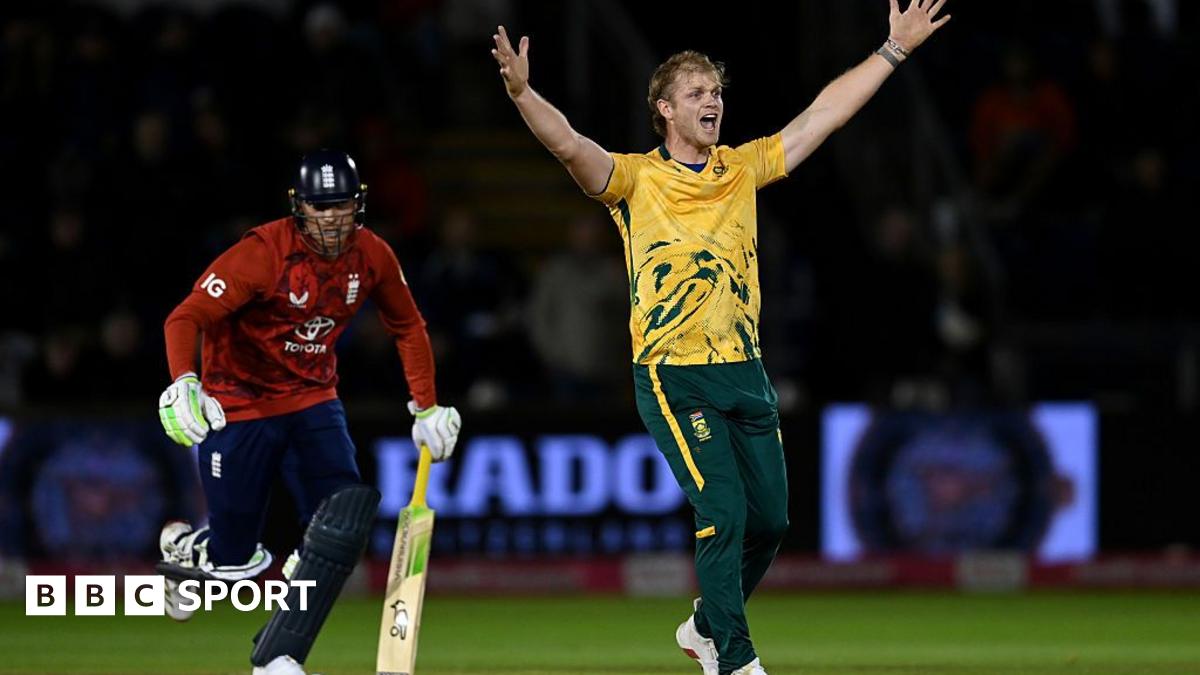
Rain Washes Away England’s Momentum in T20 Opener Against South Africa
Did you catch the chaotic T20 opener between England and South Africa at Cardiff? A deluge of rain and a dramatically shortened match led too a 14-run victory for the Proteas, leaving England with plenty to ponder ahead of the remaining series. This wasn’t yoru typical T20 contest; it was a masterclass in adapting to unpredictable conditions and a reminder of how quickly a game can change.
Here’s a breakdown of what happened, why it mattered, and what it means for the rest of the series.
A Match Defined by Disruption
The match was significantly impacted by weather from the start. A delayed start meant a reduction to nine overs per side, immediately shifting the strategic landscape. South Africa capitalized, posting a competitive 97/5 in 7.5 overs before another rain interruption.
This led to a revised target for England: 69 runs in just five overs. Essentially, they had to attack from ball one, a high-risk, high-reward scenario.
England’s Chase Falls Short
England’s pursuit got off to a disastrous start. Phil Salt was out first ball, caught at fine leg, immediately putting pressure on the middle order. Jacob Bethell followed soon after, chipping to cover for seven, and captain Harry Brook endured a chaotic four-ball duck.
Jos buttler injected some life into the chase with a quickfire 25 off 11 balls, including three sixes. However, the early wickets proved too costly to recover from. Despite a late surge from recalled all-rounder Sam Curran, who hit a crucial six, England finished on 54/5, falling short of the revised target. Corbin Bosch and Marco Jansen where the pick of the South African bowlers, each taking two wickets.
South Africa Sets the Pace
Earlier in the evening, a late change saw Luke Wood replace Jofra Archer in the England lineup. Wood made an immediate impact, dismissing Ryan Rickelton in the first over. Though,South Africa quickly recovered,led by a brisk 28 from 14 balls by captain Aiden Markram.
Dewald Brevis, fresh off becoming the most expensive player in the recent SA20 auction (https://www.bbc.com/sport/cricket/articles/cx2xyrg5z99o),showcased his talent with an entertaining 23 off 10 balls. Donovan Ferreira finished unbeaten with 25 from 11, providing valuable late-innings impetus.
Key Takeaways & What’s Next
Rain Rules: The match highlighted the important impact weather can have on T20 cricket, forcing teams to adapt quickly and prioritize aggressive batting.
Top-Order Struggles: England’s early wicket losses were crucial. A stronger start would have dramatically altered the complexion of the chase. South African Adaptability: The Proteas demonstrated excellent adaptability, maximizing their scoring opportunities in the limited overs available.
Curran’s Impact: Sam Curran’s late hitting offered a glimmer of hope, showcasing his value as a power hitter and all-rounder.
The series moves to Old Trafford on Friday, with – you guessed it – more rain forecast. Will England be able to bounce back and level the series, or will South Africa maintain their momentum?
Evergreen Insights: Mastering T20 Strategy in Challenging Conditions
T20 cricket is inherently unpredictable, but certain principles remain constant, especially when facing disruptions like rain. Here’s what you need to know:
powerplay Prioritization: In shortened matches, the powerplay becomes even more critical. Teams must maximize scoring opportunities during this phase.
Adaptable Bowling Plans: Bowlers need to adjust their lengths and variations based on the pitch conditions and the match situation. Slower balls and yorkers become particularly effective.
Strategic Fielding Placements: Aggressive fielding placements can create pressure and force errors from the opposition. Mental Fortitude: Remaining calm and focused under pressure is essential, especially when the game is constantly changing.
* Impactful All-Rounders: Players who can contribute with both