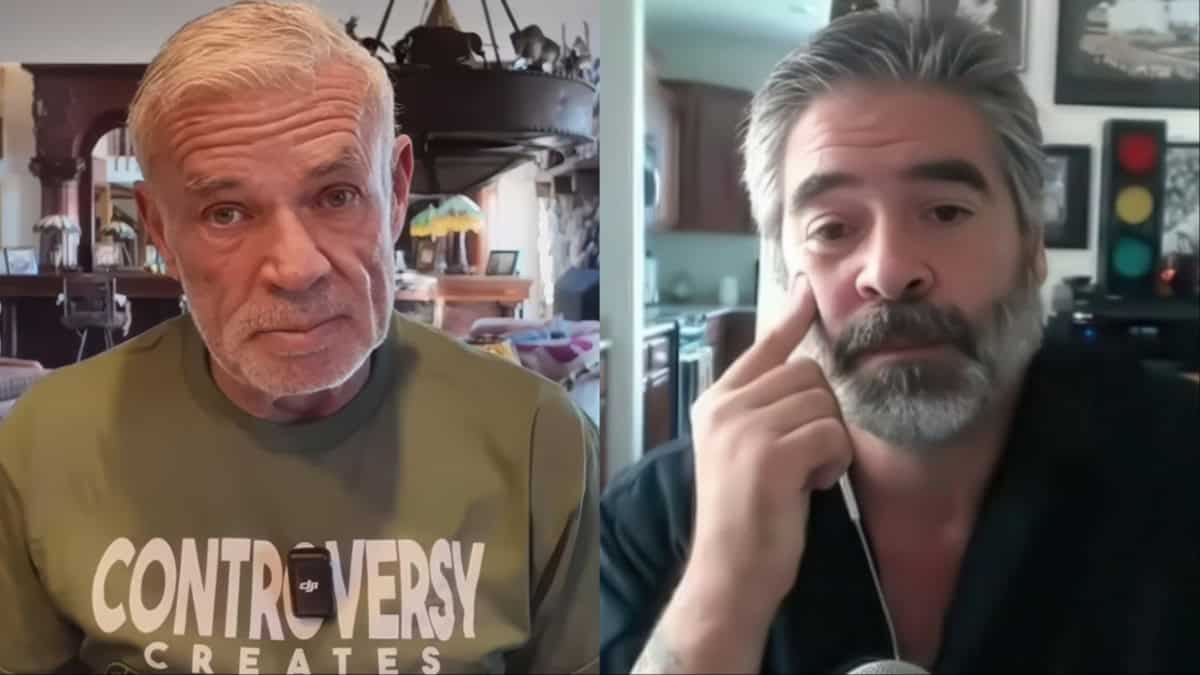
Eric Bischoff Delivers a Scathing critique of Vince Russo‘s Wrestling Creative Beliefs: A Deep dive into storytelling, Obligation, and Buisness Realities
For decades, the wrestling world has debated the creative contributions of Vince Russo, a writer known for his fast-paced, often controversial approach. Now, eric Bischoff, a veteran wrestling executive with a proven track record of success in WCW and WWE, has offered a remarkably candid and detailed assessment of Russo’s methods, arguing they consistently fall short of building lasting, profitable wrestling promotions. This analysis, delivered with Bischoff’s characteristic directness, isn’t simply a personal feud; it’s a fundamental disagreement on the core principles of wrestling storytelling and the responsibilities of those who create it.
Bischoff’s central argument isn’t about Russo’s work ethic, but rather the nature of his creative output. He contends that Russo consistently prioritized “angles” – short-term, attention-grabbing moments – over cohesive “stories” with a beginning, middle, and end.”Everybody’s pitching angles, nobody’s pitching stories,” Bischoff recalls saying repeatedly during their time together. He emphasizes that a compelling wrestling narrative requires more than just a series of matches booked week after week. It demands character development, emotional investment from the audience, and a journey that resonates beyond immediate shock value. Simply put, booking matches isn’t storytelling; it’s event scheduling.
This distinction is crucial.Bischoff argues that Russo’s approach resulted in a chaotic and unstructured product, lacking the necessary foundation for long-term audience engagement. He points to the frequent reliance on outlandish concepts, like kidnapping angles, as prime examples of this failure. “There’s an art to suspending disbelief,” Bischoff explains, “and kidnapping angles… they never, ever, ever work.” These premises, he believes, are inherently implausible and shatter the delicate balance between reality and spectacle that makes professional wrestling captivating.
The Accountability Factor: A Core Difference
Beyond the creative philosophy itself, Bischoff identifies a important character flaw: Russo’s perceived unwillingness to accept responsibility for failures. “He wants to take credit for all of the good stuff… and he does,and he will embellish the truth to make sure he does,” Bischoff states bluntly. “But when it turns out to be a flaming bag of dog poo… he’ll blame somebody else. He will lie, he will make stuff up.” This lack of accountability, according to Bischoff, is a critical impediment to learning and growth. A triumphant creative process requires honest self-assessment and a willingness to acknowledge mistakes.
This pattern, Bischoff asserts, wasn’t isolated to their time in WCW.He observed the same dynamics unfold during their shared tenure at TNA Wrestling, further reinforcing his conviction that Russo’s formula is fundamentally flawed. He challenges anyone to point to a sustained period of financial success achieved under Russo’s creative leadership in WWE, WCW, or TNA. “Show me where that formula and that approach has ever drawn a dime for anybody,” he demands. “It doesn’t draw money.”
Executive Responsibility vs. Magazine Writing: A Clash of Perspectives
Bischoff attributes these differences to their contrasting professional backgrounds. He frames their creative clash as a fundamental difference in responsibilities. As an executive responsible for a multi-million dollar business – with budgets, profit and loss statements, advertisers, and network relationships – Bischoff’s focus was on long-term growth and brand stability. Russo, conversely, came from a background as a magazine writer, prioritizing immediate impact and controversial moments for a single show.
“I had a lot of constituents that I had to be responsible to, and he didn’t,” Bischoff explains. this difference in perspective shaped their approaches to building a wrestling show and, ultimately, a wrestling company. Bischoff’s priority was building a sustainable brand; russo’s appeared to be generating short-term buzz, irrespective of the long-term consequences.
the Bottom Line: A Lack of Foundational Elements
Bischoff’s assessment paints a clear picture of two creative minds with fundamentally irreconcilable views. he argues that Russo’s creative output consistently lacks the foundational elements of successful wrestling television: compelling narrative arcs, believable character development, and logical story progression. Without these elements, the shows fail to connect with the audience on a meaningful level, hindering their ability to translate viewership into sustainable business growth.
Bischoff’s critique isn’t merely a recounting of past disagreements; it