
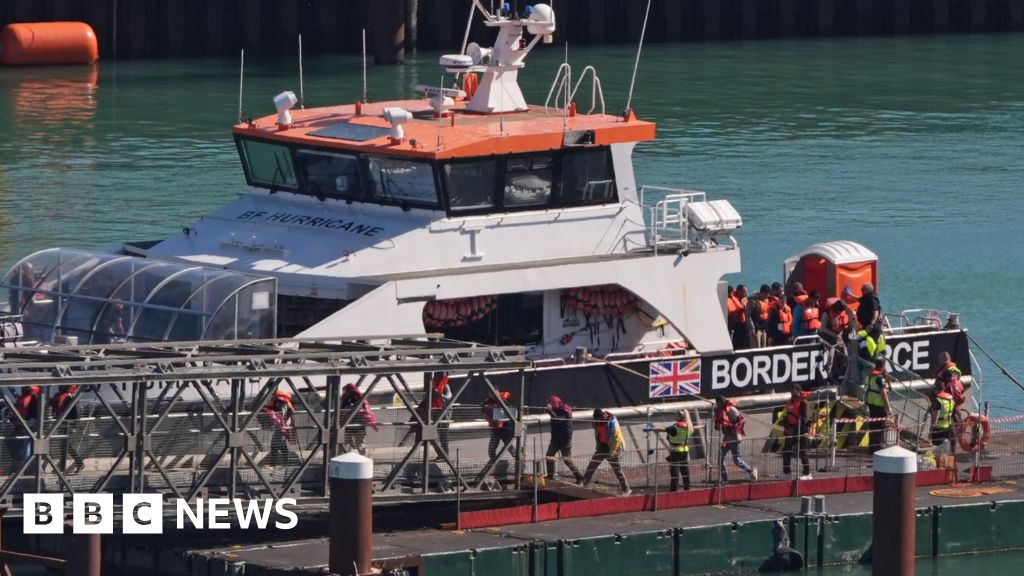
UK’s Migrant Return Scheme Faces Legal Setback, Future Uncertain
The recently launched initiative aimed at reducing small boat crossings of the English Channel has hit a significant roadblock. A High Court ruling has temporarily halted the program,casting doubt on its immediate future and reigniting a broader debate about immigration policy. This development comes as the government attempts to manage a complex situation involving international agreements and legal challenges.
Understanding the Scheme
The plan, announced earlier this year, centered on a reciprocal agreement with a neighboring European nation. It stipulated that individuals arriving in the UK via small boats, whose asylum claims were deemed inadmissible, would be returned to the country of origin.Simultaneously, the UK would accept a limited number of individuals with legitimate refugee status who had not undertaken the perilous Channel crossing.
Essentially, it was designed as a “one in, one out” system. The goal was to deter dangerous journeys and establish a more orderly approach to asylum claims.
Initial Implementation and Challenges
Preparations for the scheme’s launch were underway, with some individuals held in immigration removal centers receiving notification of potential departure dates. Flights were scheduled, and arrangements made for returns to begin this week. However, a wave of last-minute legal challenges and appeals led to deferrals for several individuals slated for removal.
Despite assurances from government officials that the scheme was legally sound, concerns persisted. A spokesperson maintained the government’s confidence in the pilot program and its compliance with both domestic and international law.
The High Court Ruling and Its Implications
The High Court’s intervention effectively paused the scheme, pending further legal review. The ruling raises critical questions about the scheme’s compatibility with human rights laws and international obligations. It’s a setback for the government, which had positioned the initiative as a key component of its strategy to address illegal immigration.
This situation is highly likely to intensify the ongoing discussion surrounding the role of international human rights frameworks in national immigration policies. The debate has been particularly focused on the European Convention on Human Rights, a topic that has divided political parties for years.
Political Fallout and Future Outlook
The Conservative Party is expected to outline its stance on the European Convention on Human Rights at its upcoming conference. Many anticipate a move towards potential withdrawal from the convention.
However, the current opposition leader has stated his unwillingness to consider such a step. This divergence creates significant pressure on the government to demonstrate the viability of its returns scheme within the existing legal framework.
You can expect increased scrutiny of the government’s approach to immigration. The success of this scheme, or the development of alternative strategies, will be crucial in shaping public perception and influencing future policy decisions.
Here’s a speedy recap of key takeaways:
* The migrant return scheme has been temporarily halted by a High Court ruling.
* The scheme aimed to deter small boat crossings through a reciprocal agreement.
* Legal challenges and concerns about human rights compliance have emerged.
* The situation is fueling a broader debate about the role of international law in immigration policy.
* Political divisions over the European Convention on Human Rights are intensifying.
This is a developing story,and we will continue to provide updates as they become available.


![MLB Big Ball Chunky Sneakers – Sale & Deals in Catanzaro | [Year]](https://images.sbito.it/api/v1/sbt-ads-images-pro/images/d5/d532cce5-6d32-4458-b80c-7411820ba2ca?rule=fullscreen-1x-auto "MLB Big Ball Chunky Sneakers – Sale & Deals in Catanzaro | [Year]")
_PKG_DOT_Commish_Sitdown "NYC DOT Commissioner: Vision & Priorities for New York City Transportation")

