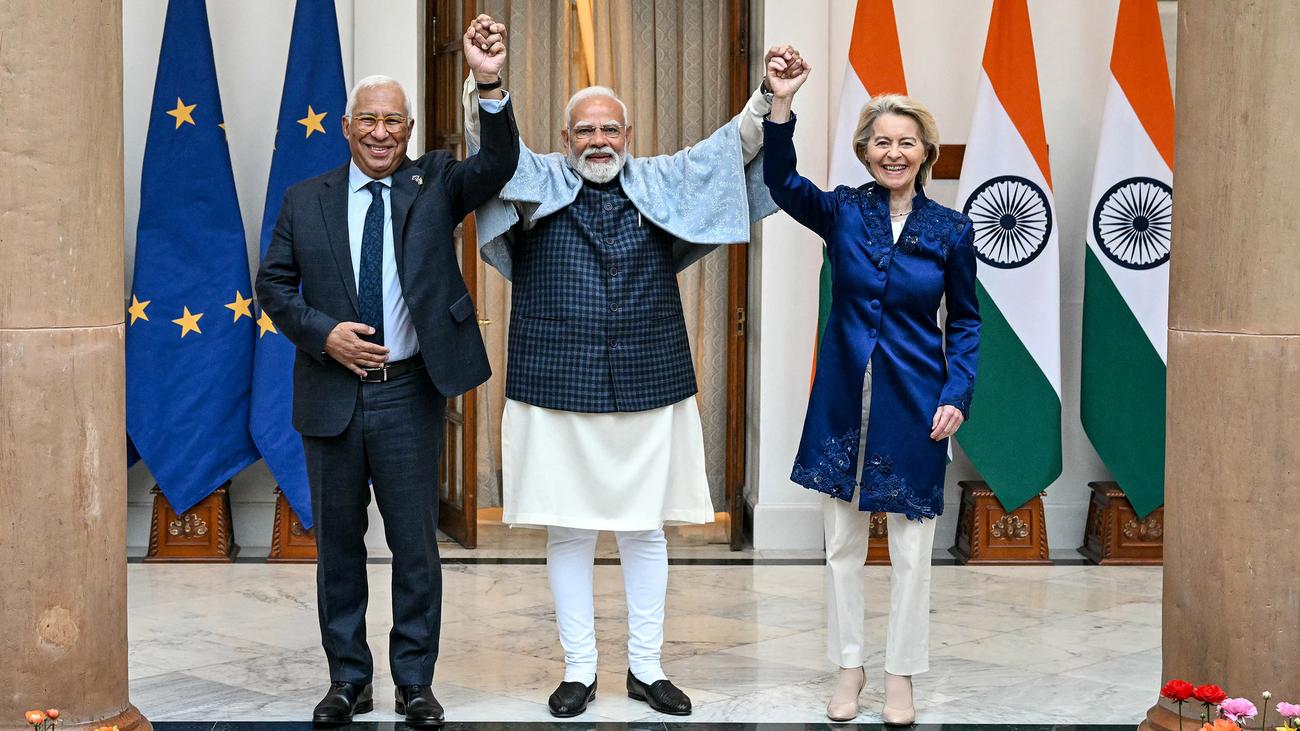
EU and India Reach Agreement on Trade and Technology
The European Union and India have reached a broad agreement on a free trade and technology partnership, aiming to boost economic ties and address geopolitical challenges. The deal, finalized after years of negotiations, focuses on reducing trade barriers, fostering technological collaboration, and enhancing supply chain resilience.
Key Components of the Agreement
The agreement will see the EU reduce tariffs on Indian goods, while India will offer greater access to its market for European products. Specifically, India is expected to increase exports of steel, pharmaceuticals, and textiles to the EU. A key aspect of the deal involves addressing patent hurdles to facilitate technology transfer and innovation. The EU aims to secure access to India’s large and rapidly growing market, currently the world’s most populous nation and projected to become the fourth-largest economy this year.The EU is already India’s largest trading partner.
Navigating Complexities: Agricultural Exemptions
Certain agricultural products, including beef, pork, poultry, rice, and sugar, are excluded from the agreement. This exclusion makes the deal less controversial in Europe compared to the trade agreement with Mercosur nations (Brazil, argentina, Uruguay, and Paraguay).
Mercosur Deal Faces Legal Scrutiny
The EU recently concluded a trade agreement with Mercosur in mid-January. However, the agreement is now subject to review by the European Court of Justice following a vote in the EU Parliament, perhaps delaying its implementation.concerns center around environmental standards and sustainability commitments within the Mercosur agreement.
EU Diversifies Trade Partnerships
The EU is actively seeking to diversify its trade partnerships globally. The trade policies of the former US President Donald Trump, including the imposition of tariffs, caused volatility in global markets and challenges for European exporters, prompting the EU to explore option trade relationships.
Key Takeaways
- The EU-India agreement aims to reduce trade barriers and boost economic cooperation.
- The deal focuses on sectors like steel, pharmaceuticals, textiles, and technology transfer.
- Agricultural products are largely excluded from the agreement.
- The EU is actively diversifying its trade partnerships in response to global economic shifts.
- The EU-Mercosur deal is facing legal challenges and potential delays.