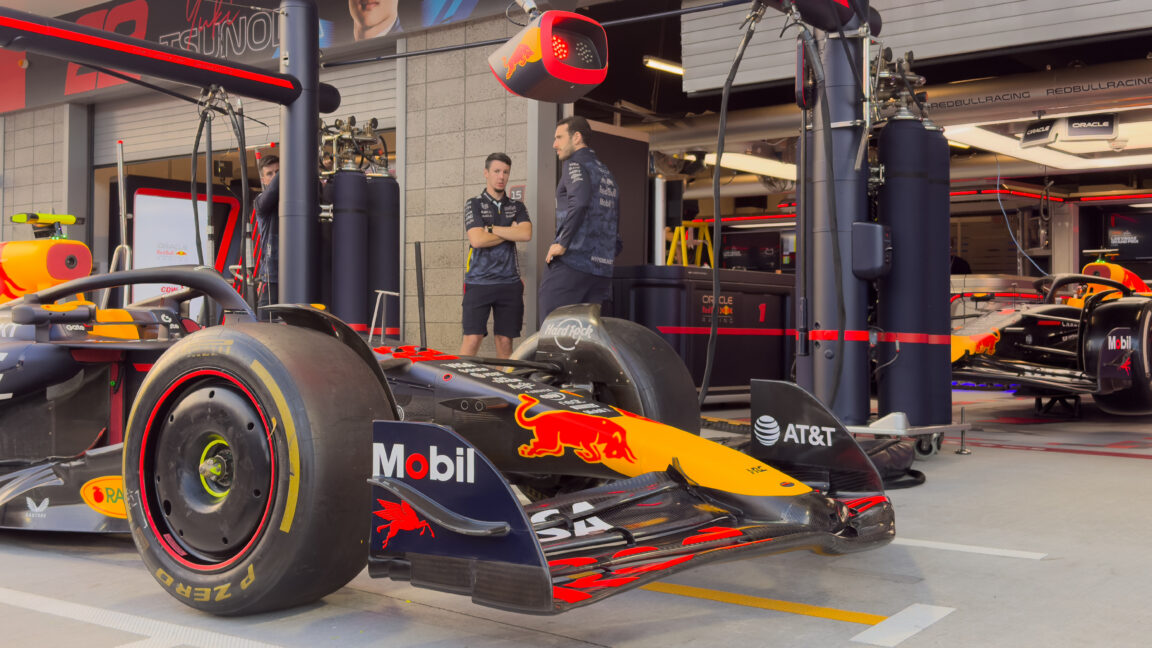
The Data-Driven Edge: How Formula 1 is Winning with Real-Time Analytics
Formula 1 racing isn’t just about speed; it’s a relentless pursuit of optimization fueled by an explosion of data analytics.The modern F1 car is a rolling laboratory, generating a torrent of details that’s reshaping how teams strategize, develop, and ultimately, win races. This isn’t your grandfather’s racing - it’s a high-stakes game of milliseconds, where the difference between victory and defeat hinges on the ability to harness and interpret vast datasets in real-time.
But how much data are we talking about? And how are teams like Red Bull Racing leveraging this information to gain a competitive advantage? Let’s dive in.
Bigger Data, faster Insights
The sheer volume of data generated by each Formula 1 car has tripled in recent years. Today, approximately 750 sensors are embedded within each vehicle, constantly transmitting data streams. This equates to roughly 1.5 terabytes per car, per race – a staggering amount of information. Compared to the relatively basic telemetry of the past – focusing on TV feeds, throttle, brake, and steering - this represents a paradigm shift.
Now, dedicated teams of engineers analyze this data live, tucked away from the cameras in the garage and connected directly to the team’s headquarters.”We need as well to bring it straight away to Milton Keynes because it’s helping us to fine-tune the setup-so when you are here on Friday-and it’s helping us as well on Sunday to make the best decision for the race strategy,” explains Guillaume Maia, a key figure within a leading F1 team.
What role does data play in your decision-making process, whether in a professional or personal context?
This immediate feedback loop is crucial. It allows teams to adjust car setups throughout a race weekend, optimizing performance for qualifying and the race itself. The ability to rapidly analyze and react to data is no longer a luxury; it’s a necessity.
The Importance of Low Latency
The value of this data is directly tied to its speed and reliability. As Zee Hussain, Head of Global Enterprise Solutions at AT&T, puts it, “It is a sport of milliseconds… the speed of data, the reliability of data, the latency, the security is just absolutely critical.”
Do you think the investment in data infrastructure is proportionate to the gains achieved in performance? Why or why not?
Even seemingly insignificant delays can have dramatic consequences.Maia notes that the latency between Australia and the UK – a notable distance – is only around 0.3 seconds. “It’s nothing. I think if you are on WhatsApp, calling someone is maybe more latency… So it’s extraordinary,” he states. This highlights the refined network infrastructure underpinning modern F1, ensuring data flows seamlessly across continents. This is achieved through partnerships with companies like AT&T, utilizing dedicated fiber optic lines and advanced network technologies. Learn more about AT&T’s work in F1.
Beyond Speed: Efficiency and Cost Control
interestingly, the focus on data isn’t just about squeezing out marginal gains in performance. Teams are also discovering ways to improve efficiency and control costs. Maia reveals, “We learned how to be more efficient as before… we were so focused on performance that we almost forgot about efficiency… we have more people now than we had in 2017, for example, in the team, but we are spending less money.”
This suggests that advanced data analysis is enabling teams to optimize resource allocation, identify areas of waste, and ultimately, achieve more with less. This is a significant growth, particularly in a sport known for its exorbitant costs. The use of predictive analytics and machine learning is becoming increasingly prevalent, allowing teams to anticipate potential failures and proactively address them, reducing downtime and repair costs.
How could similar data-driven approaches be applied to improve efficiency in your industry?
The Future of F1: AI and Edge Computing
Looking ahead, the role of artificial intelligence (AI) and edge computing will only become more prominent.Edge computing – processing data closer to the source (i.e., on the car itself) – will reduce latency even further,