
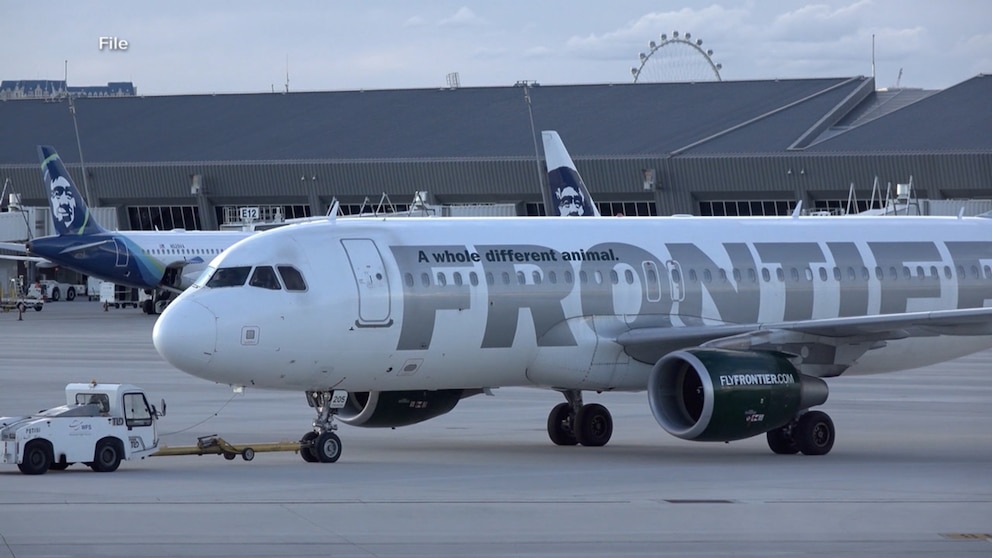
The Federal Aviation Administration (FAA) has launched a formal investigation into a harrowing near-collision at Los Angeles International Airport (LAX), where a Frontier Airlines passenger jet nearly struck two ground vehicles on a taxiway. The incident, which occurred this week, has raised fresh questions regarding ground traffic management and visibility at one of the world’s busiest aviation hubs.
According to flight data and official reports, the aircraft involved was an Airbus A321neo, registered as N609FR, operating as Frontier Flight 3216. The flight, a redeye service bound for Atlanta, was carrying 217 passengers and seven crew members at the time of the close call. While no injuries were reported, the event left the flight crew visibly shaken.
The incident took place on April 8, 2026, after the aircraft pushed back from gate 229 at 11:16 pm, following a delay of over an hour from its scheduled 10:00 pm departure. The FAA is now working to determine how two trucks were able to enter the aircraft’s path on the taxiway, nearly causing a catastrophic ground accident.
Timeline of the Near-Collision
Detailed flight data provides a precise map of the aircraft’s movements leading up to the event. The Airbus A321neo was taxiing south on taxiway L before making a left turn onto taxiway K1 and subsequently a right turn onto taxiway K. The near-miss occurred as the pilots were preparing to execute a left turn onto taxiway B.
Audio recordings from air traffic control (ATC) capture the immediate aftermath and the intensity of the moment. The pilot, describing the event to controllers, stated, “We just had two trucks cut us off. We had to slam on the brakes to not hit them.” The pilot further emphasized the severity of the encounter, calling it the “closest I’ve ever seen” and noting that the situation developed “so fast.”
Following the incident, the pilot informed ATC of the need to check on the flight attendants in the rear of the aircraft, reflecting the sudden deceleration required to avoid the collision. Frontier Airlines later praised the pilots for their “quick thinking,” which prevented the aircraft from impacting the vehicles.
Analyzing LAX Ground Risks and Blind Spots
Industry experts suggest that the incident may have been exacerbated by structural limitations in the airport’s surveillance. Brian Sinclair, a former F-18 pilot and current instructor at the U.S. Naval Academy, noted that air traffic controllers likely did not see the trucks because the incident occurred in a blind spot. Sinclair identified three specific locations at LAX where ground personnel in the tower cannot see the taxiways, creating an inherent risk for ground traffic.
The complexity of LAX’s ground layout contributes to these risks. The airport manages significant traffic with separate lanes for cars and aircraft; however, there are intersection points where these lanes meet. Transportation experts emphasize that in these scenarios, the “rules of the road” apply, and smaller vehicles must yield to larger aircraft.
Comparing the LAX Incident to Previous Ground Collisions
To put the severity of the Frontier incident into perspective, analysts have compared it to a fatal collision that occurred last month at New York’s LaGuardia Airport, which resulted in the deaths of two pilots. CBS News senior transportation correspondent Kris Van Cleave highlighted critical differences between the two events:
- Speed: At the time of the LAX close call, the Frontier plane was traveling at approximately 15 mph. In contrast, the aircraft involved in the LaGuardia collision was traveling between 93 and 105 mph.
- Control: The LaGuardia incident involved vehicles responding to an emergency crossing an active runway under direct air traffic control, whereas the LAX event occurred on a taxiway.
What Happens Next in the FAA Investigation
The FAA’s investigation will focus on the movements of the two trucks and why they were positioned in a manner that forced the aircraft to emergency brake. As of the latest reports, LAX has not released information regarding the identity of the truck drivers or their purpose on the taxiway at the time of the incident.
The findings of this investigation could lead to revised ground traffic protocols or improvements in surveillance technology to eliminate the blind spots mentioned by aviation experts. For passengers and crew, the event serves as a stark reminder of the vigilance required during ground operations, even at low speeds.
| Detail | Information |
|---|---|
| Date of Incident | April 8, 2026 |
| Aircraft Type | Airbus A321neo (N609FR) |
| Passenger/Crew Count | 217 passengers, 7 crew members |
| Estimated Speed | Approximately 15 mph |
| Location | LAX Taxiway (near turn to Taxiway B) |
The FAA is expected to provide updates as the investigation into the ground vehicle movements and tower visibility continues. We will monitor the official filings for further details on safety recommendations resulting from this close call.
Do you believe airport ground infrastructure is keeping pace with traffic demands? Share your thoughts in the comments below.