
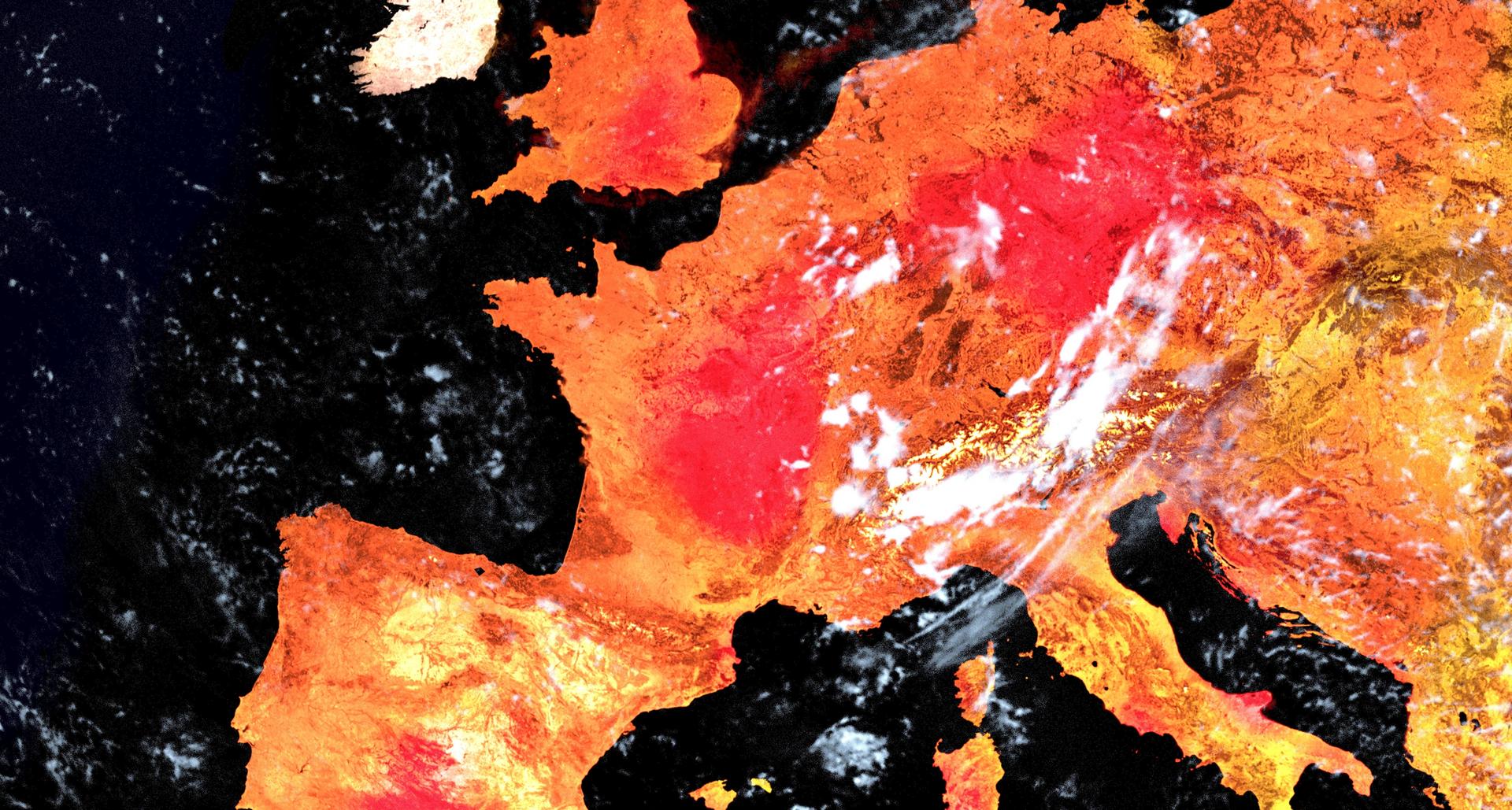
France is experiencing a stark departure from seasonal norms this April, as a “pic de chaleur précoce” (early heat peak) brings temperatures typically reserved for July to several regions. On Wednesday, April 8, 2026, Météo-France reported temperatures reaching up to 14 degrees Celsius above seasonal averages, signaling a volatile start to the spring season.
The atmospheric shift has already pushed the mercury past the 30°C mark in various locations, including parts of the Gironde and Corrèze departments as of Monday. On Wednesday, forecasts indicated temperatures would again approach this threshold, with 29°C expected in Mayenne and Sablé-sur-Sarthe according to Météo-France reports.
This early surge of heat is driven by a combination of high-pressure systems and a northward movement of warm air from the south. The impact has been felt even in the northwest; on Tuesday, record minimum temperatures were broken in Finistère, with 16°C measured at Brest-Guipavas and 15.1°C at Camaret during the coolest part of the day as detailed by AFP.
While such temperatures are usually not seen until early June, meteorologists note that the frequency of these early peaks has increased since the year 2000. This trend is attributed to a climate warmed by greenhouse gases emitted by human activities, making the occurrence of 30°C thresholds in March or April more common than in previous decades.
Understanding the Early Heat Peak and Climate Trends
To understand the severity of the current weather, it is necessary to distinguish between different types of heat events. In France, heatwaves are categorized into four distinct types: heat peaks (pics de chaleur), persistent heat episodes, heatwaves (canicules), and extreme heatwaves via Wikipedia. A formal “canicule” is decreed at the departmental level when biometeorological indices (IBM) meet or exceed specific thresholds for three consecutive days and nights, posing a health risk to vulnerable populations.
The current “pic de chaleur précoce” represents a sudden spike rather than a prolonged heatwave, but its timing is what alarms experts. Historically, the earliest date the 30°C threshold was reached in France was March 24, 2001, with 30.3°C recorded in Figari, Corsica per Météo-France data. Still, this anomaly has become more frequent, with similar events occurring on March 29, 2023 (30.4°C in Orthez) and April 6, 2024 (32°C in Pau).
This shift in timing has significant implications for the environment and public health. While the current peak is short-lived, the overarching trend of warming suggests that the traditional seasonal calendar is shifting. The vulnerability of the population—particularly infants, pregnant women, those over 65, and individuals with chronic illnesses—remains a primary concern for health authorities during any period of abnormal heat according to national risk classifications.
Impacts on Infrastructure and the Natural Environment
Beyond human health, early heat peaks place immediate stress on the natural world and the national economy. The French environment, including forests, wildlife, and water quality, is highly susceptible to temperature swings that occur outside of typical seasonal windows. In the agricultural sector, premature warmth can disrupt crop cycles, potentially leading to vulnerabilities when the actual summer heat arrives.

The economic impact extends to energy production. High temperatures increase the demand for electricity to power cooling systems while simultaneously stressing the infrastructure used to generate power. Since the catastrophic heatwave of 2003, France has implemented a continuous monitoring system and a regulatory prevention framework to mitigate these risks as documented in French public health records.
The current situation in April 2026 underscores the “interlocking of natural causes and sociopolitical factors” that define modern heat risks. The ability of urban centers to handle these peaks depends heavily on housing insulation and the availability of shaded public spaces, as those in poorly insulated homes are at significantly higher risk during these events.
Historical Context of Heat Events in France
To place the 2026 early peak in perspective, it is helpful to seem at the history of extreme heat in France. The country has a long record of significant heat events, both before and after the turn of the millennium.
| Period | Notable Years of Heat Events |
|---|---|
| Pre-2000 | 1911, 1921, 1947, 1976, 1983, 1994 |
| Post-2000 | 2003, 2006, 2012, 2015, 2016, 2017, 2018, 2019, 2020, 2021, 2022, 2023, 2024, 2025 |
The list of events after 2000 shows a marked increase in the frequency of recorded heatwaves, suggesting that what were once rare occurrences are becoming annual events. This trend aligns with the observations from Météo-France regarding the increasing frequency of early-season heat peaks.
What to Expect Next
While the current “summer-like” atmosphere is striking, meteorological forecasts indicate that this specific peak will not persist indefinitely. The immediate focus for residents and authorities remains the monitoring of temperature thresholds to ensure that fragile populations are protected during these abrupt shifts.
The broader concern for the upcoming summer of 2026 remains the subject of ongoing modeling. As the planet continues to warm due to greenhouse gas emissions, the baseline for “normal” temperatures continues to rise, potentially leading to more frequent and intense heatwaves later in the year.
For the most current weather advisories and health guidance, residents are encouraged to monitor official updates from Météo-France and departmental health authorities.
World Today Journal will continue to monitor climate developments and official meteorological reports as the 2026 season progresses. We invite our readers to share their observations of local weather patterns in the comments below.