France Recognizes Palestinian State: A Shift in Diplomacy and a Response to Evolving Realities
France has officially recognized the State of Palestine, marking a significant diplomatic move with far-reaching implications. This decision, announced recently, isn’t simply symbolic; it reflects a calculated response to shifts in the Israeli-Palestinian conflict and a renewed commitment to a two-state solution. You might be wondering what prompted this change, and what it means for the future. Let’s delve into the details.
A Changing Landscape & The Catalyst for Recognition
Several key factors converged to push France toward this historic step. Primarily, the evolving objectives declared by Israel during its recent offensive in gaza played a crucial role. Simultaneously, the accelerated expansion of Israeli settlements in the West Bank has raised serious concerns.
specifically, the prospect of annexing the West Bank is viewed as a critical red line. Such a move would severely jeopardize any realistic path toward a two-state solution, a cornerstone of French foreign policy.
Furthermore, a direct appeal from Palestinian Authority President Mahmoud Abbas to French President Emmanuel Macron and Saudi Crown Prince Mohammed bin Salman was instrumental. Abbas’s letter, delivered in June, unequivocally condemned the October 7th Hamas attacks. He also pledged to disarm Hamas and overhaul the governance of the Palestinian Authority, signaling a willingness to address longstanding concerns.
beyond Symbolism: What Does This Mean?
This isn’t merely a gesture of goodwill.It’s a deliberate political statement demonstrating France’s unwavering commitment to a two-state solution. Though, the implementation of this recognition will be gradual. It’s contingent upon developments on the ground, most importantly, the release of hostages currently held by Hamas.
Hear’s a breakdown of what you can expect:
* Diplomatic Engagement: France will actively engage with the newly recognized palestinian state on diplomatic and political levels.
* Conditional Implementation: The full realization of statehood will be tied to tangible progress in the peace process.
* Focus on Governance: Support for a reformed and demilitarized Palestinian Authority will be prioritized.
Addressing Domestic Concerns & Misconceptions
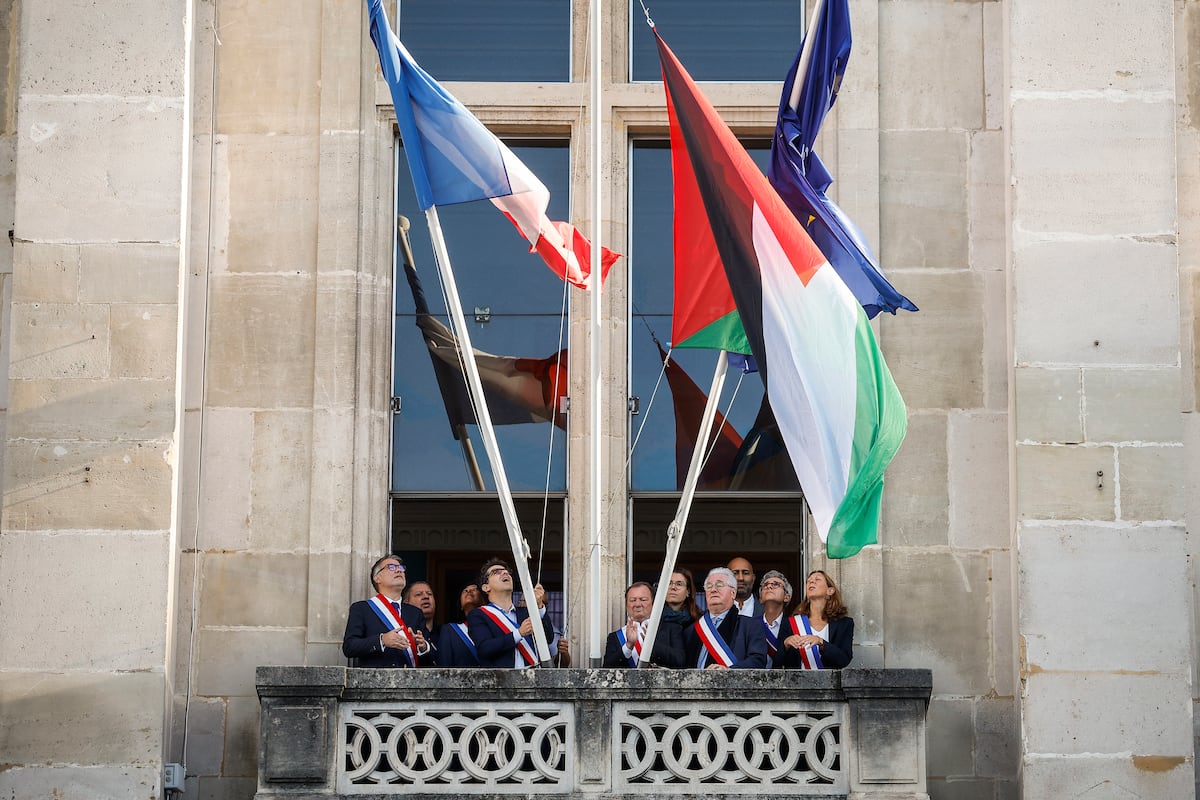
Understandably, this decision has sparked debate within France. Numerous municipalities,led by socialist administrations,have already raised the Palestinian flag in solidarity. This action, however, has been met with resistance, with some interpreting it as support for Hamas.
It’s crucial to dispel this misconception. Recognizing a Palestinian state does not equate to endorsing Hamas. As a leading socialist politician pointed out,this move is a rejection of the idea of a “Greater Israel” extending from the Mediterranean Sea to the Jordan River. The Palestinian flag represents the aspirations of a people seeking freedom and self-determination.
The Broader Context: Domestic Politics & Shifting Alliances
Interestingly, the timing of this decision also intersects with France’s internal political dynamics. Marine Le Pen’s attempts to position herself as a champion against antisemitism are being scrutinized. Some observers suggest her focus on support for Israel is more closely linked to anti-immigrant sentiment within France than genuine solidarity with Netanyahu’s government.
This complex interplay of factors underscores the multifaceted nature of this diplomatic shift. It’s a move driven by principle, pragmatism, and a desire to navigate a volatile geopolitical landscape.
looking Ahead: A Path Towards Peace?
France’s recognition of a Palestinian state is a bold step. It’s a clear signal that the status quo is unacceptable and that a renewed push for a just and lasting peace is urgently needed. While challenges remain immense, this decision offers a glimmer of hope. It reinforces the belief that a two-state solution, despite its complexities, remains the most viable path toward a secure and peaceful future for both Israelis and Palestinians.
Ultimately, this is about reaffirming the basic right of both peoples to live in dignity, security, and self-determination. It’s a commitment to a future where peace, not conflict, defines the region.