
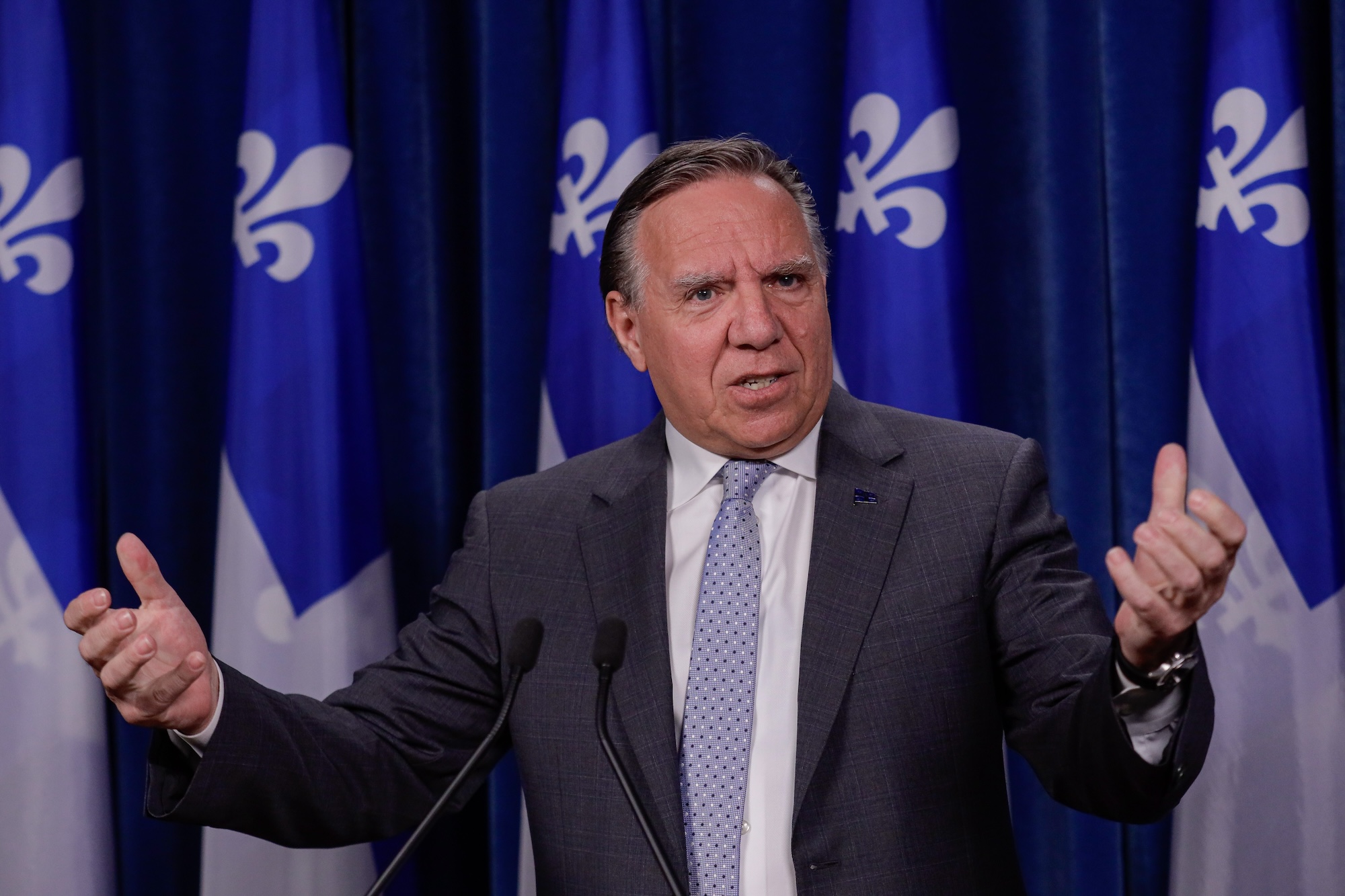
François Legault, the Premier of Quebec, has officially bid farewell to the National Assembly, marking the complete of a defining chapter in the province’s political landscape. In a speech delivered this past Thursday in the Salon rouge, Legault addressed his colleagues and the public with a tone described as both dignified and serene, reflecting on a tenure characterized by a steadfast commitment to Quebec’s autonomy and social infrastructure.
While the Premier has concluded his final session as a member of the assembly, he remains in office until April 12, when he will officially step down from his role as head of the government. The departure of the leader of the Coalition avenir Québec (CAQ) signals a pivotal transition for the province, as the political establishment begins to look toward a successor to navigate an increasingly uncertain economic and social climate.
Throughout his final address, Legault focused on the legacy he wishes to leave behind, emphasizing the need for future leaders to resist the pull of political cynicism. He urged his fellow MNAs to provide a sense of hope to younger generations, particularly as the province faces economic headwinds that could otherwise stifle the aspirations of the youth.
Central to this vision was his insistence that education remain the “priority of priorities.” Legault noted that his own journey from a working-class background to the highest office in Quebec was made possible through education, framing it not just as a policy goal, but as the primary engine for social mobility and state stability.
Economic Interventionism and the Question of Succession
The farewell speech was not merely a reflection on the past but also a strategic roadmap for the future. Legault used the platform to offer a pointed, albeit indirect, warning to Christine Fréchette, who is widely viewed as the frontrunner to succeed him. The tension centered on the role of the provincial government in managing the economy.
Legault argued that the state must continue to serve as a vital lever to stimulate the Quebec economy. This served as a direct counterpoint to suggestions from Fréchette regarding a shift toward a less interventionist approach. By advocating for the government’s active role in economic development, Legault sought to cement his philosophy of state-led growth as a cornerstone for whoever takes the helm next.
Protecting Quebec Identity and Federal Relations
A significant portion of the Premier’s final remarks focused on the enduring struggle for jurisdictional control between Quebec City and Ottawa. Legault reiterated the necessity for the National Assembly to protect Quebec’s unique identity by aggressively pursuing the repatriation of responsibilities from the federal government.
Reflecting on his own efforts to secure concessions from the Canadian federal government, Legault adopted a pragmatic stance. He emphasized the importance of maximizing gains within the existing political framework, framing the relationship with Ottawa as a strategic game of negotiation.
To illustrate this pragmatism, Legault quoted Martin St-Louis, the head coach of the Montreal Canadiens, stating, “Faut prendre ce que la game te donne” (You have to take what the game gives you). The reference to hockey, a sport deeply woven into the fabric of Quebec culture, brought a moment of levity to the proceedings and highlighted Legault’s personal passion for the game.
Legacy of the Member for L’Assomption
As the representative for L’Assomption and the leader of the Coalition avenir Québec, Legault’s influence extended beyond the legislative halls of Quebec City. His role as the responsible official for the Abitibi-Témiscamingue region further underscored his efforts to bridge the gap between the urban center and the province’s outlying regions.
His departure marks the end of a mandate that sought to balance nationalist aspirations with pragmatic governance. By focusing on education and economic stimulation, Legault attempted to build a resilient state capable of weathering global volatility while maintaining a distinct cultural identity.
Key Transitions in Quebec Leadership
| Event | Date/Status | Significance |
|---|---|---|
| Final Assembly Session | Thursday, April 3, 2026 | Farewell speech in the Salon rouge. final duties as MNA for L’Assomption. |
| Official End of Premiership | April 12, 2026 | The date M. Legault officially ceases to be Premier of Quebec. |
| Succession Process | Ongoing | Transition toward a new leader, with Christine Fréchette noted as a favorite. |
The transition of power in Quebec will be closely watched by international observers and political analysts, particularly regarding how the next administration handles the balance between state intervention and market freedom. The directives left by Legault—specifically regarding education and federal relations—will likely serve as the primary benchmarks for his successor’s early performance.
The next confirmed checkpoint in this transition is April 12, when François Legault will officially conclude his term as Premier.
We invite our readers to share their perspectives on the evolution of Quebec’s political leadership in the comments below.