
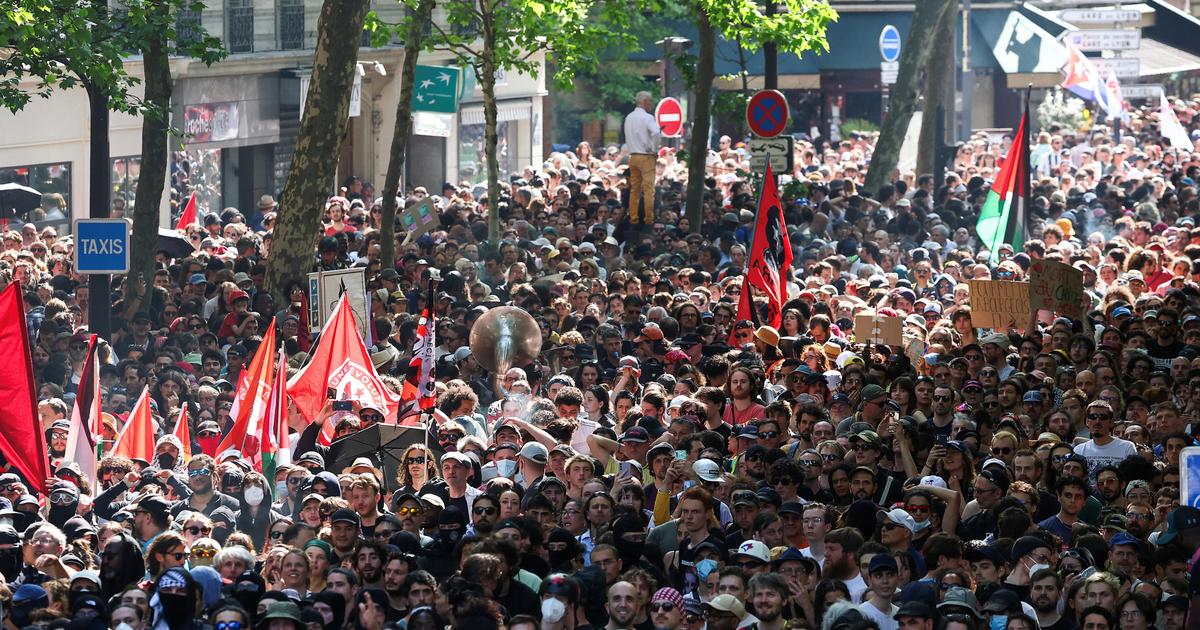
A rare coalition of France’s most prominent labor organizations has issued a formal challenge to the government regarding the status of May 1st, the traditional International Workers’ Day. In a joint letter, eight major trade unions have urged the government to abandon a proposed joint committee—known as a commission mixte paritaire—that would accelerate the adoption of a text expanding the possibility of working on this historic public holiday.
The collective action involves a broad spectrum of the French labor landscape, including the CFDT, CGT, FO, CFE-CGC, CFTC, Unsa, FSU and Solidaires. These organizations, which often diverge in their strategies and political leanings, have united to argue that altering the nature of May 1st would disregard the “social history” associated with the day.
This move comes at a time of significant transition and competition within French syndicalism. While the CFDT has emerged as the leading union in professional elections, surpassing the CGT since 2018, the two organizations—along with FO—remain the primary pillars of the country’s labor representation.
The tension centers on the balance between economic flexibility and the preservation of workers’ rights. By opposing the acceleration of this text, the eight unions are signaling a refusal to compromise on a date they view as a fundamental symbol of labor struggle, and achievement.
The Coalition: A United Front of Diverse Unions
The scale of this joint letter is notable due to the ideological differences typically found between the participating unions. The French labor landscape is characterized by a mix of “rupture” strategies and “compromise” logics. For instance, the CGT has historically been associated with more confrontational stances, while the CFDT is often viewed as more inclined toward negotiation and dialogue within the company framework.

Despite these differences, the current coalition represents a massive cross-section of the workforce. According to recent data from the Direction générale du travail, the CFDT holds 26.58% of the votes in the private sector, while the CGT follows with 22.21%, and Force Ouvrière (FO) holds 14.91%. The addition of CFE-CGC, CFTC, Unsa, FSU, and Solidaires creates a comprehensive intersyndical bloc that spans almost every sector of the French economy.
This level of unity is similar to the broad intersyndical mobilizations seen in recent years, such as the coordinated calls for mobilization involving these same organizations to protest national policy changes.
The Significance of May 1st in French Social History
For the participating unions, May 1st is not merely a day off, but a cornerstone of “social history.” The demand to renounce the commission mixte paritaire is rooted in the belief that the day serves as a vital reminder of the conquests won through labor struggle. The unions argue that expanding operate on this day would erode the symbolic and practical value of the holiday.
In France, the legal framework for unions is deeply rooted in history, dating back to the Waldeck-Rousseau law of 1884, which established syndicates as pillars of the social landscape. The unions maintain that their legitimacy is built through professional elections, and this legitimacy now compels them to defend the integrity of the labor calendar against government-led acceleration.
Understanding the ‘Commission Mixte Paritaire’ and the Proposed Text
A commission mixte paritaire is typically a joint committee used to resolve disputes or negotiate specific terms between employers and employees. The unions are specifically targeting the utilize of such a committee to fast-track a text that would allow more businesses to operate on May 1st.
The unions’ primary objection is the “acceleration” of this process. By exhorting the head of government to step back, they are demanding a more deliberative approach that respects the traditional protections afforded to workers on this specific holiday. The fear is that a streamlined legislative or administrative process would bypass the necessary social dialogue required to make such a significant change to labor norms.
Impact on the French Dialogue Social
This clash highlights the ongoing struggle for power and representation in French companies. The ability of a union to sign a company agreement in France generally requires representing at least 30% of the votes in professional elections. Given that no single union consistently hits this mark across all sectors, the “dialogue social” often depends on the ability of different organizations to either compete or collaborate.
The current opposition to the May 1st work expansion shows that while the CFDT and CGT may compete for the title of “first union in France,” they can still find common ground on issues of fundamental labor rights. This creates a complex dynamic for the government, as it must navigate a landscape where the most powerful unions are aligned against a specific policy goal.
Key Takeaways of the Labor Dispute
- Unified Opposition: Eight major unions (CFDT, CGT, FO, CFE-CGC, CFTC, Unsa, FSU, and Solidaires) have joined forces against the proposal.
- The Core Demand: The unions want the government to renounce the use of a commission mixte paritaire to speed up the adoption of a text expanding work on May 1st.
- The Justification: The movement is based on the preservation of “social history” and the symbolic importance of International Workers’ Day.
- Political Context: This occurs amidst a shifting power balance where the CFDT is currently the leading union, though the CGT remains strong, particularly in very small enterprises (TPE).
As the government considers the request from this broad intersyndical coalition, the outcome will likely serve as a bellwether for the state of social dialogue in France heading into 2026. With the CFDT, CGT, and FO all scheduled to hold congresses in 2026, the resolution of this dispute may influence the platforms and strategies these organizations adopt for their next mandates.
The next official checkpoint will be the government’s formal response to the joint letter and whether the commission mixte paritaire proceeds as planned or is suspended in favor of broader negotiations.
World Today Journal encourages readers to share their thoughts on the balance between economic productivity and the preservation of historic labor holidays in the comments below.