
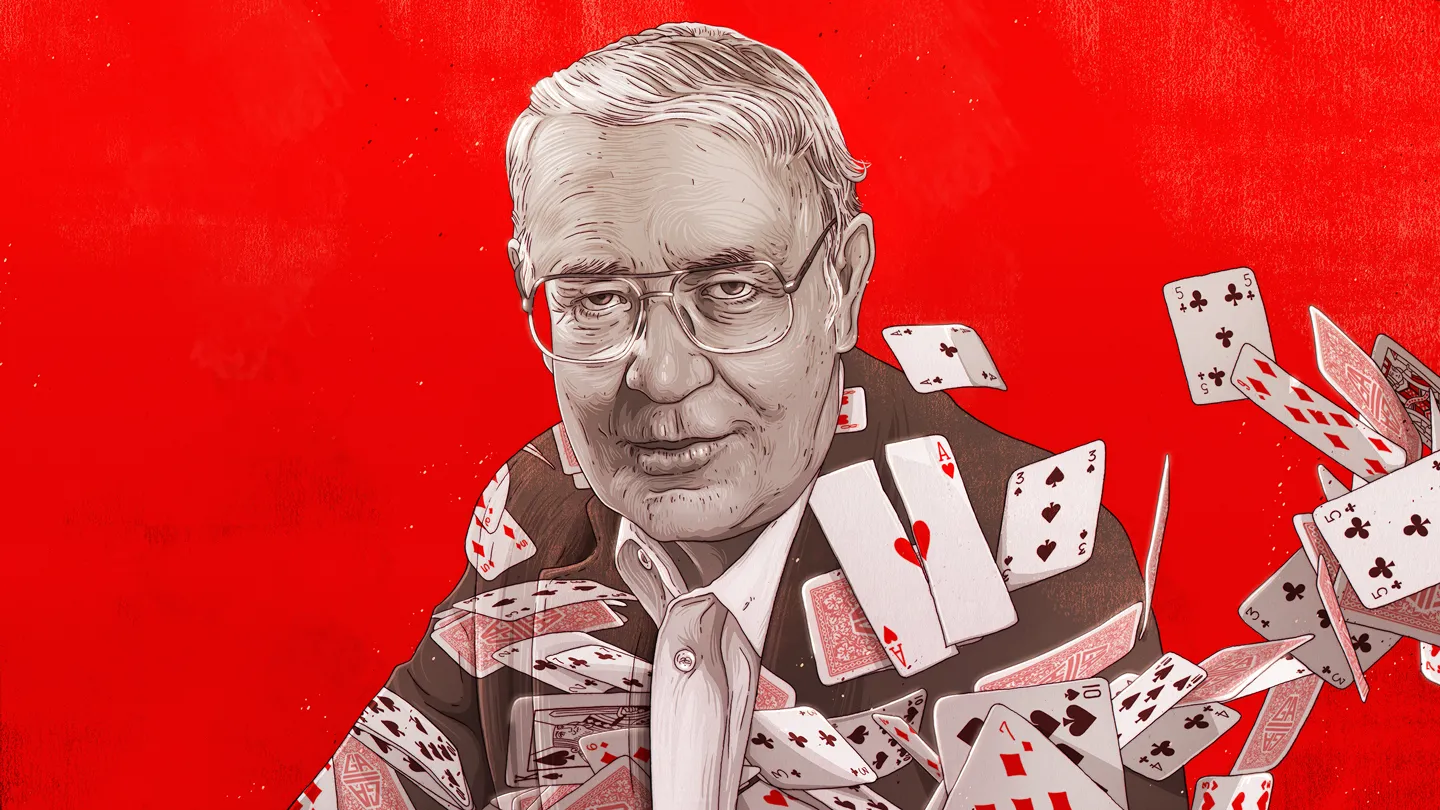
Arriving at a 1987 Gamblers Anonymous event in Dallas, Chris Anderson was at a low point. After years of losing money on high-risk stock option trades, his mental health had deteriorated and he had filed for bankruptcy. Fed up with the chaos and dishonesty,his wife had left him. Like many people contending with a severe gambling disorder,Anderson regularly experienced suicidal thoughts. Still, he couldn’t stop placing bets. He related his desperation to an older gentleman with kind eyes who nodded patiently.
“What he said to me was, ‘You’re really hurting, aren’t you?’” Anderson recalls nearly four decades later. “I knew at that moment I found somebody who could help me, who helped me give a name to what was true. I’d never heard of Bob Custer. I had no clue that he really put gambling addiction treatment on the map.”
This understanding man was Robert Custer. As a psychiatrist, Custer advocated throughout the 1970s and ‘80s for the medical community to address gambling disorder as a treatable psychological condition and boosted its reputation beyond a moral failing or a simplistic compulsive behavior. Custer established the first specialized inpatient treatment programs, collected early clinical data and played a vital role in influencing the diagnostic criteria psychiatrists rely on today. By the time he died at 63, Custer’s colleagues estimate he worked with thousands of people with gambling problems and presented the science of disordered gambling to countless researchers, clinicians, gaming industry employees and legal experts.
Despite this outsized influence, Custer is not as well-known today as some drug and alcohol addiction researchers.Yet his insights may be as salient as ever. Since Custer’s time, many more physical casinos have sprung up beyond Las Vegas and Atlantic City, N.J., and the expansion of mobile sports betting and casino apps has brought new forms of 24/7 gambling into people’s pockets. A nationwide survey from the National Council on Problem Gambling and Ipsos found the number of adults who reported gambling online in the past year rose from 15 percent in 2018 to 22 percent in 2024.
For Anderson, meeting Custer was life changing. He became his patient and later a friend and mentee. Now decades into his own recovery, Anderson treats clients with gambling disorder as a licensed clinical therapist in Austin, Texas.He says Custer’s findings inform his work daily, even as the nature of gambling changes dramatically. Today, video slot machines and mobile gaming options might potentially be more potent and accessible than older forms of gambling. “A lot of people I’m talking to are gambling in ways that nobody could ever have imagined in 1990 when [Bob] died.”
Legitimizing an unsung field
scientific interest in gambling was scant until the rise of psychoanalysis in the early 20th century. Even then, there was little agreement or rigorous inquiry on what caused gambling problems or how they should be addressed. In the 1920s, Sigmund freud proposed that compulsive gambling could be a substitute for masturbation — a theory Custer would later reject.
Around the time Freud was speculating about gambling, Custer was born in 1927 in Midland, Pa. He began his undergraduate education at Ohio State University in Columbus before joining the Army in 1945. After completing his military service, he returned to graduate from OSU. He then earned a medical degree from Western Reserve University in Cleveland in 1953.
By the late 1960s, Custer had completed his training as a psychiatrist and began treating patients with alcohol use disorders at the Veterans Administration Hospital in Brecksville, Ohio. He developed an interest in gambling disorder and became involved with the mutual support organization Gamblers Anonymous, or GA.
Custer officially opened the doors of the first inpatient treatment program offering gambling disorder treatment in 1972. Open only to veterans, the 30-day program provided individual counseling and group psychotherapy alongside GA meetings. This novel multipronged approach applied a format familiar to drug addiction treatment alongside custer’s growing insights about gambling disorder.
While Custer did not conduct lab research or placebo-controlled clinical trials, he catalyzed the burgeoning field by laying the groundwork to gather some of the first robust clinical data on gambling disorder. Because Brecksville graduates remained in the VA system, Custer and his colleagues were able to track their progress. A 1984 study by Custer’s VA colleagues found that 55 percent reported complete abstinence from gambling one year after completing the program.
With the help of his wife Lillian, Custer surveyed GA members about their experiences and identified common themes across their addictions and recovery. Many of these gamblers, he found, had tough childhoods and began gambling in adolescence. Curiously, many were athletic at some point in their lives and often shared competitive tendencies. He also found that few people sought help until the late stages of their disorders and commonly experienced depression and suicidal thoughts.
colleagues say Custer was an empathetic listener who valued the lived experience of patients and their families.He favored a pragmatic approach to his patient’s problems, such as combining therapy with debt repayment plans and vocational counseling.
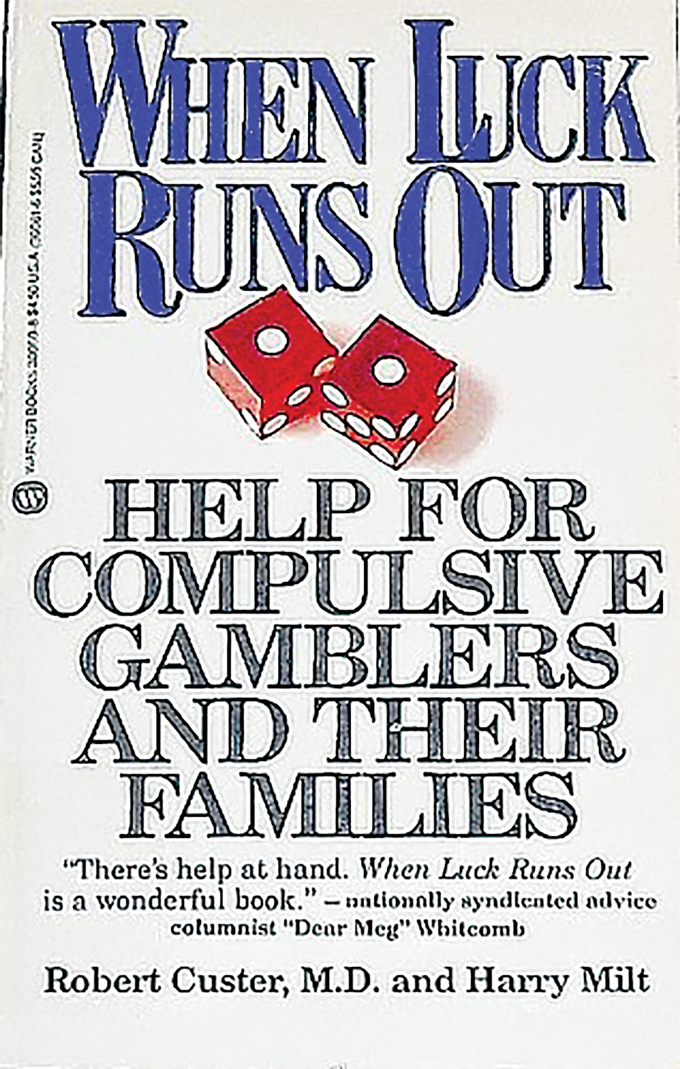
Custer eventually established two civilian programs in Ellicott City, Md., and Las Vegas. he mentored health care providers entering the field and offered workshops. throughout these campaigns, he explained that, if untreated, gambling addiction typically becomes more severe, like alcohol and drug use disorders. Custer emphasized that serious harm could be avoided if professionals and lay people recognized the signs early on. These insights would culminate in his 1985 book, When Luck Runs Out: Help for compulsive Gamblers and their Families, written with author Harry Milt.
“He really had the beginnings of describing what’s happening in the mind of the gambler,” says Anderson. “I know he would have developed that much further had he lived longer.”
To shore up support for the field, Custer cofounded the National Council for Compulsive gambling in 1972 with chaplain Joseph Dunne. The organization would later become the National council on Problem Gambling, which advocates for research funding and initiatives to improve treatment and prevention.
A rippling impact
Among Custer’s most significant achievements was his influence on the American Psychiatric Association’s Diagnostic and Statistical Manual of mental Disorders, or DSM. Now in its fifth edition, the DSM is the principal atlas of psychological diagnoses. Several tributes to Custer credit him for including pathological gambling in its third edition in 1980. The truth, though, is more intricate, according to Richard J. Rosenthal, who studies both clinical treatment for gambling disorders and the history of behavioral addictions at UCLA.
The DSM-III committee writing the impulse control disorders section brought Custer on board after they already decided to include “pathological gambling.” Before Custer’s input, the committee’s original drafts framed pathological gambling as a relatively simple impulse control problem similar to pyromania and kleptomania, Rosenthal explained in an International Gambling Studies article in 2019.people with these disorders start fires or steal items they don’t want or need as part of a pattern of building up and releasing tension. Clinicians supposed that pathological gamblers may be caught in the same cycle.
“The field could have gone in that direction; it did for a while,” Rosenthal says.“But Custer, I think, had a really prominent role in focusing on it as an addiction.”
Custer argued that pathological gambling was not just a matter of an individual’s building and releasing tension. Rather, pathological gambling followed a progressive course from slightly unhealthy gambling behaviors to increasingly problematic wagering with tangible financial and social consequences. Consequently, the committee incorporated the common consequences Custer saw in his clinical experience — such as defaulting on debts, borrowing money and struggling with family relationships — as diagnostic criteria to better identify those suffering. So, while pathological gambling remained alongside impulse control disorders in the DSM-III, its description and diagnostic criteria more closely mirrored the way the manual approached substance use disorders.
“The work of people like Custer and his colleagues has a long legacy,” says Heather Wardle, a social scientist who studies gambling policy and practice at the University of Glasgow in Scotland. The diagnostic criteria, informed by Custer’s work, have been adapted into surveys the field uses to measure and articulate how people experience gambling addiction, she says.
Wardle emphasizes that while this was crucial groundwork, there were blind spots. “[Custer’s] work was based on self-referred, often white men of a certain background,” Wardle says. This legacy may contribute to a bias in modern screening tools that may not adequately capture how gambling disorder presents in women and other populations less likely to enter treatment.
Why Custer would be “profoundly disappointed”
Custer remarked that public attitudes toward gambling disorder were decades behind those toward alcohol addiction, and that the relative paucity of research was similarly stark. While more researchers and clinicians now focus on gambling disorder, experts say scientific research has not kept up with gambling’s expansive impacts.
“So much of what we still do is actually informed by that early work,” says wardle, who co-led a Lancet Public Health commission on gambling report published in 2024. “And because there hasn’t been a vast amount of investment in gambling research, the field hasn’t particularly progressed.” For example,the field still lacks widely accessible treatment options or any medications approved by the U.S. Food and Drug Administration.
Anderson agrees. “I think [Custer] would be profoundly disappointed at the lack of progress that has occurred in understanding and funding of the treating of this addiction.”
Some advances have been introduced.Helplines are now ubiquitous in casinos and advertising. At least one “gambling court” in the United States integrates treatment into the criminal justice system. Anderson believes Custer would be especially pleased to know that, in the fifth edition of the DSM released in 2013, gambling disorder was moved from the ill-fitting impulse control disorder section to the substance-related and addictive disorders section.
Still,the field faces an uphill battle.Much of the limited research is sponsored by state gaming commissions and the gambling industry, which many experts argue has held back breakthroughs in treatment and prevention. The Americans with Disabilities Act specifically excludes gambling disorder from its protections, despite including protections for substance use disorders. And, perhaps of most concern, little is known about the potential pitfalls of new and rapidly expanding gambling technology.
“This notion that you can gamble on your phone, that you can carry a ‘casino in your pocket’ … is mind-boggling,” Rosenthal says. “It’s very different from what Custer saw.”
But while the tools for gambling evolve, Custer’s prescription of compassion and curiosity hardly feels dated. As Cait Huble, communications director of the National Council on Problem Gambling, explains, “If you are truly interested in … solving the problem — on a holistic society level or even just helping one individual — starting with a place of judgment is no way to build trust or make any progress.”
If you or someone you know is struggling with a gambling problem, call or text the National Problem Gambling Helpline at 1-800-522-4700. If you or someone you know is facing a suicidal crisis or emotional distress, call or text the 988 suicide & Crisis Lifeline at 988.




![Master Lock Comanche: Race Time, Weather & How to Watch | [Year] Update](https://static.ffx.io/images/$zoom_0.5516%2C$multiply_0.7554%2C$ratio_1.777778%2C$width_1059%2C$x_0%2C$y_55/t_crop_custom/q_86%2Cf_jpg/t_metro_live_no_age_social_wm/53c85f551a91ff2c094f35fc9f3bff31abb136bca8acaf39f79f098dd87f56e5 "Master Lock Comanche: Race Time, Weather & How to Watch | [Year] Update")


