
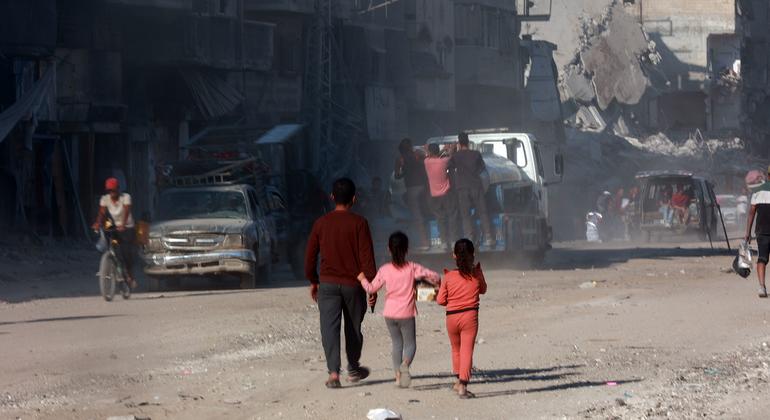
Gaza Humanitarian Crisis: Ceasefire Fragility, Aid Disruptions, and Rising Tensions - October 28, 2025 Update
Teh fragile ceasefire in Gaza is facing increasing strain as reports of renewed military activity raise serious concerns, while critical aid deliveries are hampered by logistical challenges and a concerning surge in settler activity. This comprehensive update, drawing from the latest briefings from the United nations and on-the-ground reports, details the current situation, ongoing humanitarian efforts, and emerging threats to lasting peace.
Is the Ceasefire Holding? Renewed Concerns Emerge
Recent reports of Israeli military action within Gaza have prompted the United Nations to express “extreme concern.” UN Spokesperson Stéphane Dujarric underscored the urgent need to protect civilians and ensure the continuation of vital humanitarian operations, stating, “We don’t want civilians to be bombed again” or aid efforts “derailed again.” Concurrently,Hamas has denied involvement in reported attacks on Israeli forces,reaffirming its commitment to the ceasefire terms and accusing Israel of violations. this conflicting narrative highlights the precarious nature of the current truce and the potential for escalation.
What’s happening on the ground? The situation remains volatile,demanding constant monitoring and diplomatic intervention to prevent a return to full-scale conflict. The international community is watching closely, urging all parties to uphold their commitments and prioritize the safety of civilians.
Humanitarian Response: Scaling Up Amidst Obstacles
Despite the challenges, the UN and its partners are working to scale up humanitarian assistance under a 60-day response plan coordinated by the UN Office for the Coordination of Humanitarian Affairs (OCHA). Notable progress is being made in several key areas:
* Water & Sanitation: Water distribution in northern Gaza has expanded,now reaching 4,600 cubic meters daily across Gaza and North Gaza governorates,serving 585 locations. This is a critical improvement,addressing a basic need for the displaced population.
* nutrition Programs: Between October 1st and 25th, over 4,300 acutely malnourished pregnant and breastfeeding women received treatment, while preventative nutritional support reached more than 134,000 mothers and children under five. These programs are vital in combating the long-term health consequences of the crisis.
* Shelter & Protection: Recognizing the impending rainy season, preparations are underway in Deir al Balah, Khan Younis, and Gaza governorates, focusing on clearing stormwater drainage systems. Ingeniously, displaced communities are repurposing flour and rice bags – originally provided as food aid – into sandbags to reinforce shelters against the elements.
* Internal Displacement: A significant internal displacement trend continues, with over 480,000 movements observed from southern to northern Gaza since the ceasefire began. Nearly 100,500 movements have also been recorded from western to eastern Khan Younis, indicating a desperate desire among Gazans to return to their homes, even those severely damaged.
Aid Delivery Delays: A Growing Crisis Within a Crisis
However, the delivery of life-saving aid is facing significant disruptions.Israeli authorities have rerouted humanitarian and commercial trucks, causing ample delays.
* Impact on Convoys: Several agencies have temporarily reduced the number of trucks in their convoys pending an assessment of the new road conditions.
* Congestion & traffic: Teams on the ground report severe congestion and heavy traffic along the rerouted path, further slowing down the movement of critical cargo.
* UN Engagement: The UN is actively engaging with Israeli authorities and other stakeholders to address these slowdowns and ensure the unimpeded flow of humanitarian assistance.
These delays are not merely logistical inconveniences; they directly impact the lives of vulnerable populations relying on this aid for survival. The urgency of the situation demands swift action to resolve these bottlenecks.
Escalating tensions: A Surge in Settler Activity Fuels Instability
Beyond the immediate humanitarian crisis, a deeply concerning trend is emerging: a significant increase in Israeli settler activity in the West Bank.
* New Outposts: reports from the Israeli NGO Peace Now, cited by the UN Human Rights Office (OHCHR), reveal that 84 new outposts were established over the past year, a dramatic increase compared to 49 the year before.
* Settler Attacks: The first half of 2025 witnessed 757 recorded settler attacks, demonstrating a pattern of escalating violence and intimidation against Palestinian communities.
This surge in settler activity is a major impediment to peace and stability, undermining the possibility of a two-state solution and exacerbating tensions on the ground. The international community must hold those responsible for these

![New Agreements & Guidelines | [Company Name] Updates](https://i0.wp.com/developer.apple.com/news/images/og/apple-developer-og.png?resize=150%2C150&ssl=1 "New Agreements & Guidelines | [Company Name] Updates")



![Literary Trivia Quiz: Test Your Book Knowledge | [Your Brand/Site Name]](https://i0.wp.com/static01.nyt.com/images/2025/12/22/opinion/22Quiz-Literary-Trivia/22Quiz-Literary-Trivia-facebookJumbo.png?resize=150%2C100&ssl=1 "Literary Trivia Quiz: Test Your Book Knowledge | [Your Brand/Site Name]")


![UK Alcohol Consumption: Record Lows & Changing Drinking Habits | [Year] Data](https://i0.wp.com/i.guim.co.uk/img/media/5087295f493410f26d3de148bac78c75a884b66e/213_41_4621_3697/master/4621.jpg?resize=150%2C100&ssl=1 "UK Alcohol Consumption: Record Lows & Changing Drinking Habits | [Year] Data")
