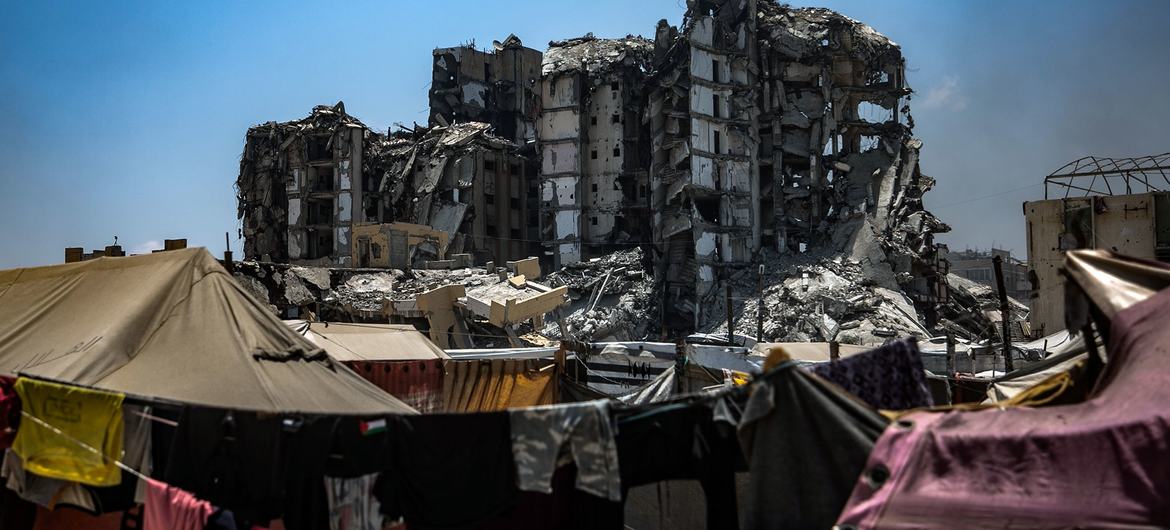
Gaza’s Healthcare System on the Brink: A Deep Dive into the Escalating Crisis (August 2025)
The humanitarian situation in Gaza is rapidly deteriorating, pushing the region’s already fragile healthcare system to the point of collapse. recent reports from the World Health Association (WHO) paint a grim picture: hospitals overwhelmed, critical supplies depleted, and a surge in preventable diseases threatening a population already enduring immense hardship. This article provides a thorough overview of the crisis,examining the key challenges,the devastating impact on civilians,and the urgent need for increased international intervention.
The Overwhelmed Healthcare Infrastructure
The scale of the crisis is staggering. As of August 12, 2025, less than half of Gaza’s hospitals are functioning, even partially, and a mere 38% of primary healthcare centers are operational – and ofen at minimal capacity. This collapse isn’t simply a matter of physical damage; its a systemic failure driven by resource scarcity and relentless pressure.
Key facilities are operating far beyond their intended capacity. Shifa Hospital, the largest medical complex in gaza, is currently operating at a shocking 250% capacity. Nasser Hospital (180%), Al-Rantisi (210%), and Al-Ahli (over 300%) are similarly overwhelmed. This overcrowding severely compromises the quality of care and increases the risk of infection.
Critical Shortages: A Matter of Life and death
The most immediate threat is the critical shortage of essential medical supplies. WHO reports reveal that 52% of all medicines and 68% of essential consumables are wholly out of stock. This includes vital medications for treating chronic conditions, managing injuries, and combating infectious diseases.
The situation is particularly dire for trauma care. Hospitals are reporting a surge in injuries stemming from chaotic scenes at food distribution points, further exacerbating the demand for blood and plasma – both of which are in critically short supply. Since May 27th, at least 1,655 people have been killed and over 11,800 injured in these areas alone, placing an unbearable strain on already stretched resources.
The Growing Threat of Malnutrition and disease
Beyond immediate trauma, malnutrition is rapidly becoming a widespread crisis. Since the beginning of 2025, 148 people have succumbed to malnutrition, tragically including 49 children – 39 of whom were under the age of five.July saw nearly 12,000 children under five diagnosed with acute malnutrition, the highest monthly figure recorded to date, with over 2,500 suffering from the most severe and life-threatening form.
Compounding the malnutrition crisis is the emergence of preventable disease outbreaks.Suspected cases of meningitis have reached 452 between July and early August – the highest number as the escalation began. A surge in Guillain-Barré syndrome, a rare and debilitating post-infection disorder, has also been observed, with 76 suspected cases reported as June.The ability to effectively treat these conditions is severely hampered by the “zero stock” levels of crucial medications like intravenous immuneoglobulin and anti-inflammatories.
Displacement and Access: Obstacles to Aid Delivery
The crisis is further complicated by ongoing displacement orders. Recent evacuation zones now encompass WHO’s own warehouse in Gaza, as well as hospitals, primary care centers, and ambulance facilities. This poses a direct threat to the continuity of essential healthcare services.
Perhaps the most significant obstacle remains access for international medical teams and supplies. Despite urgent pleas,international medics continue to face entry denials,and critical equipment – including ICU machines,anesthesia devices,and cold chain supplies – are routinely delayed or blocked. While WHO has managed to deliver 80 trucks of medical supplies as June, the process is agonizingly slow and unpredictable.What Needs to Happen Now?
Dr. Rik Peeperkorn, WHO Representative for the West Bank and Gaza, has issued a stark warning: “We need multiple crossings into Gaza opened, procedures simplified, and access impediments lifted.” The current pace of aid delivery is simply insufficient to meet the overwhelming needs of the population.Increased humanitarian access, streamlined procedures, and a commitment to removing bureaucratic obstacles are paramount.
Evergreen Section: Understanding Humanitarian Crises & Healthcare System collapse
Humanitarian crises,like the one unfolding in Gaza,are complex events with far-reaching consequences. Healthcare system collapse isn’t a sudden event; it’s a gradual process driven by a confluence of factors including conflict, political instability, economic hardship, and natural disasters. key indicators of a failing healthcare system include: shortages of essential medicines and